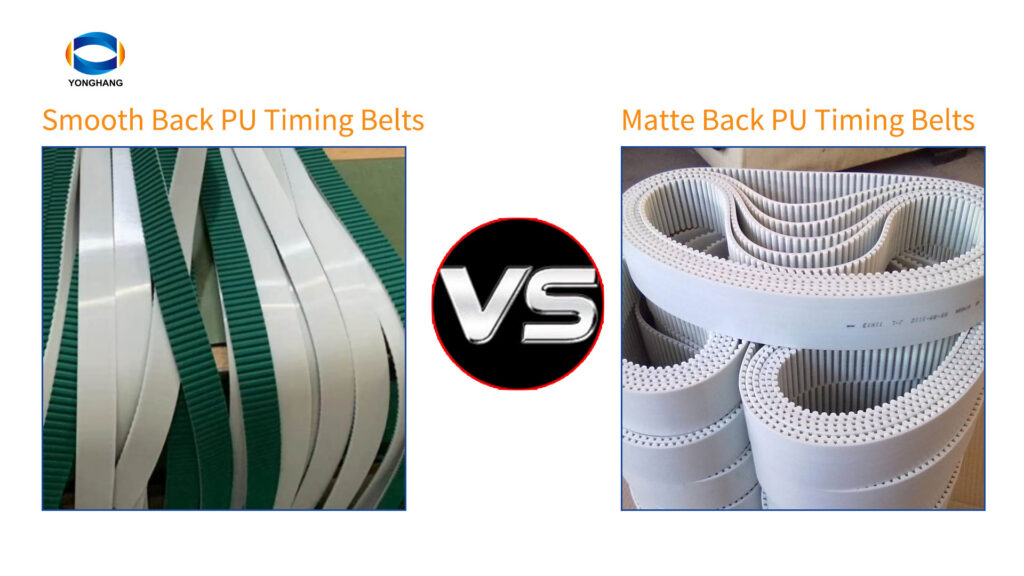
Although both are PU (polyurethane) timing belts, the glossy and matt finishes on the back may appear to differ only in terms of surface sheen; in reality, however, there are differences in performance, suitability for specific operating conditions and equipment performance, with glare interference during visual inspection being the most typical example!
When selecting PU timing belts, most engineers focus heavily on tooth profile, pitch, width, and material hardness, yet they frequently overlook a critical detail: the belt back surface finish.
Even though both are made of integral polyurethane, smooth back and matte back PU timing belts differ far more than just appearance. Their performance, suitable working conditions, and equipment operation effects vary greatly. Improper selection may result in slippage, workpiece scratches, and optical interference. In severe cases, it will compromise equipment stability and increase maintenance costs.
This article clearly explains the definition, characteristics, core differences, and ideal applications of smooth back and matte back belts, helping you make accurate selections.
1. Basic Definitions: What Are Smooth Back & Matte Back Belts?
Smooth Back PU Timing Belt
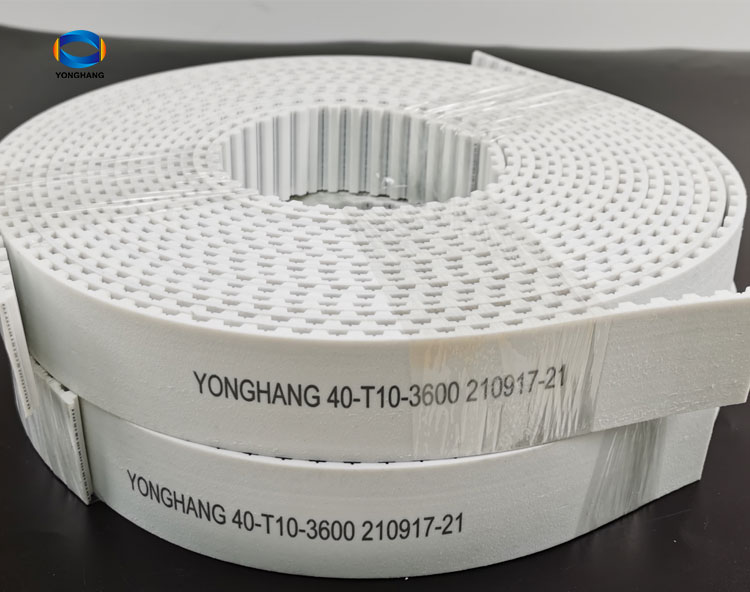
The smooth back surface is integrally molded from raw PU material without secondary sanding or embossing processes. It features a high-gloss mirror finish, compact flat surface, and extremely smooth texture.
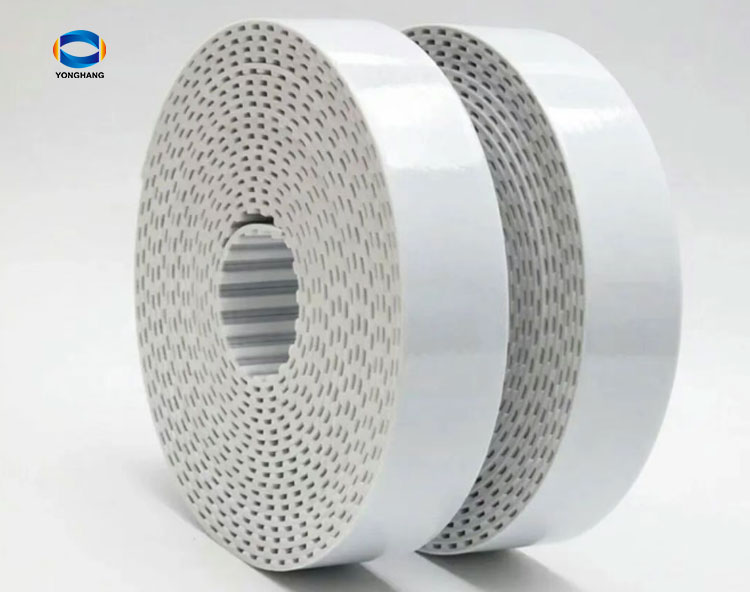
Matte Back PU Timing Belt
As a standard series product, the matte back belt has a frosted, atomized surface with no obvious reflection. It feels slightly dry to the touch and features uniform micro-scale surface texture.
2. Core Properties: Pros & Cons of Each Surface
Characteristics of Smooth Back PU Timing Belts
- Ultra-smooth surface with strong mirror reflection and transparent visual texture.
- Dense material structure that resists dust and oil accumulation. Easy to clean with simple wiping.
- Low back-surface coefficient of friction, leading to lower power consumption during high-speed operation.
Drawbacks: Prone to slippage, easy to scratch workpieces. Strong mirror reflection interferes with optical equipment under bright light.
Characteristics of Matte Back PU Timing Belts
- Low to zero surface reflection, completely eliminating mirror glare and perfectly suitable for optical inspection applications.
- Micro-rough surface with higher friction coefficient, delivering superior anti-slip, anti-deviation and anti-offset performance.
- Soft surface contact that prevents scratches on delicate workpieces including glass, acrylic, painted surfaces, and PCBs.
- Stable contact with idler wheels and guide rails, with minimal vibration during operation.
Drawbacks: Micro-textured surface tends to trap fine dust; slightly harder to clean than smooth back belts.
3. Direct Comparison: Key Differences at a Glance
| Comparison Item | Smooth Back PU Timing Belt | Matte Back PU Timing Belt |
|---|---|---|
| Surface Appearance | High-gloss mirror finish, shiny and transparent | Frosted atomized surface, no obvious reflection |
| Surface Texture | Extremely smooth | Slightly coarse with uniform micro texture |
| Coefficient of Friction | Low, minimal running resistance | High, excellent anti-slip performance |
| Dust & Oil Resistance | Dense structure, anti-contamination, very easy to clean | Prone to fine dust adhesion, slightly harder to maintain |
| Power Consumption | Low energy loss and heat generation at high speeds | Slightly higher resistance, stable contact transmission |
| Light Reflection | Strong mirror reflection | Minimal to no reflection |
| Workpiece Protection | Risk of scratching precision parts | Gentle contact, scratch-resistant surface |
| Running Stability | Stable only for tooth-driven transmission; easy to slip under back pressure | Excellent stability against guide rail/idler contact; strong anti-deviation performance |
4. Application Selection: Choose According to Working Conditions
Choose Smooth Back Belts For These Conditions
- Pure power transmission only, where the belt back does not contact idlers, guide rails or workpieces; power transfer relies solely on tooth meshing.
- High-speed, low-resistance transmission requiring low power consumption and low heat generation.
- Cleanroom environments such as food and pharmaceutical industries, demanding easy-clean, contamination-resistant surfaces.
Typical Applications: Packaging machine main shaft drive, internal servo motor transmission, food-grade main conveying lines, general automation power transmission.
Choose Matte Back Belts For These Conditions
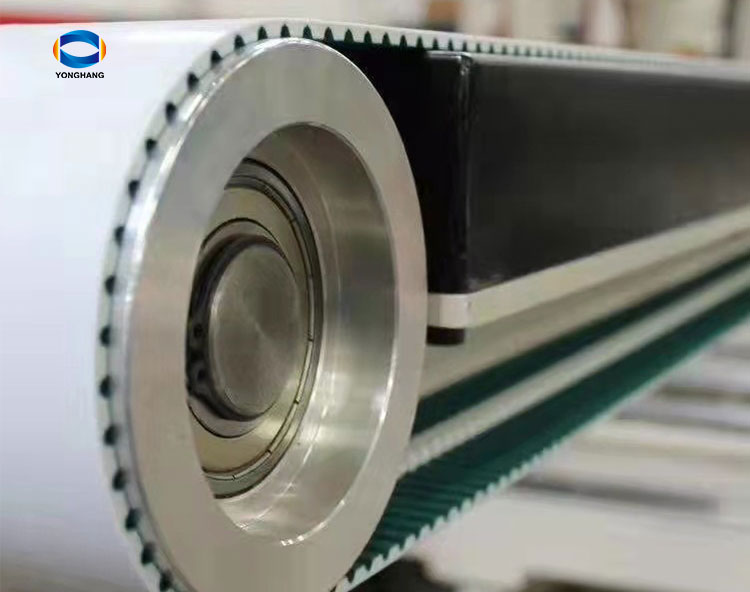
- Equipment requiring back-surface contact with back-pressure wheels, idlers or linear guide rails.
- Precision machinery with vision inspection, barcode scanning and optical positioning to eliminate glare interference.
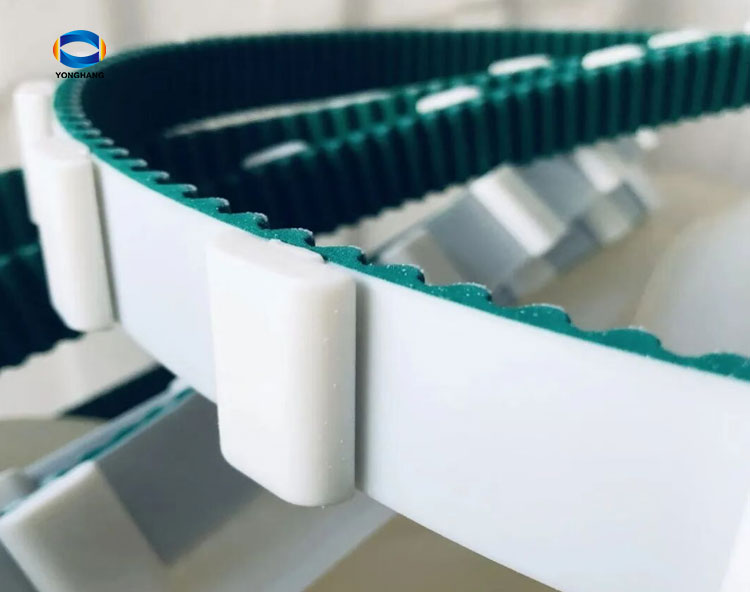
- Direct conveying of fragile, scratch-prone materials including glass, lenses, PCBs, acrylic and painted panels.
- Inclined conveying and multi-belt parallel operation requiring anti-slip and anti-deviation performance.
- Low-dust workshops for 3C electronics and photovoltaic equipment.
Typical Applications: 3C electronic vision inspection lines, photovoltaic module conveying equipment, PCB processing machinery, linear motion modules, wood panel conveying systems.
5. Final Selection Summary
- Pure power transmission, high cleanliness requirement, low-resistance smooth operation → Select Smooth Back
- Workpiece scratch prevention, anti-deviation stability, optical equipment, back-pressure contact operation → Select Matte Back
There is no superior type among industrial belts, only proper matching for specific conditions. Small surface details directly affect overall operational performance. Never overlook belt back finish when selecting parameters.
This article has been compiled by Guangzhou Yonghang Transmission Belt Co., Ltd. We hope it will help users across all industries gain a deeper understanding of our products, enabling them to select high-quality products that best meet their business needs and resolve any difficulties encountered during the selection process. Should you have any queries, please do not hesitate to contact our team for a free consultation.