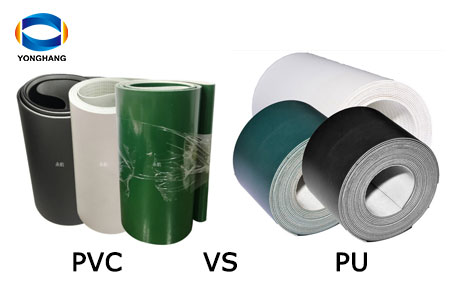
How to choose correctly: rubber timing belts or PU timing belts? This article will help you make sense of it all – engineering technicians, please read on!
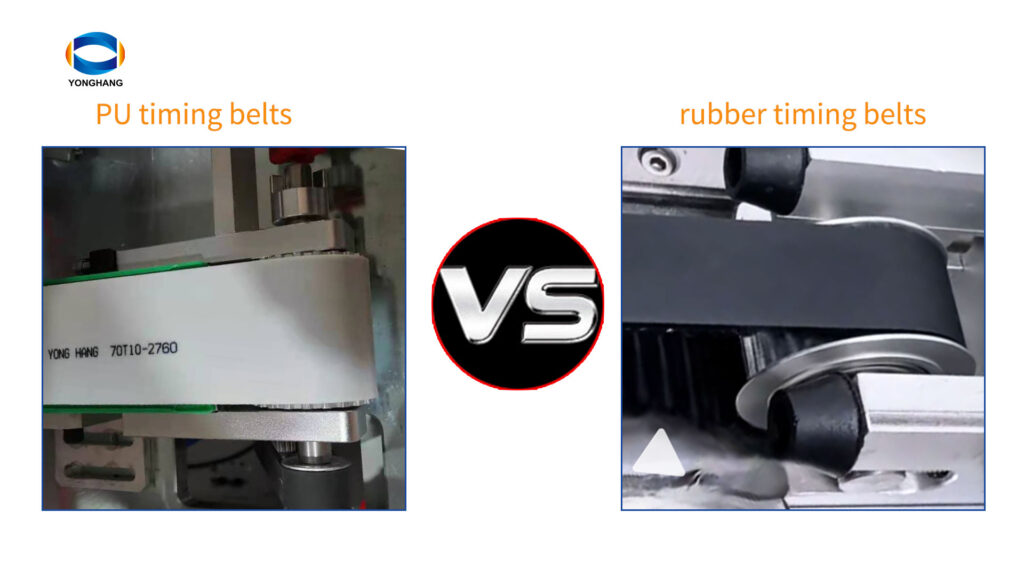
In principle, a decision can be made simply by comparing the following eight key parameters, including:
– Material properties
– Transmission accuracy
– Wear resistance
– Chemical resistance
– Operating temperature
– Load conditions
– Cost and manufacturing process
– Application scenarios
I. Material Properties
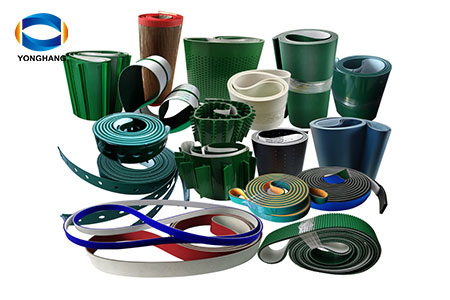
1) Rubber timing belts feature a base material primarily composed of neoprene, reinforced with glass fibre. A Shore A hardness of 55–60 is commonly used, offering good elasticity and high toughness
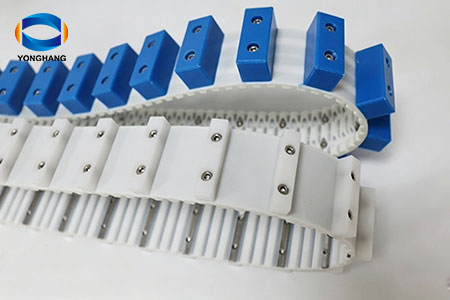
2) PU timing belts are made of thermoplastic polyurethane (TPU), with embedded steel wire or Kevlar. A Shore A hardness of 92 is standard, offering high hardness and sufficient rigidity.
II. Transmission Precision
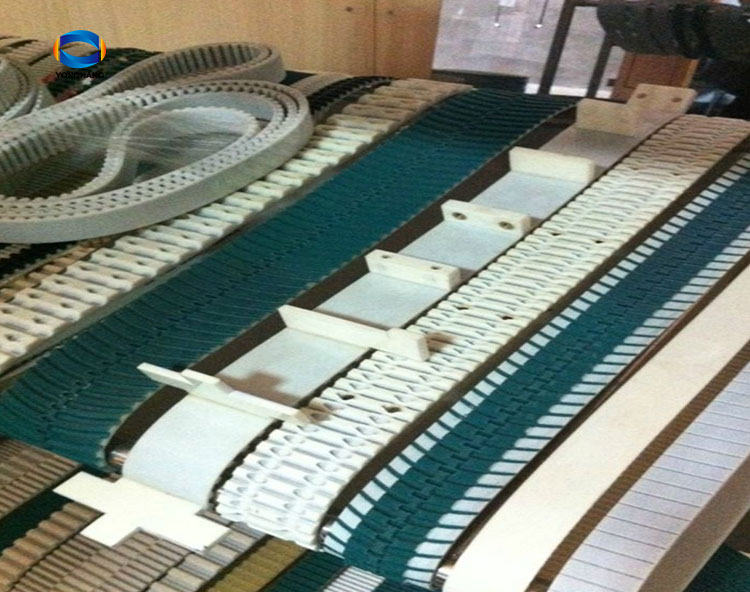
1) PU timing belts offer excellent dimensional stability and minimal pitch error. They are resistant to elongation in high-speed and positioning applications, making them suitable for precision transmission.
2) Rubber timing belts offer good elasticity and strong shock absorption, with superior impact resistance and flexural fatigue resistance; however, they are prone to creep under long-term loads and have poorer precision retention than PU belts.
III. Wear Resistance
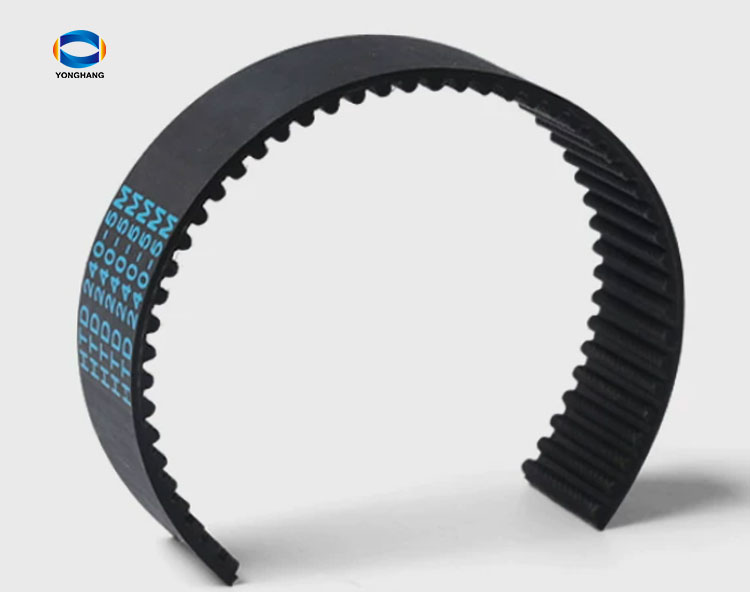
1) PU belts have high density and do not shed particles during friction; they offer superior wear and shear resistance, with a longer service life under high-frequency reciprocating motion
2) Rubber is prone to shedding particles through friction and to ageing and cracking; it is not suitable for cleanrooms.
IV. Chemical Resistance
1) PU is resistant to oil and most acidic and alkaline solvents, but is prone to deformation when exposed to water or heat.
2) Rubber is more stable against hydrolysis and damp heat; it has superior water resistance and outdoor stability, but its chemical resistance is inferior to that of PU.
V. Operating Temperature
1) PU: -20°C to +80°C
2) Rubber: -30°C to +120°C
VI. Load and Operating Conditions
1) Rubber: Good flexibility and impact resistance; suitable for heavy-duty impact loads and high-power transmission
2) PU: High rigidity and tensile strength; suitable for light to medium loads, high speeds and high-precision positioning, but prone to fatigue under sustained heavy loads
VII. Cost and Manufacturing Process
1) Rubber: Raw materials and production processes are highly mature, resulting in lower costs
2) PU: The manufacturing process is straightforward, allowing for non-standard customisation and further processing; however, material costs are higher, making it slightly less cost-effective than rubber
VIII. Typical Applications
1) Rubber timing belts: Automotive engines, mining machinery, fans and pumps, and damp outdoor equipment, where low cost and impact resistance are prioritised
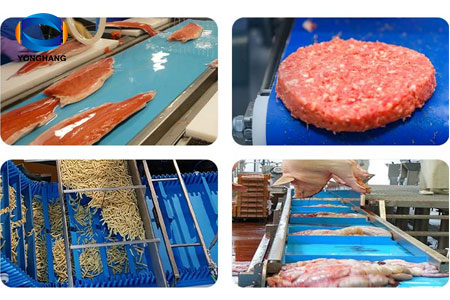
2) PU timing belts: Electronic assembly, food and pharmaceutical industries, printing and packaging, precision conveying – where oil resistance, dust-free operation, high precision and a longer service life are required
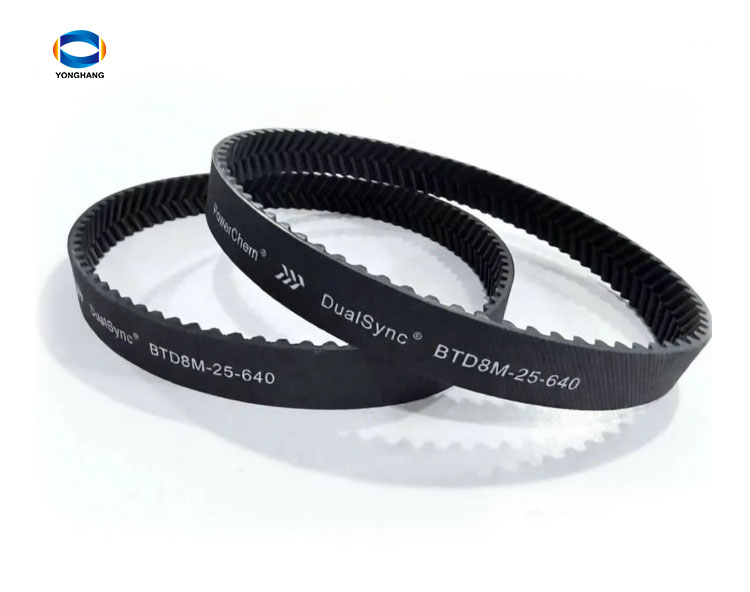
Let’s summarise
– For heavy loads, impact resistance, damp outdoor environments and cost control, choose rubber timing belts
– For precision positioning, cleanrooms, wear resistance, oil resistance, chemical resistance and frequent start-stop cycles, choose PU timing belts
Have you learnt the key points?
This article provides a comprehensive overview of the fundamentals of ‘timing belts’, compiled by Guangzhou Yonghang Transmission Belt Co., Ltd. We hope it will assist users across various industries in gaining a deeper understanding of the product, enabling them to select high-quality products that best meet their business needs and resolve any difficulties encountered during the selection process. Should you have any further queries, please feel free to contact our team for a free consultation.