
timing belt coating Factory wholesale
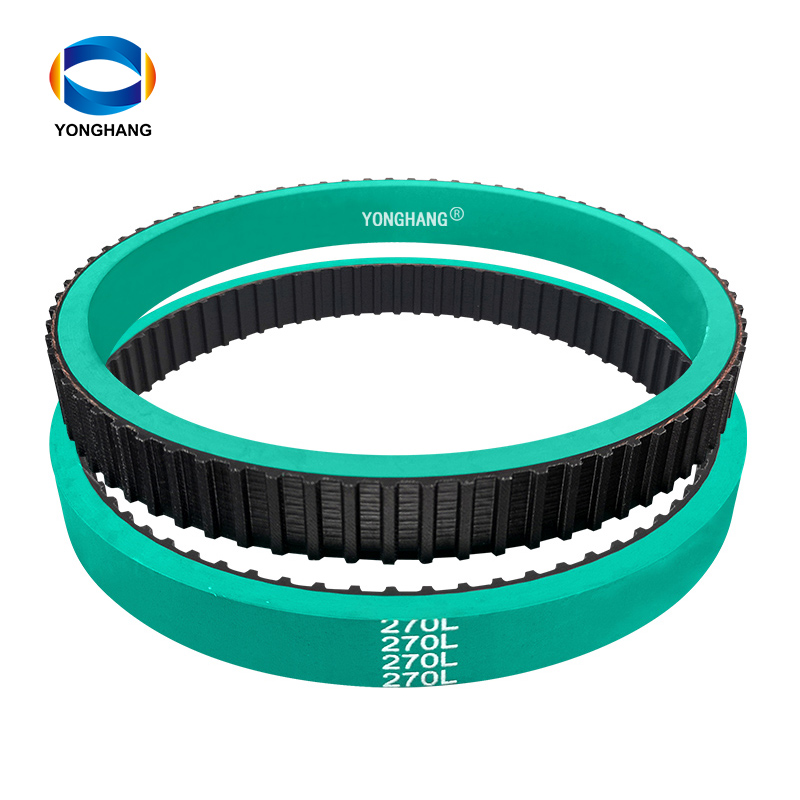
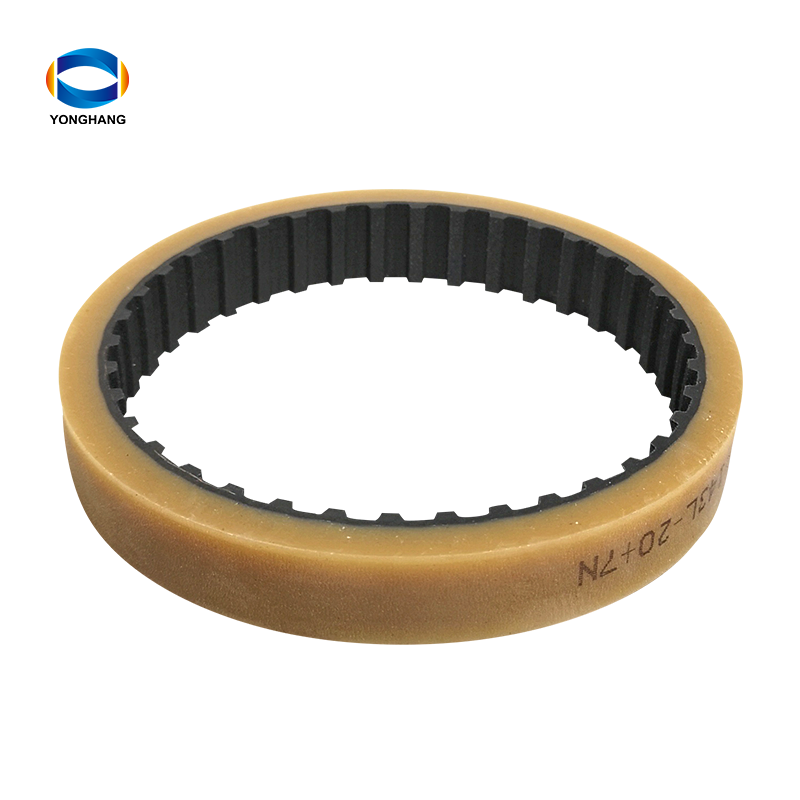
Yonghang can manufacture all types of timing belts coating, including surface coating different materials, varying hardness levels, and pattern designs,different thickness coatings etc.We offer services such as tooth removal, perforation, attachment installation, and guard plate fabrication. We can also customize belt coating according to your requirements.Yonghang, a leading producer of timing belt coating, is dedicated to supply high precision and performance coated synchronous belt for packing industry.
The coating Yonghang supplies natural rubber like Linatex and APL, and synthetic rubber such as EPDM, CR rubbers,elastomer and sponge rubber.food-grade raw material silicone coating and pu coating, high-temperature resistant material felt coating, high friction coefficient pattern coating,etc.
What are differences between different coatings?
| Material | Working temperature | Chemical resistence | Physical properties | Applications |
| Rubber | -20~+110℃ | Resitant against oil,water | good resilience,hard-wearing | Transport or haul-off belts subject to high friction, wood, paper, textil and packing industry |
| PU | -20~+80℃ | Resitant against simple oil and fats, petrol,ozone | Outstanding abrasion resistance, high load-bearing capacity, and tear strength | General transport tasks, transport of glass, sheet metal, transport mechanically aggressive parts |
| Silicone | -20~+230℃ | Food grade, non-stick, resistant to oil and water, resistant to common acids and alkalis | Excellent flexibility, durability and comfortable touch | Foodstuff industry |
| Felt | -20~+600℃ | High temperature resistant | Light in weight, soft in texture | Aluminum materials / glass / metal sheet conveying, high-temperature product mechanical conveying components |
| PVC Pattern | -20~+80℃ | Resistant against simple oil and fats, acids,lyes | Provide anti-slip and decorative textures | Well suitable for inclined conveying,Used in the ceramic, glass, elevator, wood and paper industries. |
| Sponge | -20℃ to+50℃ | Depending on the different materials, they are generally not resistant to high temperatures. | Good water absorption property,Highly resilient,Light weight | Well suitable for Light and fragile items conveying |
| Foam | -20℃ to+50℃ | Depending on the different materials, they are generally not resistant to high temperatures. | The hardness range is wide, and the water absorption rate varies depending on the different materials. | Well suitable for Light and fragile items conveying |
.jpg)
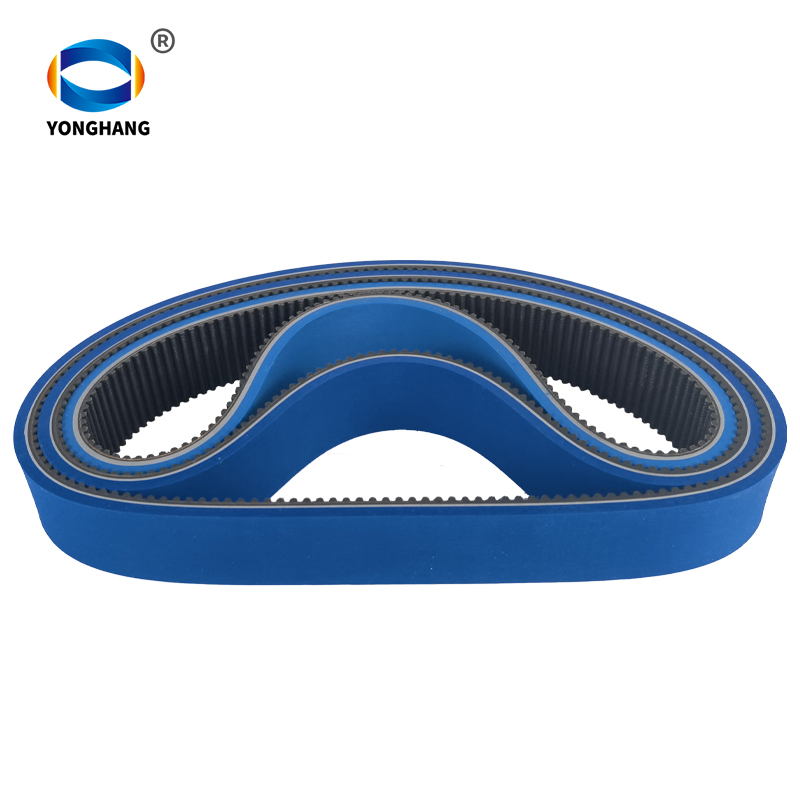
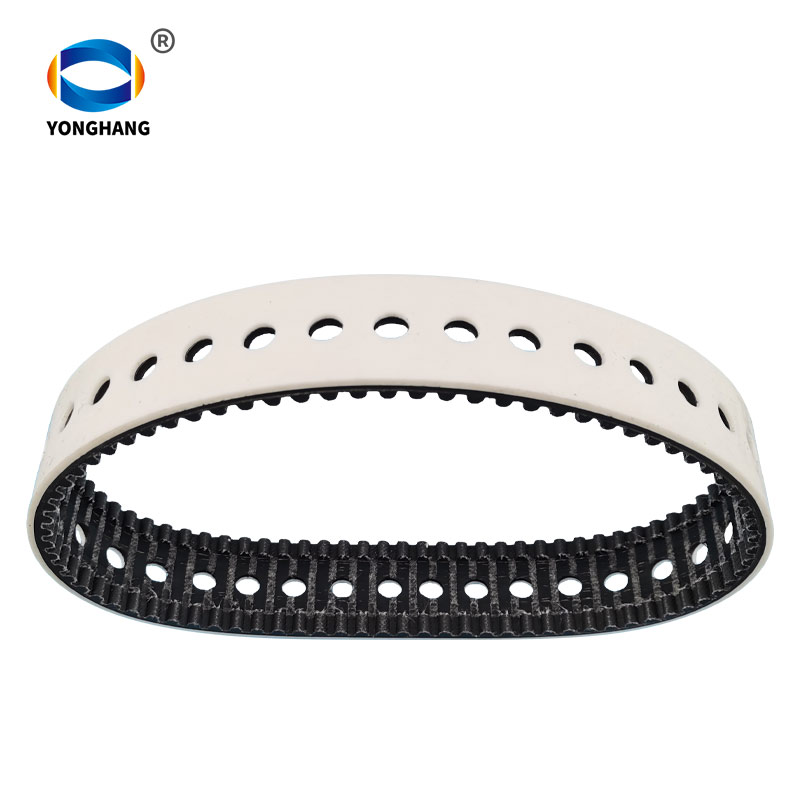
timing belt Sponge coating
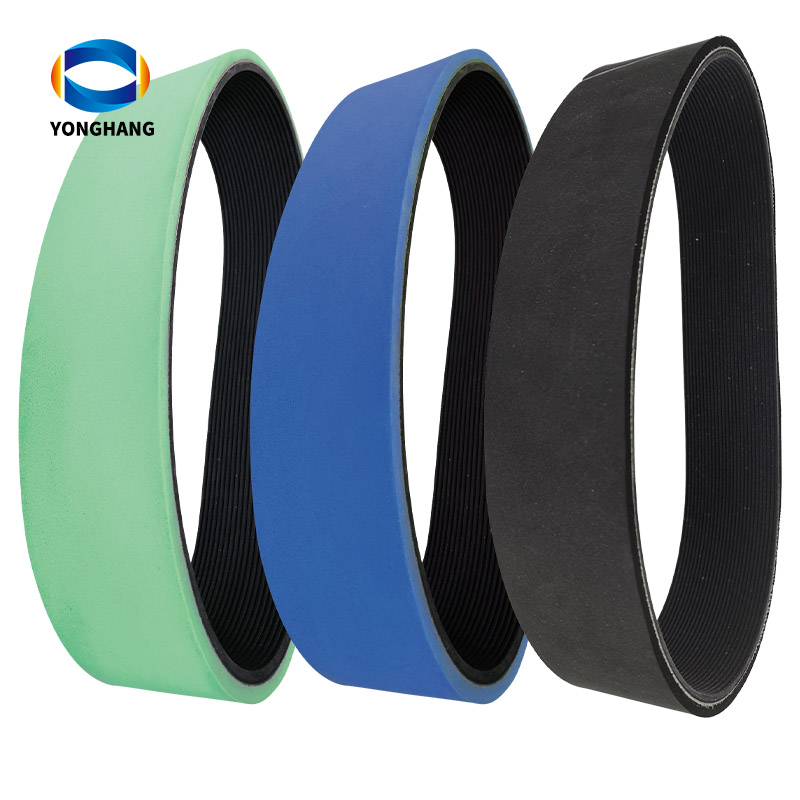 Multi-ribbed belt with foam
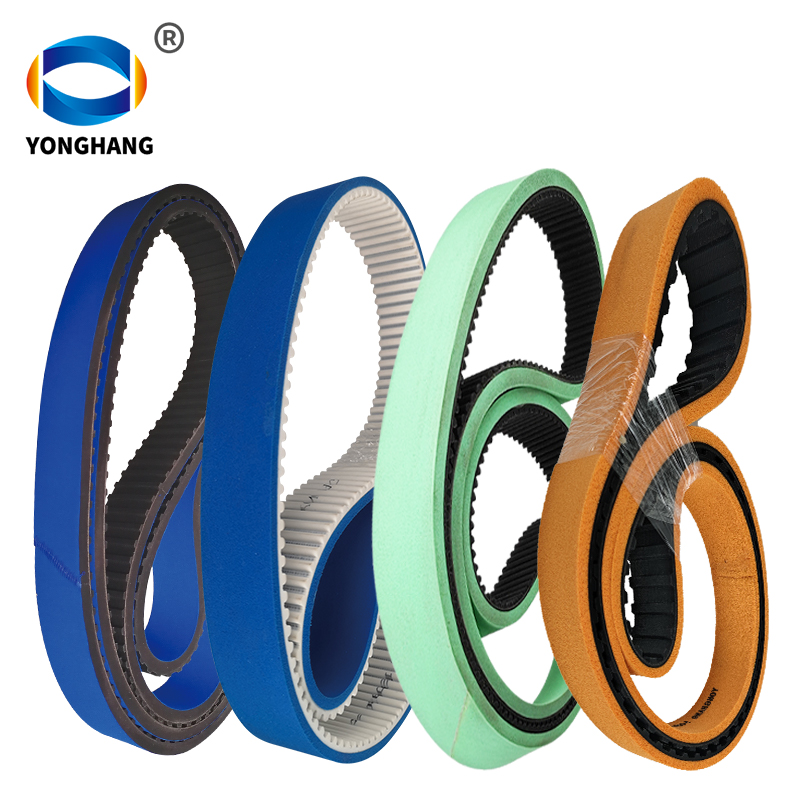 timing belt with foam
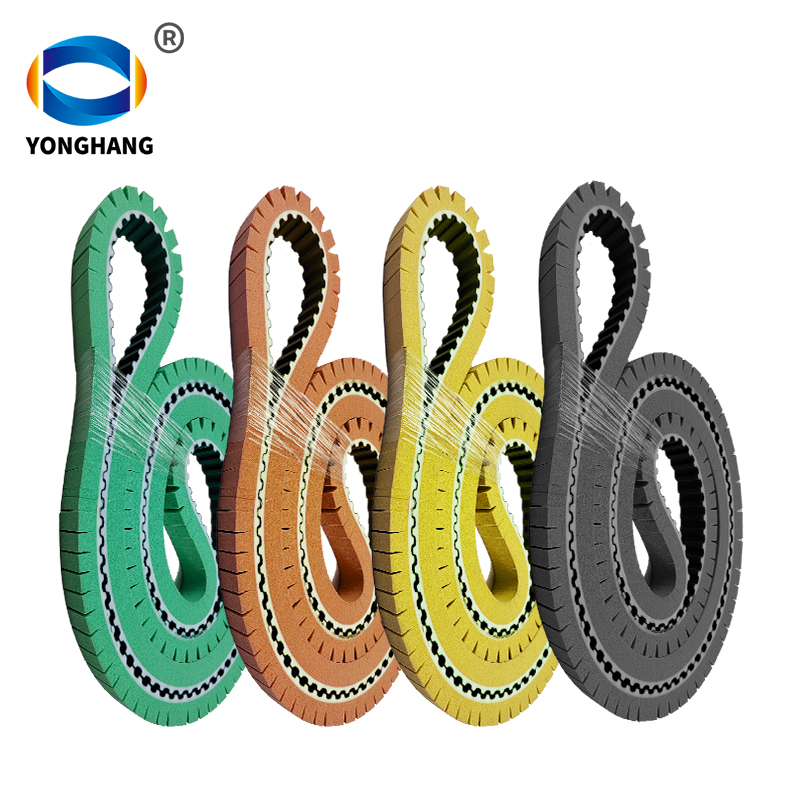 timing belt with foam grooves
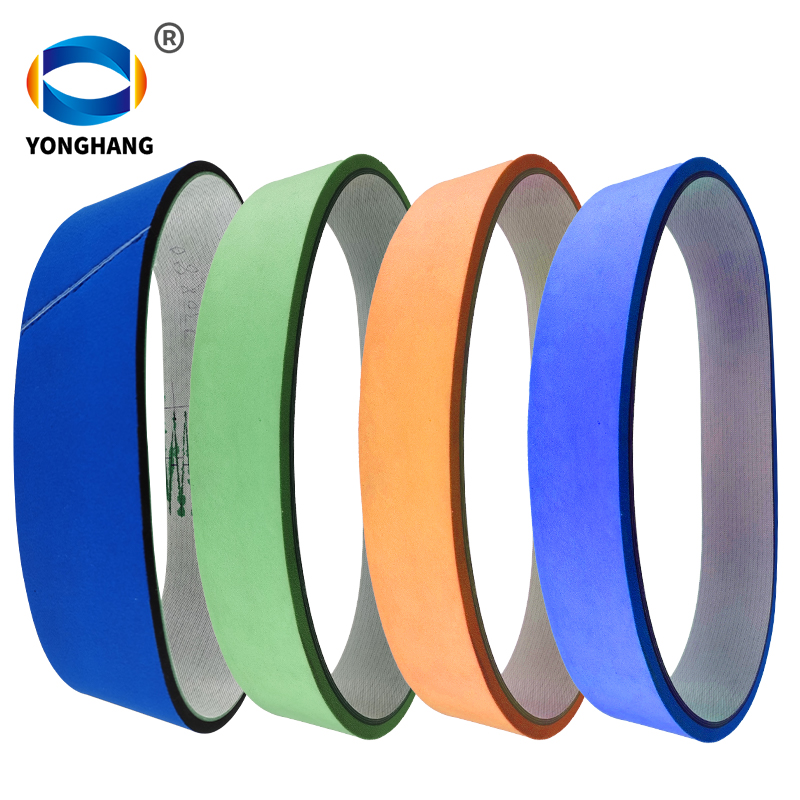 PVC with foam
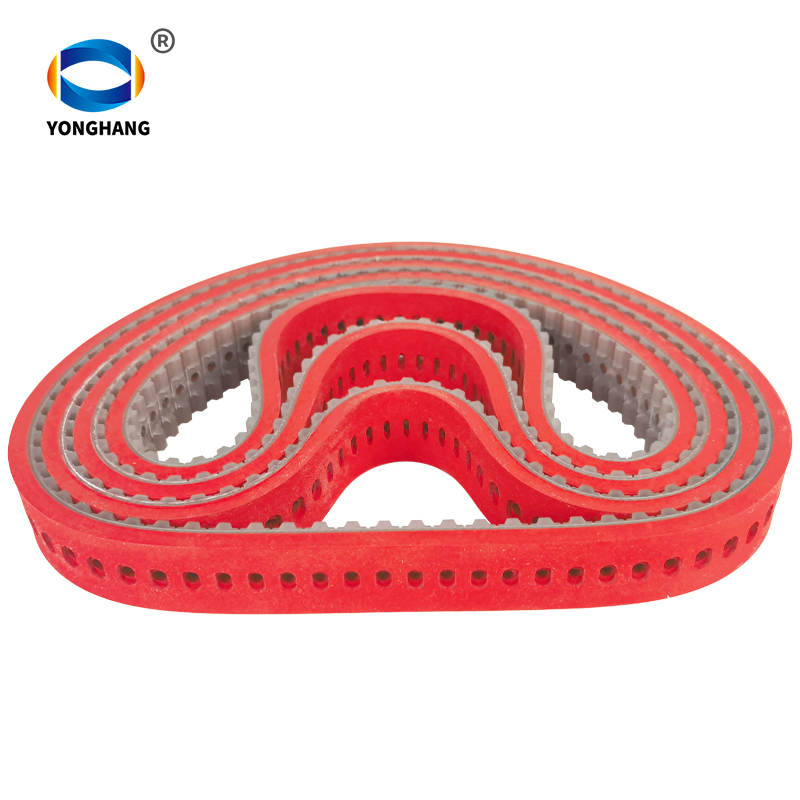
PU coating
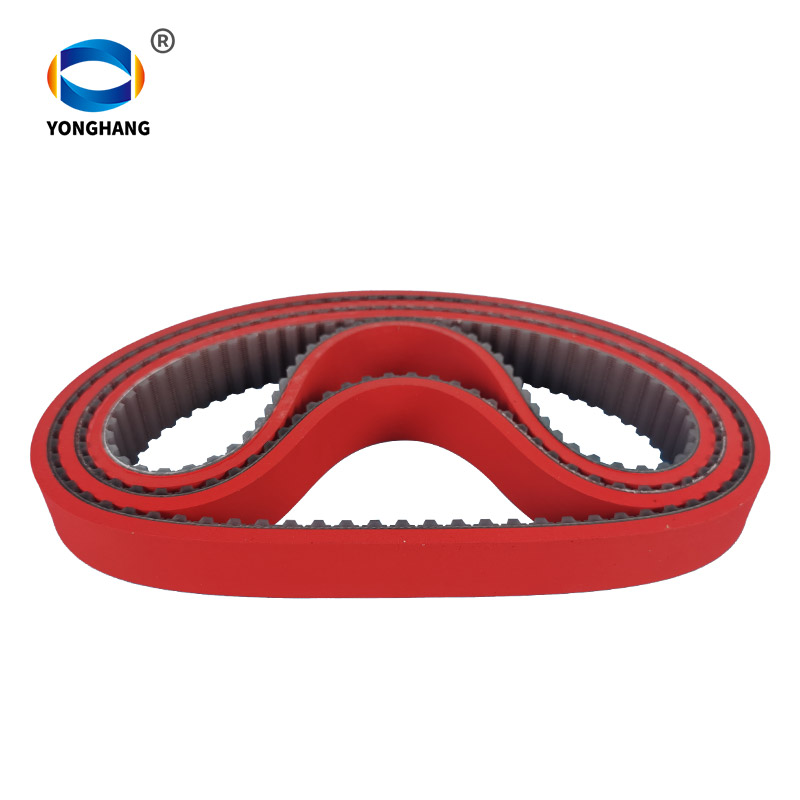
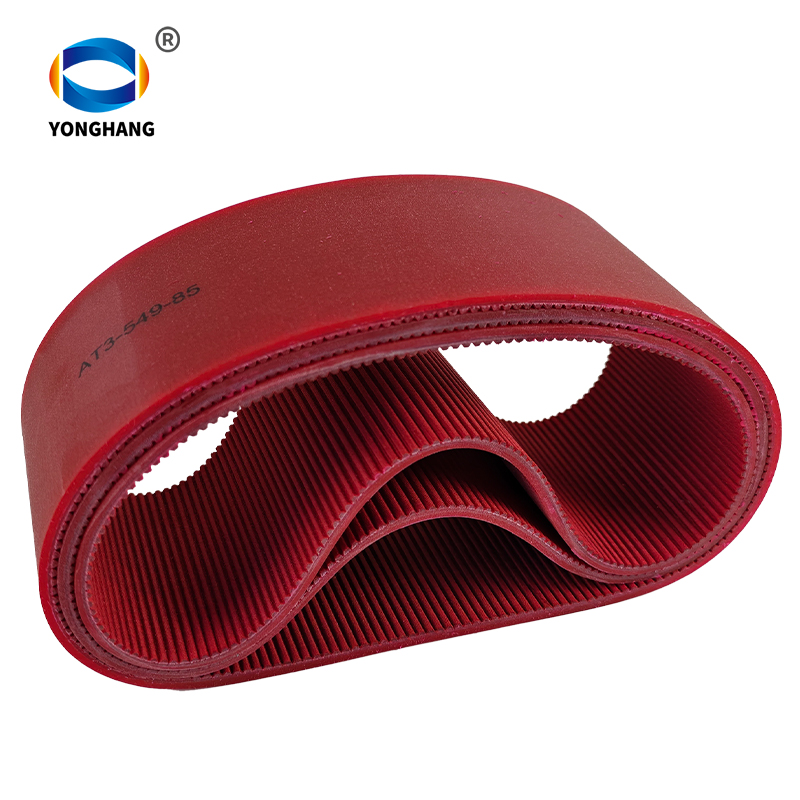 AT3 pu timing belt with red pu coated

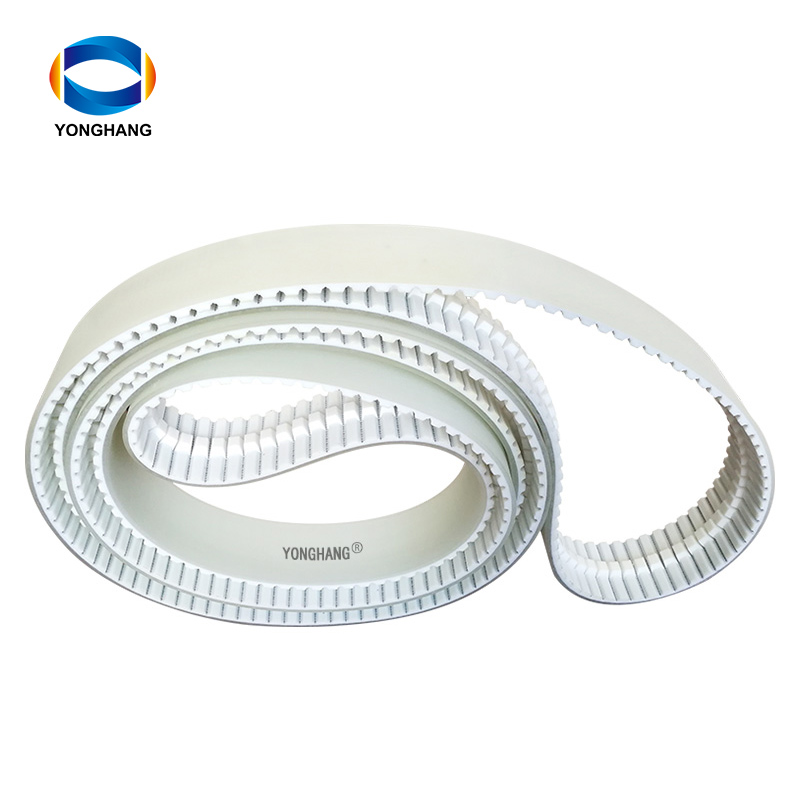
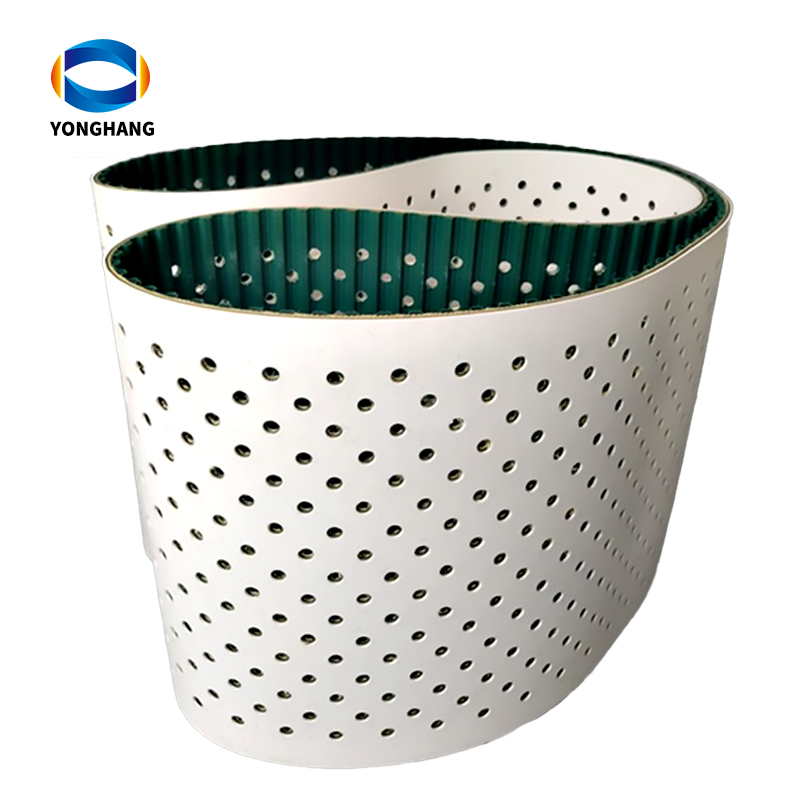
timing belt with Pattern coating
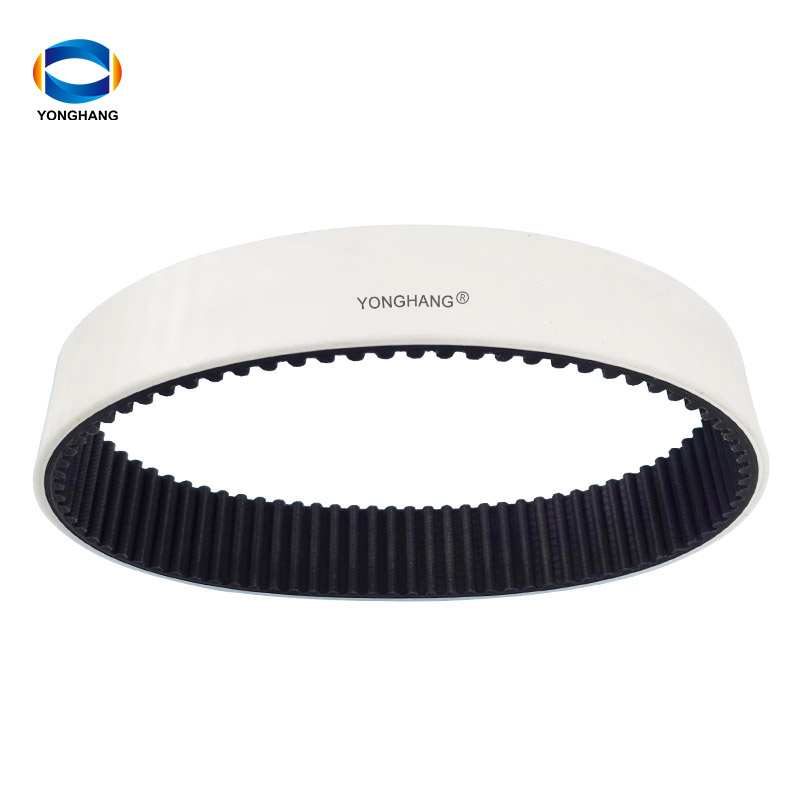
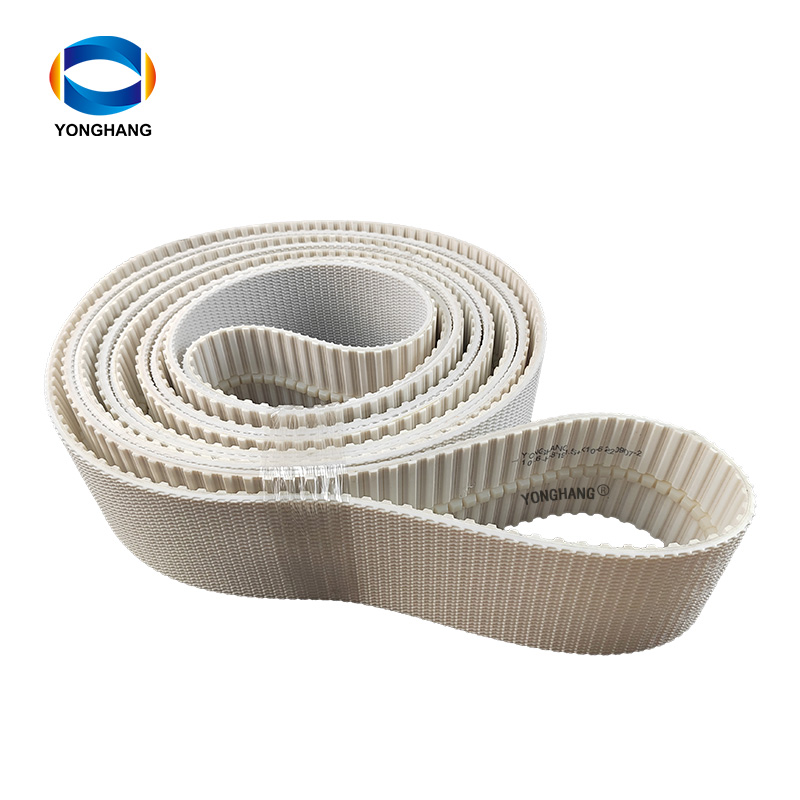 white pvc patterns coated Pu timing belt
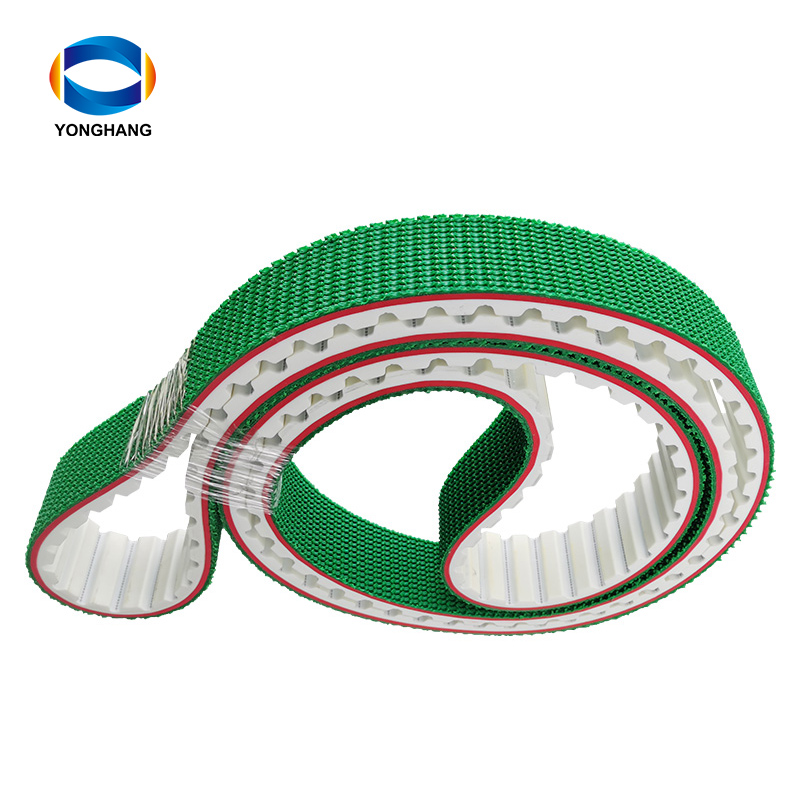
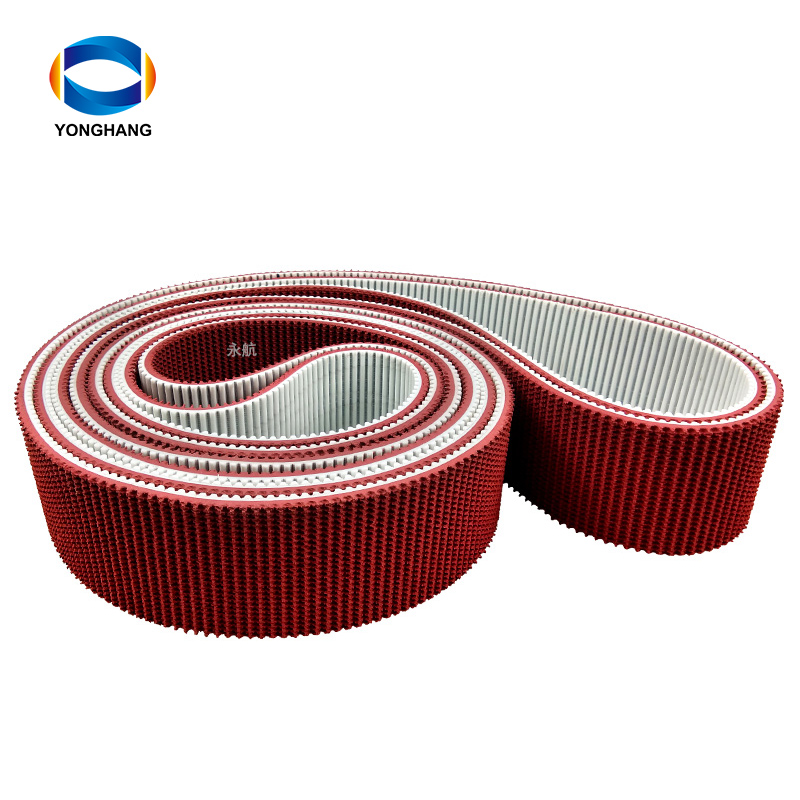
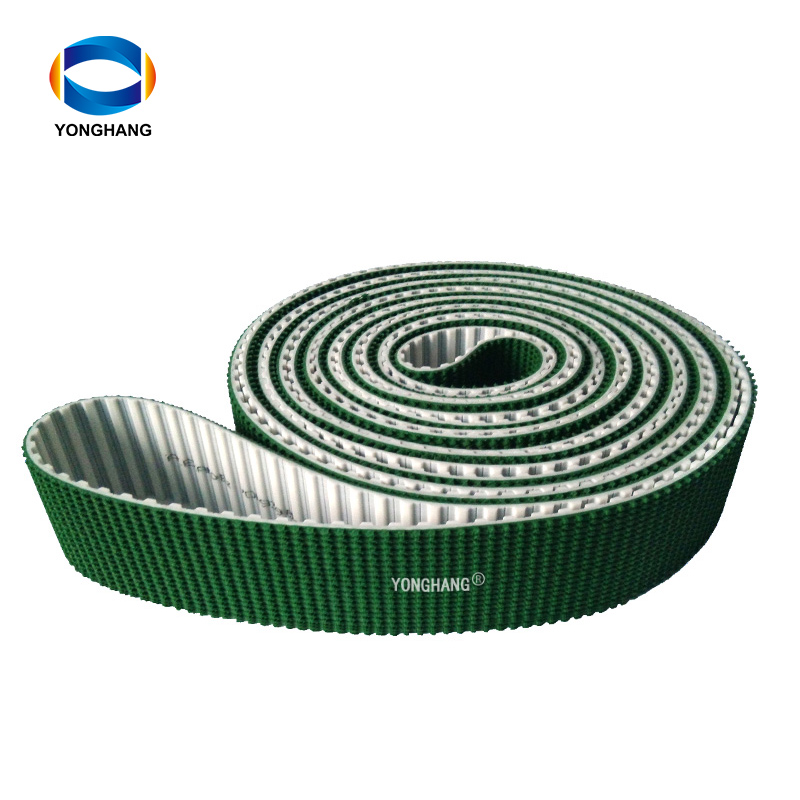
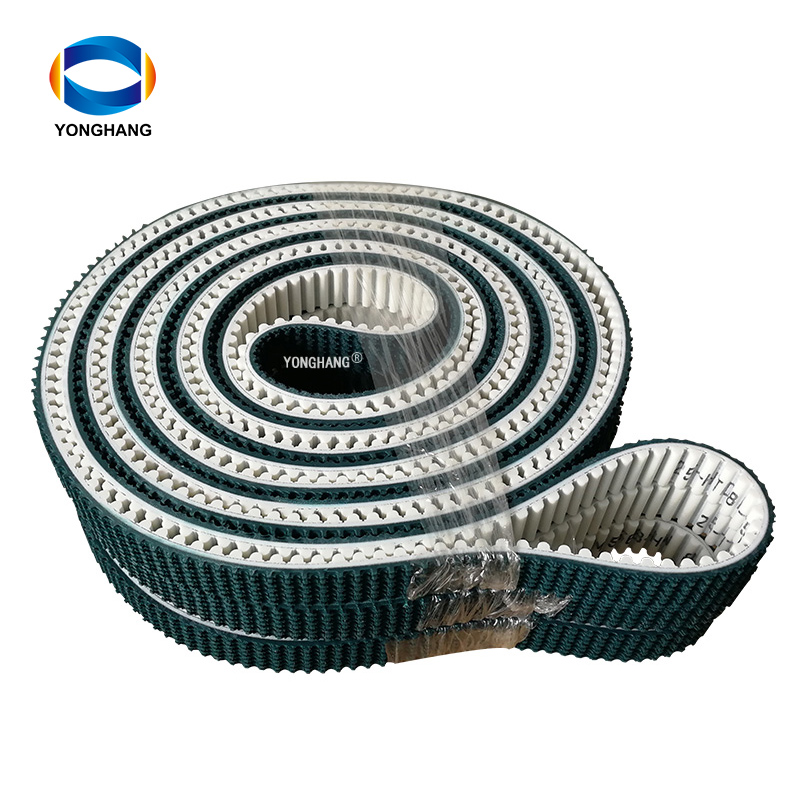
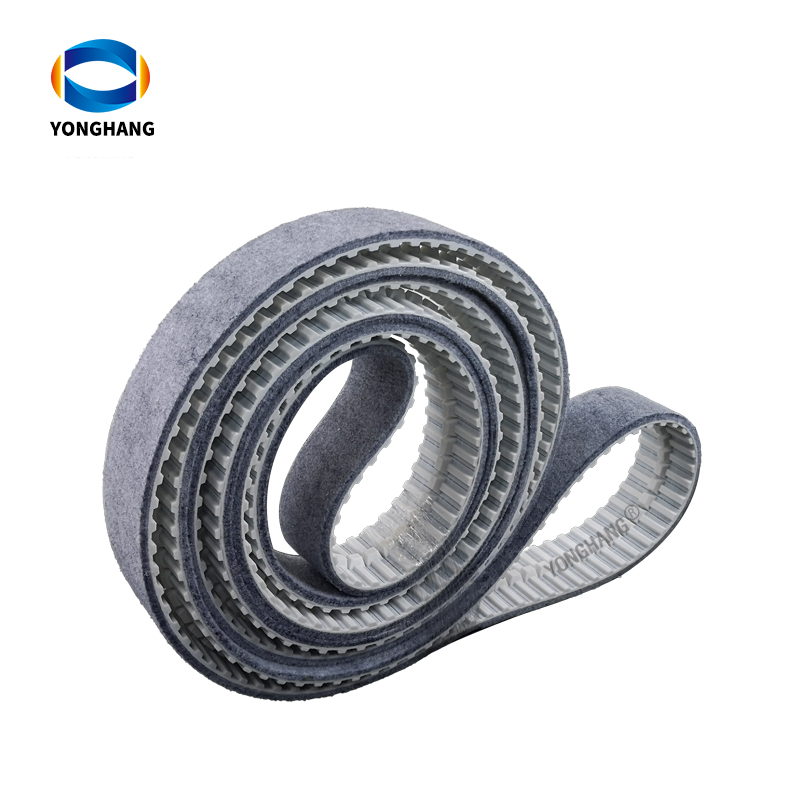
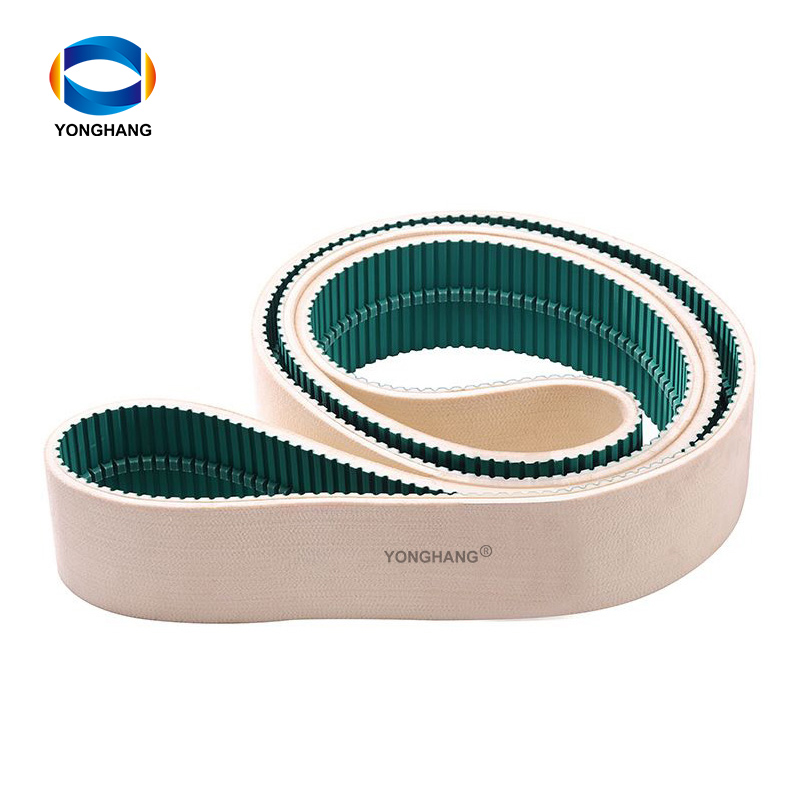
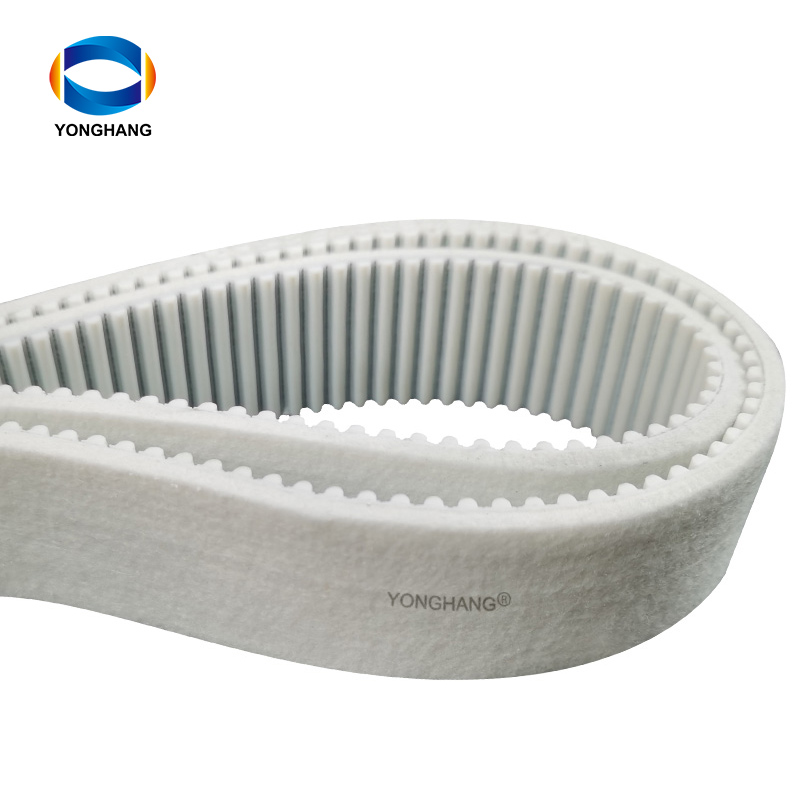
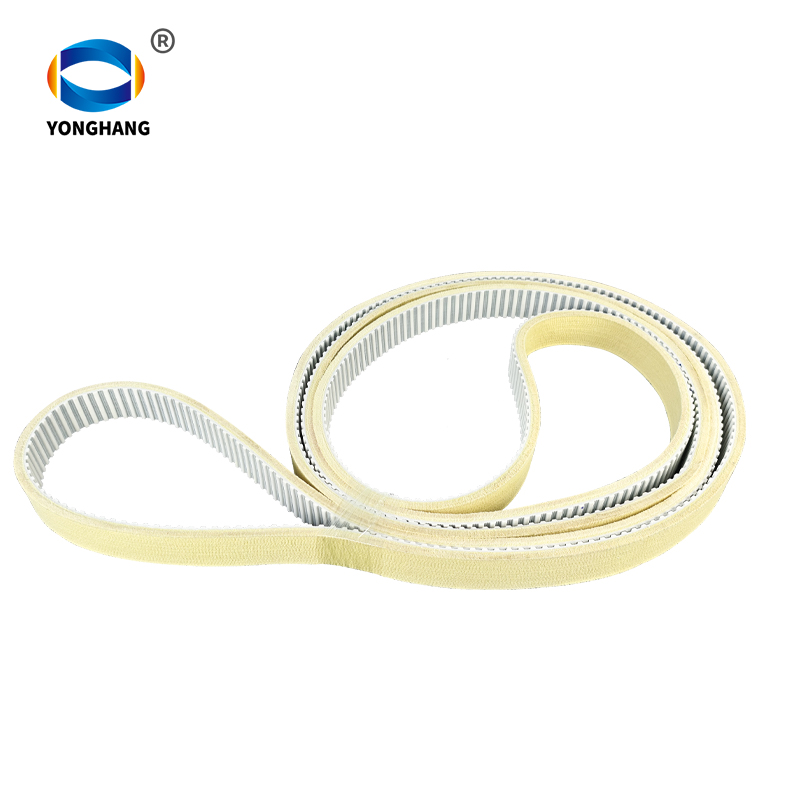
Applications of yonghang coated timing belts
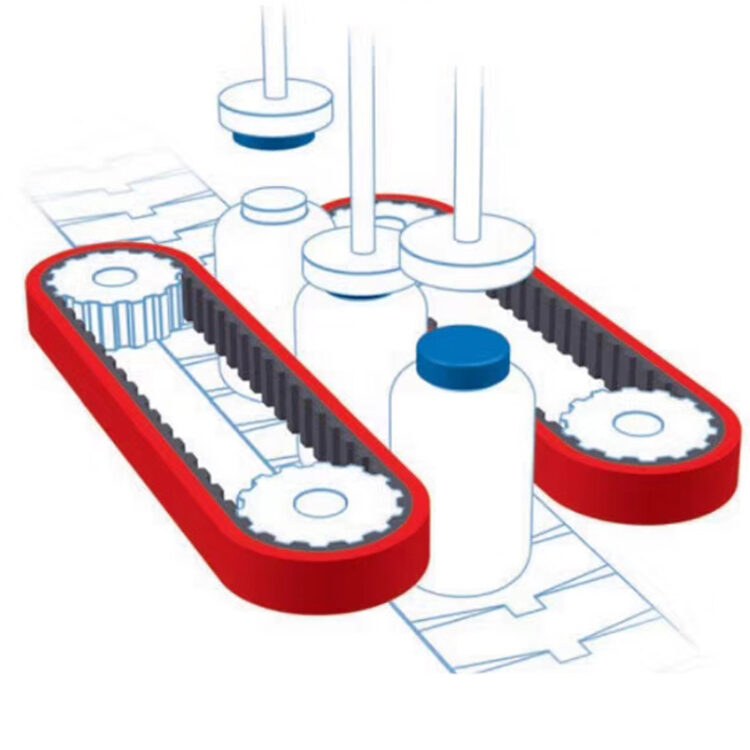
Yonghang transmission belts serve as comprehensive drive system solutions widely applied across diverse industries and scenarios.coatings can be applied to PU timing belts, and rubber timing belts, We can help you optimize your design and recommend the right solution, including custom-made synchronous belts and surfaces plus Silicone /holes/rubber/sponge/foam/Drilling and slotting, etc.
Applications
- Packaging Industry: Film wrapping, sealing, labeling, carton folding lines
- Food Processing: Chocolate coating, bakery conveyors, drying lines
- Textile Industry: Fabric feeding and traction belts
- Electronics & PCB Manufacturing: Precise transport under heat conditions
- Printing & Paper Industry: Folding, laminating, and feeding machines
- Glass & Plastic Industry: Sheet conveying and surface protection systems
Coating hardness
| Description | Material | Color | Hardness / density |
| CR | Rubber | Red | 50º Sh. A |
| CR | Rubber | Green | 45º Sh. A |
| APL | Rubber | Red | 45º Sh. A |
| CR | Rubber | White | 50º Sh. A |
| CR | Rubber | Black | 50º Sh. A |
| Silicone | Silicone | White /Blue/Grey | 40º Sh. A |
| PU | PU | Black/White/Black/Red/Yellow/Transparent | 85º Sh. A |
| PU | PU | Transparent | 55º Sh. A |
| Foam | Foam | Black/Green/Orange/Blue | RD300 |
| Felt | Felt | White/Grey/beige | n.a. |
| Super Grip PU | PU | Dark green | 40º Shore A |
| Super Grip PVC | PVC | Green | 45º Shore A |
| Super Grip Rubber | Rubber | Red | 45º Shore A |
| Super Grip PU | PU | Black/Grey/Green etc | 50º Shore A |
| longitudinal groove | PU | Black/Transparent | 60° Shore A |
| Anti-static | Fabric | Black/Green | n.a. |
| Brush | Pig bristles/ nylon | Black/Brown/White | n.a. |
| Fishbone | PVC | Green | 65º Shore A |
| Magnetic | Rubber | Black | n.a |
| Silicone Red | Silicone | Red | 35°ShoreA |
| CR | Rubber | Yellow | 45º Sh. A |
Related Products
-
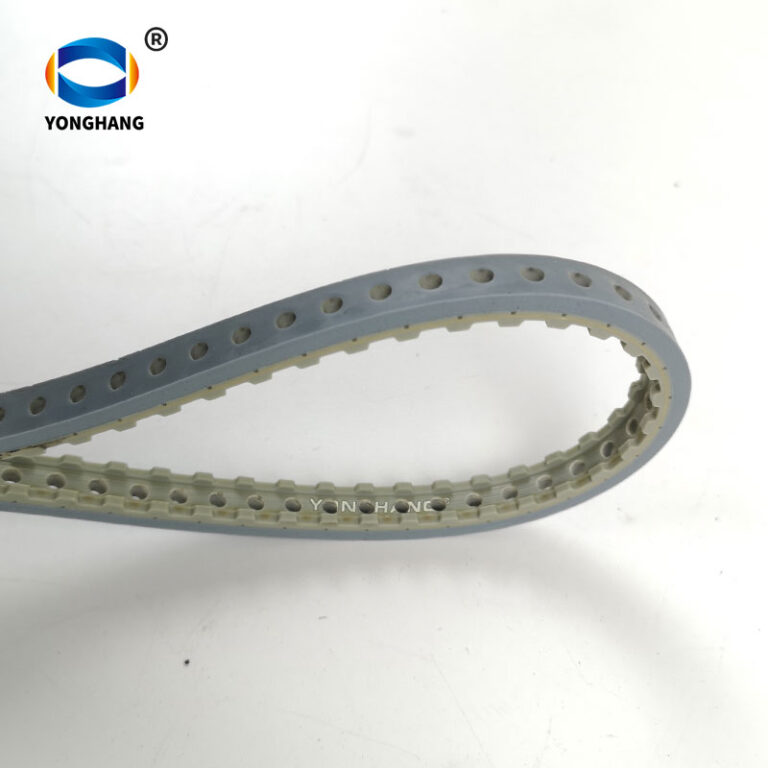
high quality T10.5-934.5-12.9 Gray silicone coating vffs timing belt
By • 05.06.2026high quality T10.5-934.5-12.9 Gray silicone coating vffs timing belt for Tobacco packaging machine,10.5mm pitch 934.5mm length,This is a special pitch designed specifically for tobacco packaging machines. It is a vacuum conveyor belt.The cable channel is positioned against the rough side of the silicone, not on the base band, ensuring a very tight seal. vffs timing… -
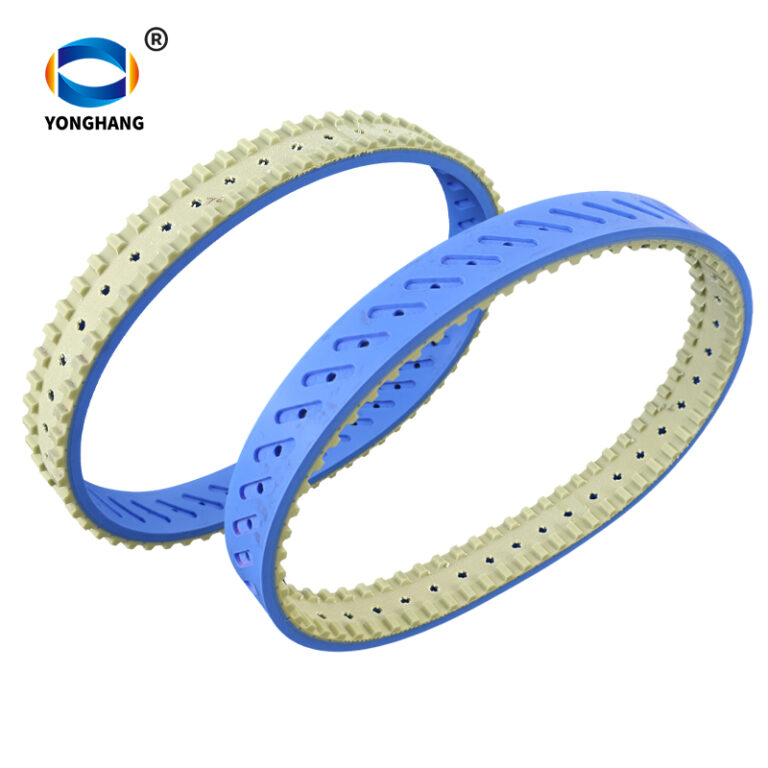
T10-920-30+4Blue silicone coated PU timing belt for vertical form fill seal machine
By • 05.06.2026T10-920-30+4Blue silicone coated PU timing belt for vertical form fill seal machine,Also known as a VFFS timing belt, its distinctive feature is the absence of wire channels in the base belt; this design ensures a tighter seal when used in vacuum packaging machines. There are two types of perforations, with the holes oriented in opposite… -
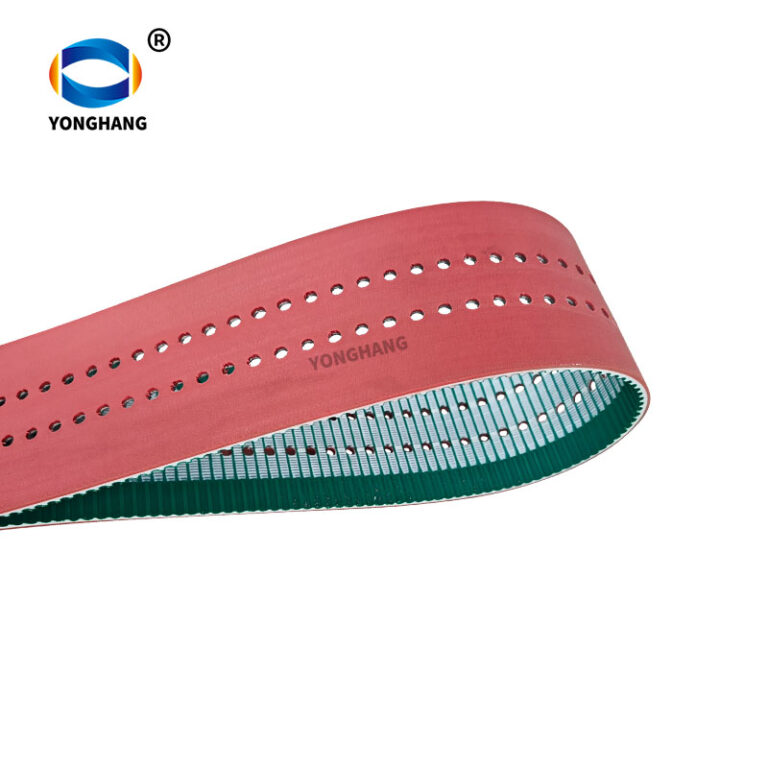
PAZ PU Timing Belt with Red Rubber Coating and Punched Holes for Photovoltaic Industry Transmission
By • 22.05.2026PU Timing Belt (PAZ) with Red Rubber Cover and CNC Vacuum Holes for Photovoltaic Industry Transmission&Solar Cell Conveying,Red Rubber Coating,We supply rubber with a hardness of 35/45/50 Shore A , thicknesses of 2, 3, 4, 5, 6, 8, 10 and 12 mm.Wear-resistant, shock-absorbent, high frictiond Red Linatex/CR-Rubber Cover. parameter Manufacturer Yonghang Material/Hardness Rubber approx.50 Shore… -
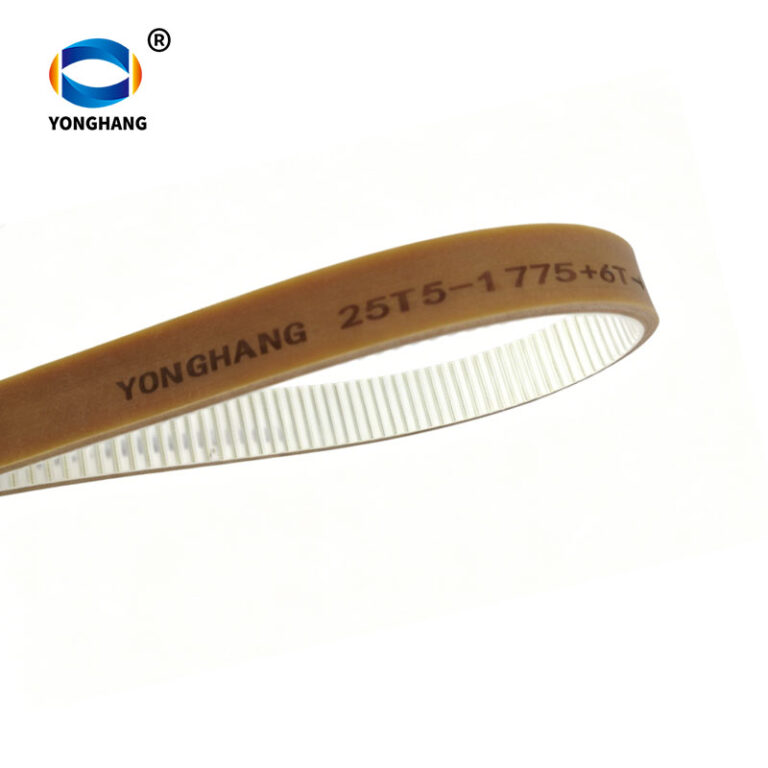
Brown rubber coating for PU timing belt
By • 22.05.2026Premium brown CR rubber coating offers an unmatched mechanical grip and elastic recovery. This makes it an industry staple for high-speed friction feeding, metal stamping lines, and delicate glass or paper processing. parameter Material/Hardness CR Rubber approx.50 Shore A Colour Brown Working Temperature -20℃ to+80℃ Chemical Resistence Resitant against oil,water,hard-wearing Anti-static no FDA no Applications Transport… -
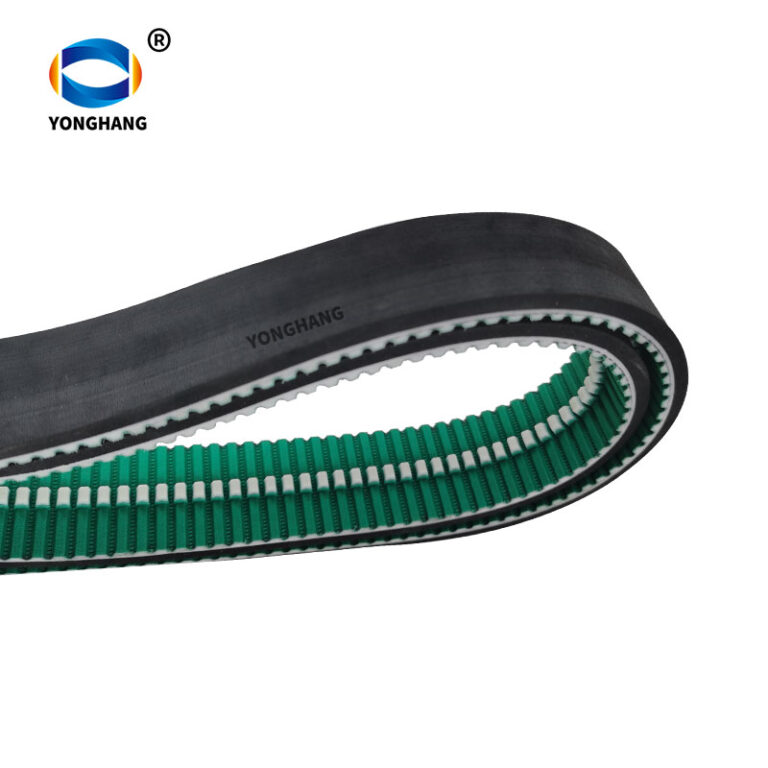
viton coating for PU timing belt
By • 22.05.2026viton coating(chemically known as FKM or Fluoroelastomer) is a rubber coating that can withstand high temperatures.represents the highest echelon of surface protection against extreme heat and aggressive chemical environments. Product information Sylomer brown Coating material Fluorocarbon rubber Colour black Hardness 75° Shore A Thickness 2/3mm Minimum pulley diameter 20x coating thickness Maximum operating temp. ℃… -
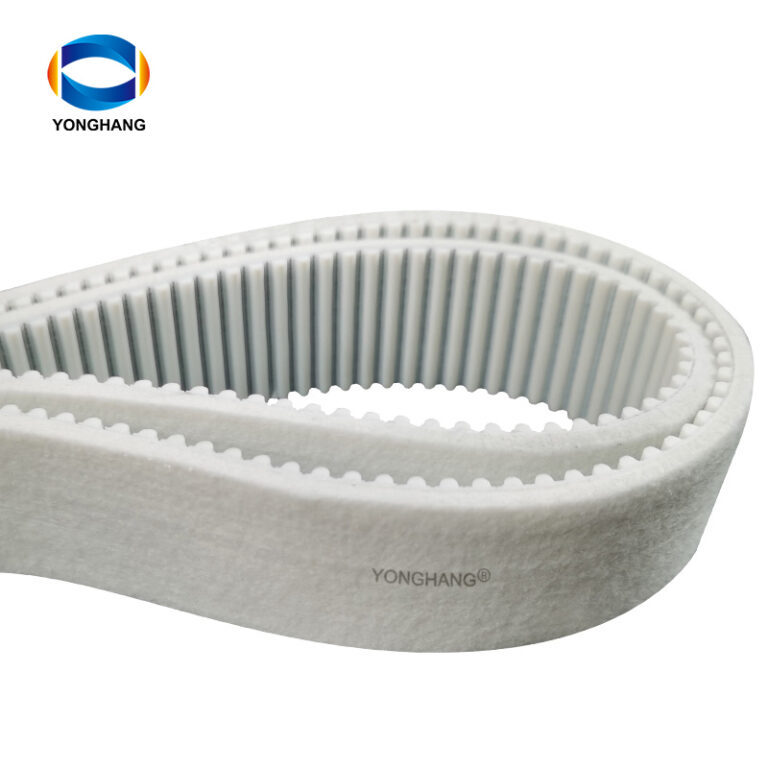
180℃felt coating timing belt
By • 15.05.2026For high temperature applications that don’t require the extreme heat resistance of POB aramid (Kevlar), the 180℃ felt coating timing belt is the most cost-effective and versatile choice. These belts are widely used in the aluminum extrusion cooling process, laundry machinery, and battery manufacturing. Specifications Table Brand Yonghang Material 100% White Meta-aramid (Nomex) Colour White…