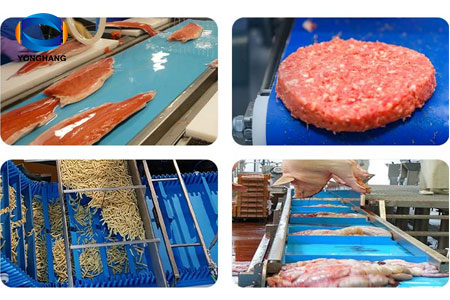
Introduction: Why Conveyor Belt Material Matters to Your Business
Every conveyor system starts with one critical decision: choosing the right belt material. The wrong material means product contamination, premature belt failure, or missed compliance requirements — problems that cost your customers money and damage your reputation as a supplier. The right material, on the other hand, translates into longer service life, regulatory compliance, and repeat orders for your business.
As a leading conveyor belt manufacturer based in China, Yonghang Transmission Belt Factory understands the material selection pressures distributors face. Whether your clients operate in mining, food processing, logistics, or heavy industry, you need a reliable manufacturing partner who can deliver the right belt, on time, at a competitive price — with full technical support.
The global conveyor belt market, valued at USD 5.68 billion in 2025, is projected to reach USD 7.21 billion by 2030, driven by expanding automation, e-commerce warehousing, and increasing demand for energy-efficient conveying solutions. As a vertically integrated factory, Yonghang is positioned to help you capture this growth — combining cost-competitive manufacturing with engineering support that empowers your sales efforts.
This comprehensive guide breaks down every major conveyor belt material available from Yonghang, along with expert insights to help you guide your customers toward the optimal choice.
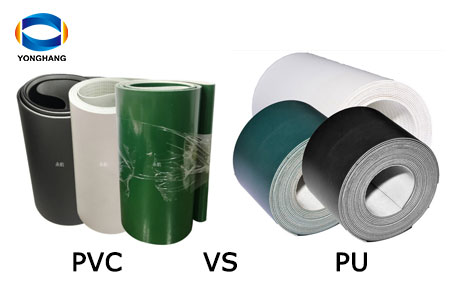
1. PVC conveyor belts (polyvinyl chloride)
— Soft PVC is flexible due to the addition of plasticisers and is renowned for its inherent flame-retardant properties.
Simple identification: It is difficult to ignite; the flame is yellow with a distinctive green edge, emits thick black smoke, self-extinguishes upon removal from the flame, and gives off a strong, pungent odour of hydrochloric acid (HCl). This is its key identifying characteristic.
Processing: It has poor thermal stability; processing temperatures must be strictly controlled (170–220°C) to prevent decomposition, with mould temperatures set at 30–60°C.
2. PU Conveyor Belts (Thermoplastic Polyurethane)
— PU offers high elasticity, abrasion resistance, oil resistance and flex resistance.
Quick identification: When burned, the flame is yellow with a blue base, and there is a slight pungent or characteristic isocyanate odour.
Processing: The processing temperature range is relatively wide, typically between 180–220°C. A mould temperature of 20–40°C is recommended; a lower mould temperature helps to reduce sticking to the mould. PU is highly hygroscopic and must be dried at 80–100°C for 2–3 hours; otherwise, it may lead to melt degradation, resulting in bubbles and surface defects in the finished product.
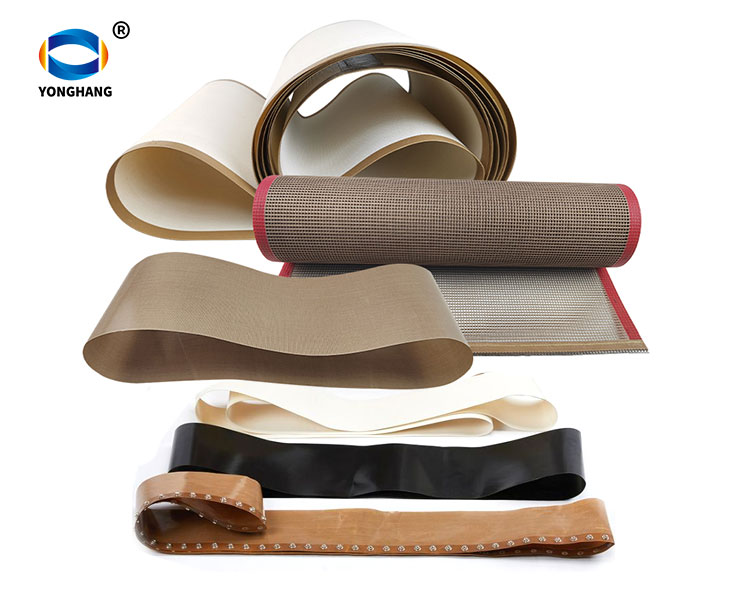
3. Teflon Conveyor Belts (Polytetrafluoroethylene, PTFE)
——PTFE is known as the ‘King of Plastics’, boasting the most exceptional chemical resistance, the lowest coefficient of friction, excellent non-stick properties and high-temperature resistance.
Simple identification: It does not burn; at extremely high temperatures, it merely softens, discolours and releases highly toxic and irritating fluoride gases.
Polytetrafluoroethylene (PTFE):
Upper limit for continuous long-term use: 260°C (500°F)
Can operate stably for long periods at this temperature with virtually no change in performance.
Short-term peak tolerance: 300–320°C (for brief periods, ranging from a few minutes to a few hours)
Strength gradually decreases above 260°C; prolonged exposure is not recommended.
Melting point: approx. 327°C
Approaching or exceeding 327°C causes significant softening and loss of load-bearing capacity.
Thermal decomposition: Significant decomposition begins at >350°C;
at >400°C, this accelerates and may release toxic fluoride fumes. Polytetrafluoroethylene (PTFE)
Processing methods: Due to its extremely high melt viscosity, it cannot be processed using conventional injection moulding; it is typically formed using cold-press sintering processes similar to powder metallurgy.
4. PE Conveyor Belts (Polyethylene)
— Polyethylene is one of the most common plastics, divided into low-density polyethylene (LDPE) and high-density polyethylene (HDPE). It is soft yet tough, offering excellent chemical resistance (particularly to acids and alkalis), electrical insulation and a low coefficient of friction, whilst being cost-effective. LDPE is softer and more transparent, whilst HDPE is harder and has higher strength.
Simple identification: When burned, the flame is yellow at the top and blue at the bottom; it melts and drips like a candle, emits the odour of burning paraffin, and produces no black smoke.
Processing parameters: Barrel temperature is typically 180–280°C, mould temperature 20–60°C, and injection pressure is moderate (50–100 MPa). As the raw material has low moisture absorption, drying is usually not required.
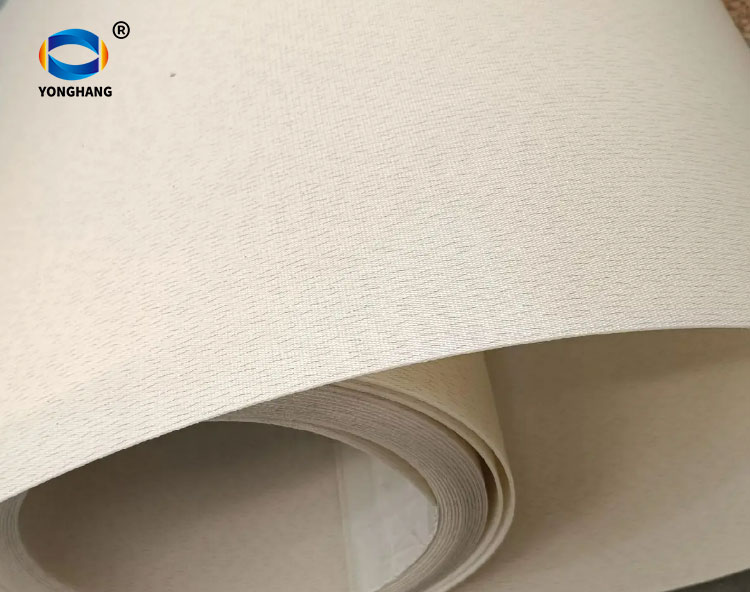
5. Polyester mesh belts (polyethylene terephthalate, PET)
— PET is renowned for its high strength and excellent barrier properties; when used in engineering applications (e.g. glass fibre reinforced), its heat resistance and rigidity are significantly enhanced.
Simple identification: Its combustion characteristics are similar to those of PBT; the flame is yellow with a blue edge, emits black smoke, and has a sweet, aromatic odour.
Processing: Injection-moulding grade PET requires high injection temperatures (260–300°C) and high mould temperatures (80–120°C), and the raw material must undergo prolonged, thorough drying at 130–150°C.
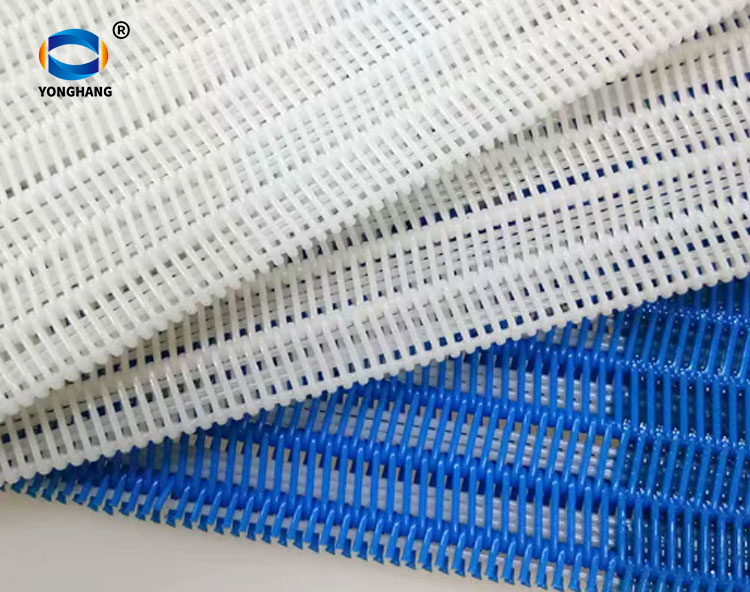
6. PP Modular Conveyor Belt (Polypropylene)
— Polypropylene is the lightest general-purpose plastic, offering excellent fatigue resistance, good heat resistance (up to over 100°C) and chemical resistance; its ‘flexible hinge’ properties are particularly notable.
Simple identification: When burned, the flame is yellow at the top and blue at the bottom, with a small amount of black smoke. The material melts and drips whilst continuing to burn, emitting an odour similar to petrol or diesel.
Processing parameters: The processing temperature range is relatively wide, at 200–300°C, with a mould temperature of 40–80°C and moderate injection pressure (70–120 MPa). Pre-drying is generally not required.
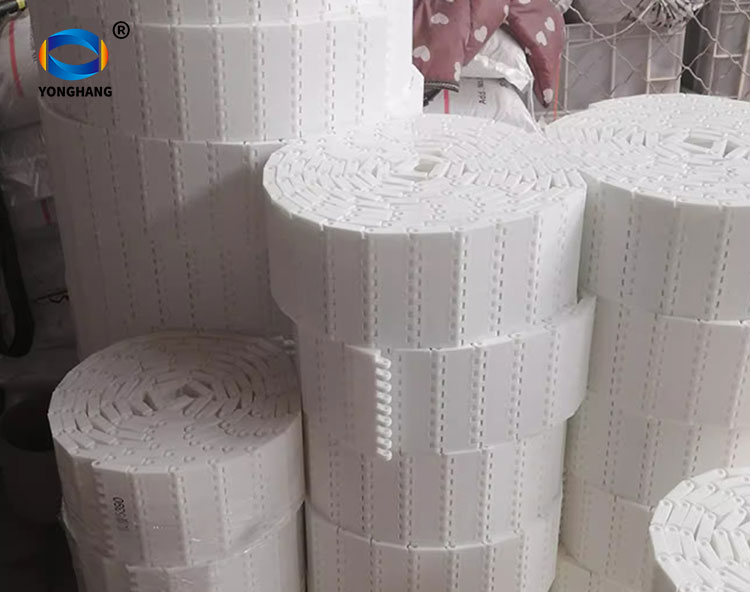
7.POM (Polyoxymethylene) Modular Conveyor Belt
— POM, commonly known as ‘Acetal’, offers extremely high rigidity and strength, excellent fatigue resistance and wear resistance, and dimensional stability; however, it has poor acid resistance.
Simple identification: Flammable; the flame is yellow at the top and blue at the bottom, produces no smoke, melts and drips, and emits a strong, pungent formaldehyde odour (fishy smell).
Processing: The processing temperature is relatively low (190–230°C), but high mould temperatures (80–110°C) are required to ensure adequate crystallisation.
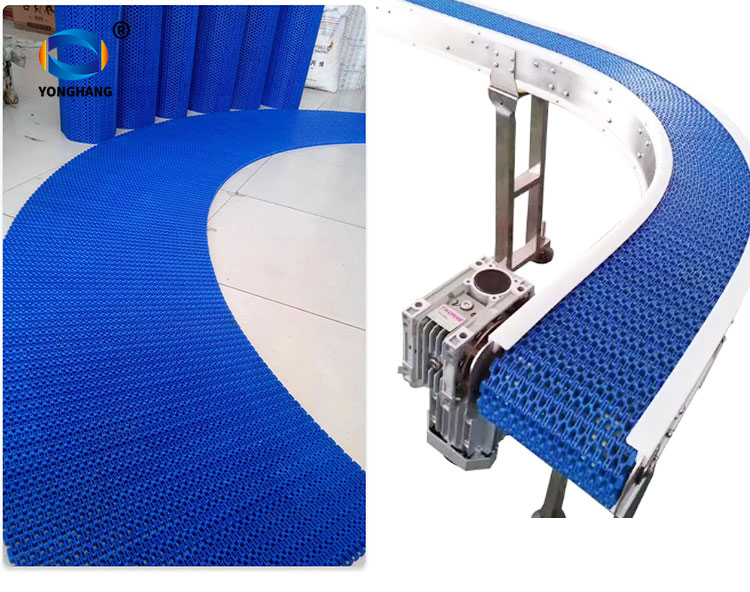
8. Silicone conveyor belts (silica gel, mSiO₂·nH₂O)
— Possess high adsorption capacity, high-temperature resistance (up to 200°C) and chemical stability
Simple identification: Good elasticity when stretched by hand; when heated to 280°C for 10 minutes, high-quality silicone shows no deformation or ageing; in low-temperature tests (e.g. -40°C), high-quality silicone should remain flexible;
When ignited, high-quality material emits white smoke and, upon burning, turns into a white powder that is colourless and odourless; inferior materials may turn yellow or black, or leave behind charred residue.
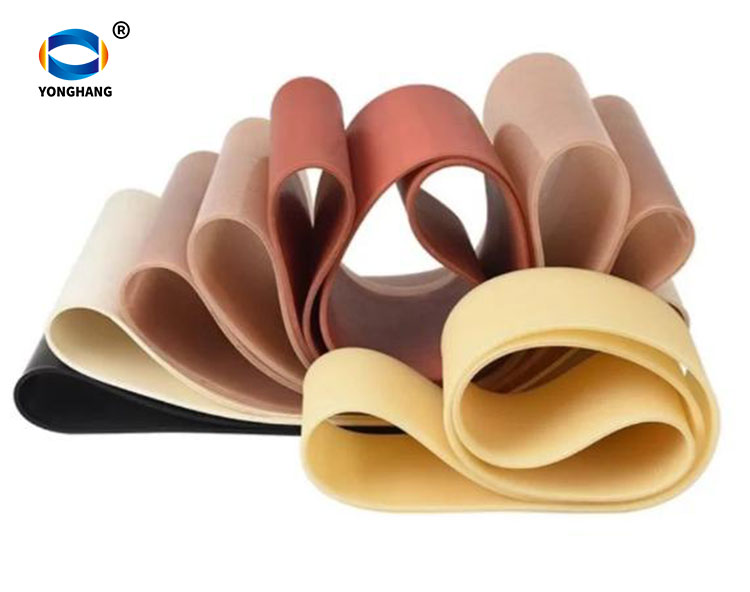
9. Nylon Conveyor Belts (Polyamide PA6/PA66)
— Nylon is renowned for its excellent wear resistance, high mechanical strength and self-lubricating properties, but its main drawback is high water absorption, which affects dimensional stability and electrical properties.
Simple identification: Burns slowly, with a yellow flame at the top and a blue flame at the bottom; melts and drips while bubbling; emits a very distinctive burnt feather or fingernail odour.
Processing: High processing temperatures (240–300°C) are required, and mould temperatures must also be high (60–100°C). The raw material must be thoroughly dried; otherwise, it is highly prone to the formation of bubbles and silver streaks.
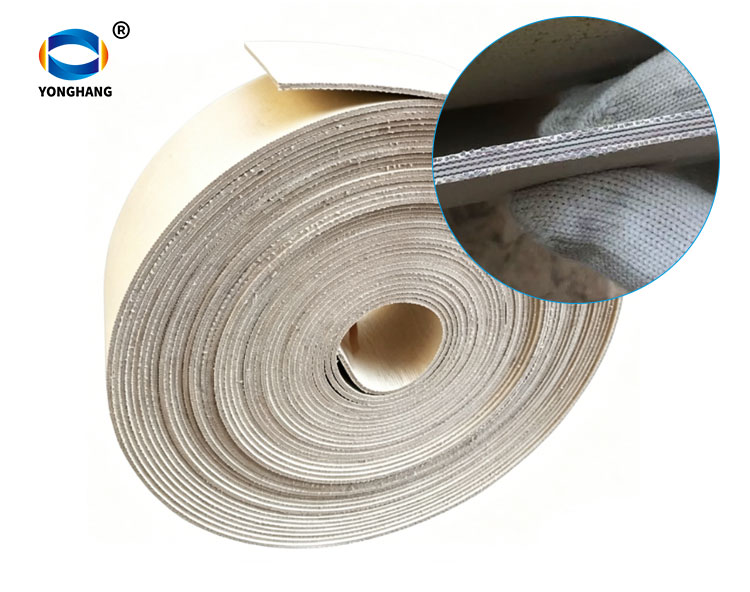
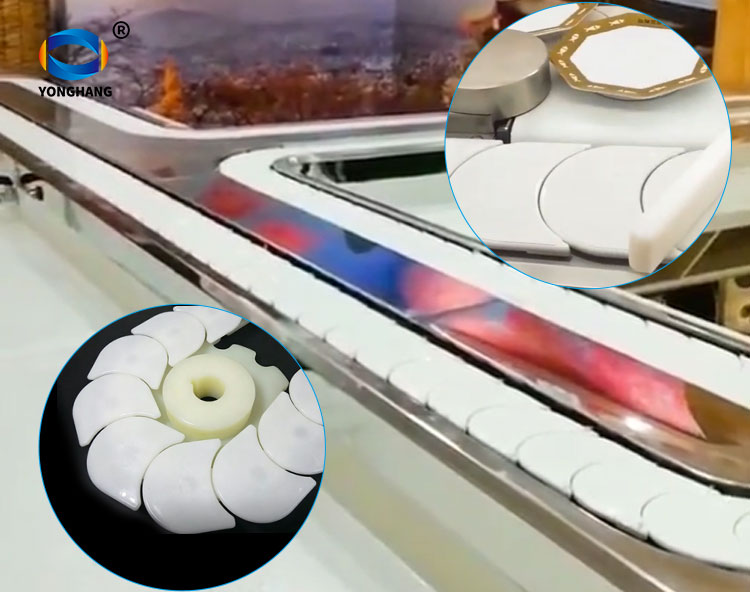
10. Sushi Conveyor Belt (Polymethyl Methacrylate, PMMA/Acrylic)
— PMMA is a plastic with excellent transparency and weather resistance; its light transmittance is higher than that of glass. However, it has a relatively low surface hardness, is prone to scratching, and is somewhat brittle.
Simple identification: Flammable; burns with a bright flame, emits black smoke, and gives off a sweet, floral or fruity odour.
Processing: It has a wide processing temperature range of 180–250°C; excessive temperatures can lead to degradation and bubbling. Mould temperatures should be maintained at 50–80°C to minimise weld lines and internal stress. The material is highly hygroscopic and must be dried at 80–90°C for 2–3 hours; otherwise, the finished product may exhibit defects such as bubbles and silver streaks.
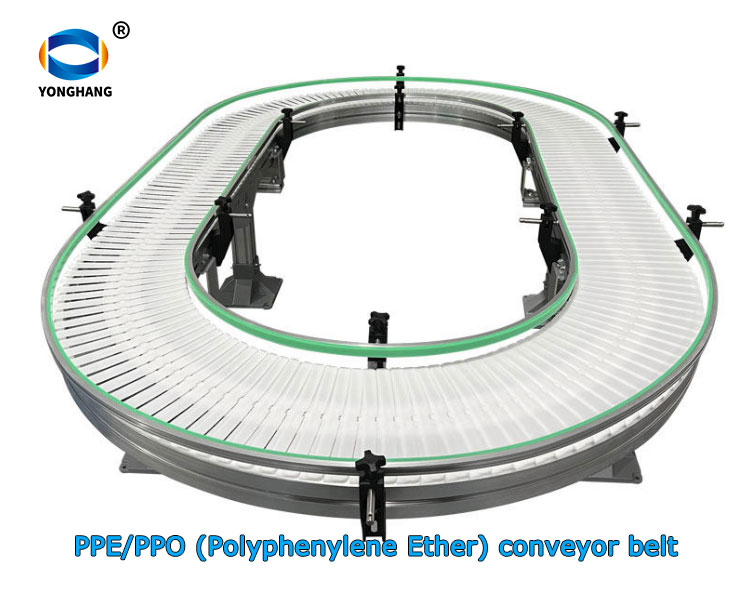
11. High-temperature conveyor belts (Polyphenylene oxide= PPO/Polyphenylene Ether = PPE)
— PPO offers excellent water resistance, dimensional stability and electrical properties; however, as the virgin material has poor processability, it is often blended with PS (e.g. Noryl) to improve flow.
Simple identification: Flame-retardant; self-extinguishing when removed from the flame; emits thick black smoke when burning; has a phenolic odour.
Processing: Injection moulding parameters vary depending on the modified grade; typical barrel temperatures range from 240–300°C, whilst mould temperatures must be higher, at 80–100°C, to achieve optimal performance. The material is hygroscopic and must be dried for 2–4 hours at 100–110°C.
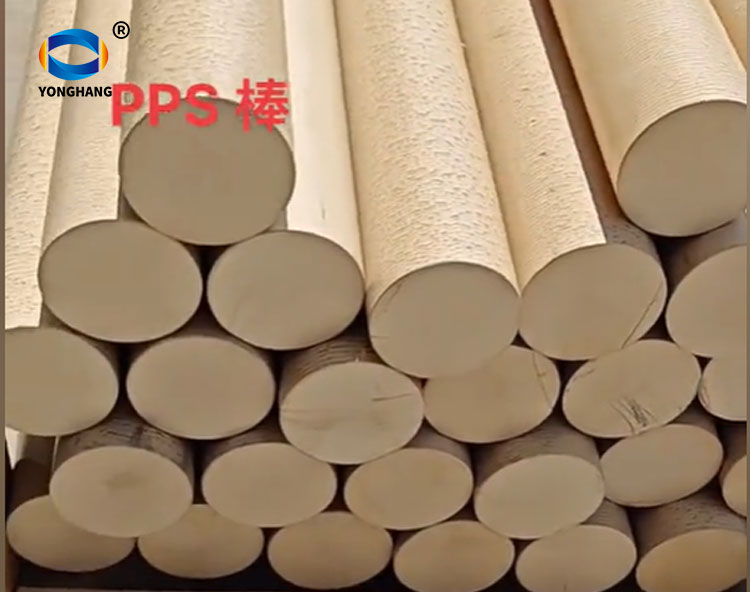
12. Heat- and corrosion-resistant conveyor belts (Polyphenylene Sulphide, PPS)
— PPS is a high-performance speciality engineering plastic characterised by excellent heat resistance (long-term operating temperature >220°C), high rigidity, flame retardancy and dimensional stability.
Simple identification: Flame-retardant; self-extinguishing when removed from the flame; the flame is yellow-orange in colour and emits a faint smell of sulphur.
Processing: Processing temperatures are very high, typically 300–340°C. Mould temperatures must also be very high (130–150°C); high mould temperatures ensure the product achieves full crystallisation, thereby providing optimal mechanical properties and heat resistance. The raw material must undergo thorough drying at 130–150°C for 3–4 hours.
Why Partner with Yonghang Transmission Belt Factory?
Frequently Asked Questions
Ready to expand your conveyor belt product line? Contact our export team today for a product catalog, custom quotation, or technical consultation. Let’s discuss how Yonghang can become your competitive advantage in the conveyor belt market.