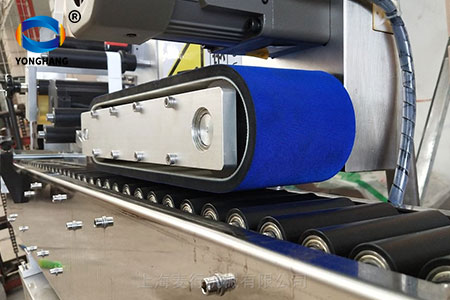
In modern industrial automation, selecting the correct polymer material for your conveyor framework directly influences production uptime, operational lifespan, and regulatory compliance. Polyvinyl Chloride (PVC) and Polyurethane (PU) represent the two most widely deployed synthetic covers in lightweight material handling. However, deploying the wrong belt chemistry can lead to premature structural failure, oil degradation, or food safety violations.
This technical guide provides industrial maintenance and procurement teams with practical field test methods and strategic selection frameworks to successfully distinguish between PVC and PU conveyor belts.
1.Core Material Properties & Chemical Dynamics
While PVC and PU belong to the broader synthetic polymer family, their molecular structures deliver vastly different physical characteristics and environmental resistance capabilities.
Polyvinyl Chloride (PVC) Characteristics
- Physical Texture: Typically exhibits a rigid, high-durometer cross-section with a less resilient feel.
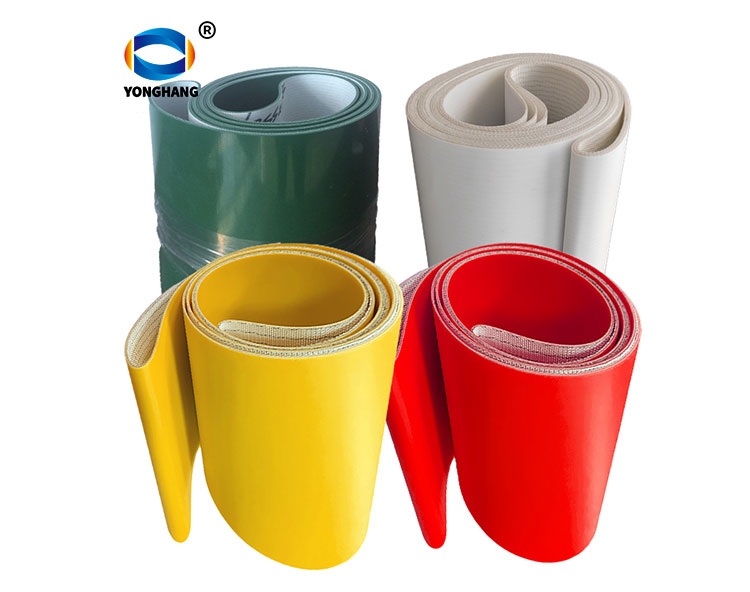
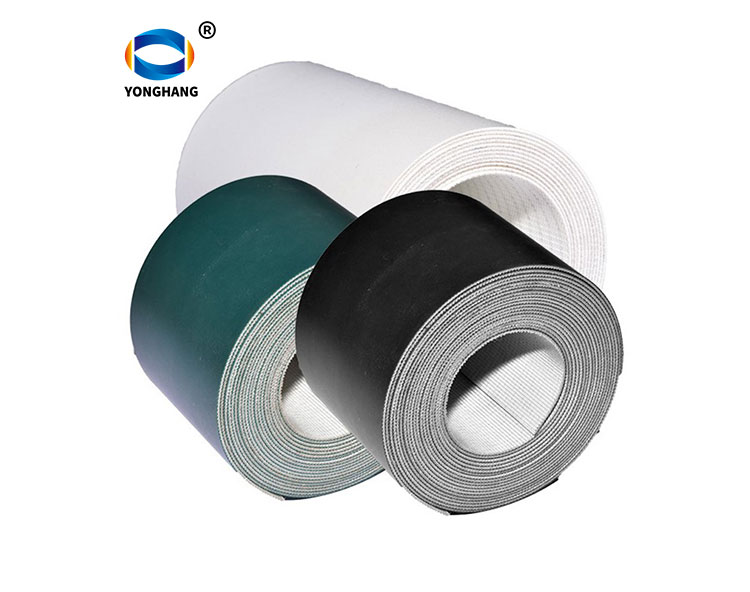
- Standard Colorways: Most commonly manufactured in industrial dark green, white, glossy black, or light grey.
- Thermal Decomposition (Burn Test): When exposed to an open flame, PVC ignites with difficulty, burning with a yellow flame with a distinct green edge. It emits heavy black smoke and releases a highly pungent, sharp odor of hydrogen chloride gas (HCl).
- Volumetric Density Tracking: PVC carries a higher specific gravity than PU. Under identical dimensions, a PVC belt weighs approximately 20% more than a PU equivalent and will sink rapidly when placed in water.
Polyurethane (PU) Characteristics
- Physical Texture: Displays exceptional mechanical flexibility, elastic recovery, and a smooth, rubber-like touchpoints matrix.
- Standard Colorways: Matte dark green,or frequently processed in translucent white, cream, clear, or high-visibility blue for hygienic identification.
- Thermal Decomposition (Burn Test): PU burns readily with a clear, steady pale blue flame. It melts and drips during combustion, emitting minimal white smoke accompanied by a mild, slightly sweet, aromatic ester/ether scent.
2.The five-second touch test
When direct lab testing or technical spec sheets are unavailable on the factory floor, maintenance personnel can utilize these three rapid physical inspections to identify the belt cover compound within seconds.
Test 1: The Mechanical Crease Inspection
Firmly fold a sample section of the belt sharp-edge inward at $180^\circ$ and compress the crease between your fingers multiple times.
- PVC Result: The high-crystalline structure breaks down under localized stress, leaving a permanent, visible white crease line along the fold.
- PU Result: Due to its superior elastomer memory and high tensile elasticity, the material snaps back rapidly without leaving any structural stress lines or marks.
Test 2: Surface Scratch and Abrasion Resistance
Apply firm downward pressure with a fingernail or a blunt metallic tool across the working face of the belt cover.
- PVC Result: Because raw PVC has low localized shear resistance, it easily deforms, leaving a permanent indentation or groove.
- PU Result: The high-density polyurethane matrix resists gouging. Its natural elastic recovery repels the scratch, leaving the top surface smooth and blemish-free.
Test 3: Ambient Thermal Conductivity Perception
Conduct this manual touch inspection in low-temperature storage or standard winter factory conditions.
- PVC Result: PVC possesses higher thermal conductivity, causing it to draw heat away from the skin rapidly and feel noticeably icy or cold to the touch.
- PU Result: Polyurethane acts as a natural thermal insulator. It feels neutral, warm, and relatively mild under identical cold ambient temperatures.
3. Make smart choices based on the Matching Belts to Applications
Selecting between PVC and PU should be driven entirely by operational environment parameters, sanitation mandates, and cost-of-ownership targets.
Food Processing Lines: Prioritize PU
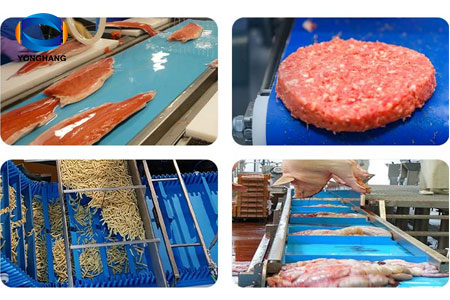
For direct food contact (such as meat processing, bakery dough lines, or confectionery conveying), FDA-compliant PU belts are mandatory. PU contains zero volatile plasticizers, exhibits superior resistance to animal fats, vegetable oils, and harsh industrial washdown chemicals, and provides far better microbial resistance than standard PVC.
High-Moisture & Wet Environments: Prioritize PVC
In industrial environments subject to continuous water spraying, wet vegetable washing, or high humidity, PVC belts offer exceptional stability. PVC is highly hydrophobic, ensuring the belt plies resist water absorption and retain their structural tracking geometry without warping or twisting under prolonged moisture exposure.
Precision Electronics Conveying: Prioritize PU
The transport of sensitive electronic components, printed circuit boards (PCBs), and precision micro-hardware requires a stable coefficient of friction and zero acoustic noise. PU belts glide smoothly over slider beds, generate lower decibel ratings at high velocities, and are easily integrated with permanent anti-static carbon grids to eliminate static discharge.
General Material Handling & Budget Optimization: Prioritize PVC
For large-scale parcel distribution hubs, baggage handling systems, and basic packaging lines where food safety and high oil exposure are not factors, PVC conveyor belts offer the most economical solution. PVC belts typically cost 30% to 40% less than PU alternatives, making them the preferred choice for maximizing budget allocation in non-critical transport loops.
Manufacturing Capabilities by YONGHANG
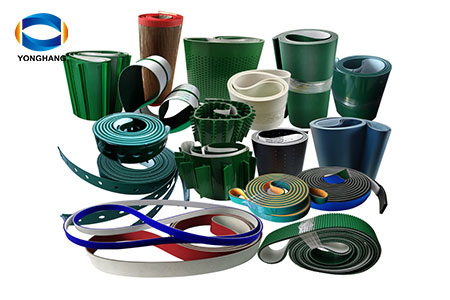
At YONGHANG (Yonghang Transmission Belt Factory), we engineer premium-grade, ISO-certified PVC and PU conveyor belts tailored to your exact industrial specifications. From high-friction pattern molding (such as diamond, line, or staggered slot profiles) to custom CNC punching and high-frequency welded cleat profiles, we ensure your automation lines run at peak mechanical efficiency.
Contact our engineering support team today to receive custom material samples and technical quotes for your next conveyor installation project.