If you work with ATN timing belts—whether ATN10, ATN12.7, or ATN20—you already know that the hardware securing your profiles to the belt is just as critical as the belt itself. Among the most commonly specified fasteners for these modular conveying systems are rhombus nuts (also called diamond nuts or rhombus T-nuts), which slot into the extruded cavities on the tooth side of the belt and allow profiles to be screwed down with precision.
ATN timing belts commonly used in linear positioning, automated conveying, and precision indexing systems—you know that the smallest hardware choices can have a significant impact on performance. These rhombus nuts are available in three standard metric thread sizes—M3, M4, and M5—and come in two distinct material grades: brass and stainless steel. Among the most frequently overlooked components are the nuts used to attach profiles, brackets, or tooling plates to the belt. While M3, M4, and M5 nuts may seem nearly identical in a drawer, their differences in size, strength, weight, and application suitability can make or break a design.
In this post, we’ll break down exactly how M3, M4, and M5 nuts compare when used with ATN timing belts, and how to choose the right one for your system.

1.What Is an ATN Timing Belt?
Before diving into the nuts, a quick reminder: ATN is a metric curvilinear timing belt profile, known for its smooth tooth engagement, high positional accuracy, and quiet operation. It’s widely used in lightweight linear drives, 3D printers, packaging machines, and small automation systems. Attaching payloads or cleat profiles to these belts typically requires a bolt-through or insert-mounted connection—and that’s where the nut selection comes in.
1.1 Overview: M3, M4, and M5 Nuts in a Timing Belt Context
In metric thread designations, the number denotes the nominal diameter in millimetres:
- M3 → 3 mm major diameter
- M4 → 4 mm major diameter
- M5 → 5 mm major diameter
The differences go far beyond just that single millimetre step. They affect strength, required torque, overall weight, and the geometry of the mating belt profile or attachment insert.
1.2 What Exactly Is a Rhombus Nut in an ATN System?
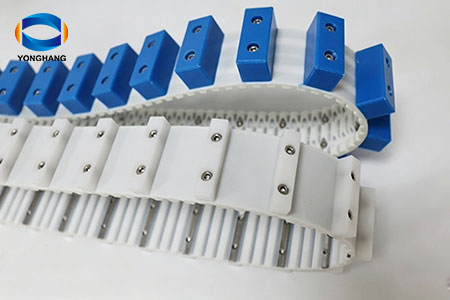
ATN timing belts feature extruded cavities—often rhombus-shaped—in every tooth along the belt. These cavities accept specially shaped rhombus nuts (also called diamond nuts or rhombus T-nuts) that prevent rotation when a profile is screwed in from above. The rhombus geometry locks the nut in place within the tooth recess, ensuring accurate and repeatable profile positioning even under dynamic loading conditions
A metal backing plate or retainer is typically installed from below to prevent the insert from rotating and the belt tooth from deforming under load
Key advantages of the rhombus nut system:
- Nuts are available in brass, stainless steel, giving engineers flexibility to match material to the operating environment
- Profiles can be installed, removed, or reconfigured without taking the belt off the machine
- The design offers high positional accuracy suitable for precision indexing and automated conveying

2.Dimensional Comparison
The following table summarizes the key dimensional and mechanical specifications for M3, M4, and M5 rhombus nuts used in ATN timing belt systems.

| Specification | M3 Rhombus Nut | M4 Rhombus Nut | M5 Rhombus Nut |
| Thread Major Diameter | 3.0 mm | 4.0 mm | 5.0 mm |
| Thread Pitch | 0.5 mm | 0.7 mm | 0.8 mm |
| Rhombus Body Width (w) | ~6 mm | ~6 mm | ~8mm |
| Overall Length (L) | ~12 mm | ~12 mm | ~15 mm |
| Height (A) | ~2-2.5mm | ~2.5-4.5mm | ~6.5-8.5mm |
| Height (B) | ~1.5mm | ~1.5mm | ~4.5mm |
| Total height(A+B) | ~3.5-4mm | ~4-6mm | ~8-10mm |
| Compatible Belt Pitch | ATN10, ATN12.7 | ATN10, ATN12.7, ATN20 | ATN10, ATN12.7, ATN20 |
| Standard Materials Available | Brass, Stainless Steel | Brass, Stainless Steel | Brass, Stainless Steel |
| Typical Applications | Miniature automation, sensor mounts, lightweight guides | General-purpose automation, product pushers, indexing fixtures | Heavy-duty profiles, cantilevered tooling, high-load attachments |
Note: Rhombus nuts for ATN timing belts are custom components designed to fit the specific extruded cavity geometry of each belt pitch. Unlike generic T-slot nuts used in aluminum extrusion framing systems, ATN rhombus nuts are engineered for the precise tooth profile of the timing belt.
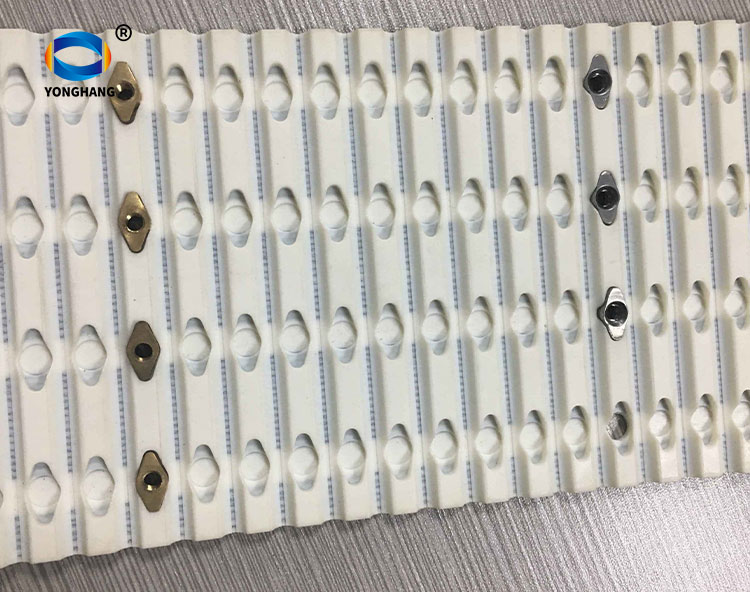
The dimensions scale predictably with thread size, but the most important parameter for ATN applications is the body height (h) . A taller nut protrudes further from the belt tooth and can interfere with the pulley during belt wrap if not properly recessed. This is why M3 and M4 nuts are often preferred for smaller-pitch belts like ATN10, where clearance is limited.
3. Material Deep Dive: Brass vs. Stainless Steel Rhombus Nuts
The material choice for your rhombus nut is just as important as the thread size. Brass and stainless steel each offer distinct performance characteristics that make them suitable for different applications. Based on general materials engineering properties, here is a comprehensive breakdown.
| Property | Brass Rhombus Nut | Stainless Steel Rhombus Nut |
| Density | ~8.5 g/cm³ | ~8.0 g/cm³ |
| Tensile Strength | ~330–470 MPa | 515–750 MPa for 304, ~620 MPa for 316) |
| Corrosion Resistance | Good against freshwater and mild acids. Vulnerable to dezincification in saltwater over time (~800 hours salt spray resistance) | Excellent in saltwater, chemicals, and harsh outdoor environments, Resists salt spray for 2000+ hours |
| Electrical Conductivity | High (~28% IACS) | Low (~2.5% IACS) |
| Thermal Conductivity | High (~120 W/m·K) | Low (~16 W/m·K) |
| Magnetic Properties | Non-magnetic | Slightly magnetic (especially after cold working) |
| Machinability | Excellent—easy to precision-machine | Moderate to difficult—requires more complex tooling |
| Wear/Galling Tendency | Low—natural self-lubricating properties reduce thread galling | Higher—prone to galling; anti-seize compound often recommended |
| Relative Cost | Moderate | Higher |
Why choose Brass?
Brass rhombus nuts are the traditional choice for many ATN applications. Their excellent machinability allows manufacturers to produce them with tight tolerances at a reasonable cost. The material’s natural self-lubricating properties means brass nuts are less prone to thread galling or seizing when screws are repeatedly installed and removed—a common scenario in reconfigurable ATN systems where profiles are frequently swapped-.
Additionally, brass is non-magnetic and non-sparking, making it the preferred choice in environments with sensitive electronics, MRI equipment, or potentially explosive atmospheres.
The main limitation of brass is its lower tensile strength. Brass rhombus nuts should not be used in high-tension applications where thread stripping or deformation under dynamic loads is a risk. Brass is also susceptible to dezincification in prolonged saltwater exposure, meaning stainless steel is the better choice for marine or washdown environments
Why choose Stainless Steel?
Stainless steel rhombus nuts (typically A2/304 or A4/316 grade) offer superior strength and corrosion resistance, making them the go-to choice for demanding industrial environments. With approximately 50–70% higher tensile strength than brass, stainless steel nuts can handle significantly higher clamping forces and dynamic shock loads without risk of thread failure.
Their excellent corrosion resistance makes them ideal for food processing, pharmaceutical, chemical, and outdoor applications where exposure to moisture, cleaning chemicals, or salt spray is expected.
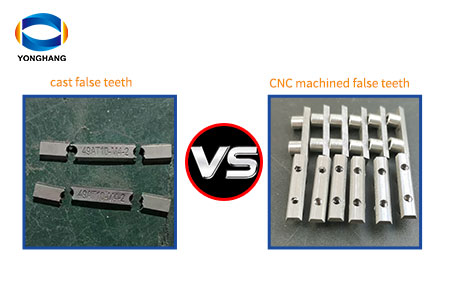
Manufacturer Note: In the Chinese ATN belt market, stainless steel rhombus nuts are typically available in two quality levels—machined and die-cast—with the machined variant offering superior dimensional accuracy and thread quality.
casting material vs CNC processed nuts
Our Yonghang also offers two types of stainless steel nuts produced by different processes. The casting material is Martensitic precipitation-hardening stainless steel, with a hardness of 15-27 HRC. The CNC processed nuts are made of 304 stainless steel or 316 stainless steel.
4. Weight Comparison: M3, M4, M5 in Brass vs. Stainless Steel
Weight is a critical parameter in high-speed automation systems. Every gram of mass on the belt contributes to inertial forces during acceleration and deceleration, directly affecting motor sizing, energy consumption, and positioning accuracy. Across multiple attachment points, the choice of nut size and material can result in meaningful system-level weight differences.
The following table provides approximate per-unit weights for M3, M4, and M5 rhombus nuts in both brass and stainless steel. Please note that these weights are estimated based on the density differences of the raw materials.
| Nut Size | Material | Approx. Weight per Unit | Weight Comparison |
| M3 | Brass | ~1.2 g | Lightest configuration |
| M3 | Stainless Steel | ~1.1 g | ~8% lighter than brass M3 |
| M4 | Brass | ~3.5 g | Mid-range weight |
| M4 | Stainless Steel | ~3.3 g | ~6% lighter than brass M4 |
| M5 | Brass | ~6.5 g | Heaviest single nut |
| M5 | Stainless Steel | ~6.1 g | ~6% lighter than brass M5 |
Stainless steel rhombus nuts are typically 6–8% lighter than their brass counterparts of the same thread size, owing to the slightly lower density of stainless steel (approximately 8.0 g/cm³ vs. 8.5 g/cm³ for brass). However, this weight difference is negligible in most applications. The far more impactful decision is the thread size: moving from M3 to M5 increases the nut weight by approximately 4–5 times regardless of material.
5. Load Capacity and Torque Recommendations
While precise load ratings for ATN-specific rhombus nuts are manufacturer-dependent and should be verified against supplier datasheets, the following values represent general recommended torque ranges based on standard metric thread engineering data.
Although the precise load ratings for ATN-specific diamond nuts vary depending on the manufacturer and manufacturing process, the values below represent the generally recommended torque range based on standard metric thread engineering data.
| Nut Size | Recommended Tightening Torque (Brass) | Recommended Tightening Torque (Stainless Steel) | Relative Load Capacity |
| M3 | 0.3–0.5 Nm | 0.5–0.7 Nm | Low—for lightweight attachments |
| M4 | 0.8–1.0 Nm | 1.2–1.5 Nm | Moderate—general automation |
| M5 | 1.5–1.8 Nm | 2.0–2.5 Nm | High—heavy-duty attachments |
TIPS:
Brass nuts in particular are susceptible to thread stripping if over-torqued, and the soft polyurethane body of the ATN belt can deform if excessive clamping force is applied through the nut
The load capacity of the rhombus nut system is also influenced by the belt tooth structure and the backing plate design. The metal plate prevents the insert from rotating and distributes the clamping load across a wider area of the belt tooth. Without proper plate support, even a high-strength stainless steel nut can deform the surrounding polyurethane and compromise the assembly
6. Important Compatibility Notes for ATN Systems
Pitch Compatibility
- ATN10 (10 mm pitch): Typically accommodates M3 and M4 rhombus nuts. M5 may be too large for the tooth cavity in narrower belt widths.
- ATN12.7 (12.7 mm pitch): Compatible with M3, M4, and M5 in most belt widths.
- ATN20 (20 mm pitch): The larger tooth profile easily accommodates M4 and M5, with M5 being the most common specification for this pitch.
ATN rhombus nuts are available open-ended or welded endless, with widely used belt widths of 25, 50, 75, and 100 mm. The number of insert holes per tooth depends on the belt width—typically 2 holes for 50 mm, 3 for 75 mm, and 4 for 100 mm—with a standard insert hole pitch spacing of 25 mm
Material Pairing: Avoid Galvanic Corrosion
When a stainless steel rhombus nut is paired with a carbon steel screw in a wet environment, galvanic corrosion can rapidly corrode the screw. Similarly, a brass nut paired with certain steel screws can create a weak galvanic cell. For maximum corrosion resistance, match materials throughout the entire fastener assembly (nut, screw, washer, and backing plate).
Nut Height and Pulley Clearance
Always verify that the rhombus nut height does not exceed the available clearance when the belt wraps around the smallest pulley in the system. The nut body must not protrude past the belt tooth height, or it will contact the pulley tooth flank, causing belt jump, accelerated wear, or tooth damage.
Final Thoughts
The differences between M3, M4, and M5 rhombus nuts for ATN timing belts extend far beyond a simple diameter measurement. Thread size determines clamping force and load capacity, while material choice governs corrosion resistance, magnetic properties, galling tendency, and service life. Brass offers workability and anti-galling advantages; stainless steel delivers superior strength and environmental resistance. Understanding these trade-offs is essential to designing a reliable and maintainable ATN conveying system.
As a rule of thumb:
M3 for micro, ultra-light precision. M4 for the general-purpose automation sweet spot. M5 when real mechanical strength is needed. Pair with brass for ease of use and frequent changes; choose stainless steel for harsh environments and maximum durability.
If you need any assistance, please feel free to contact our online team at Yonghang. We will be more than happy to help you select the appropriate profiles and the correct materials.