In the food processing sector, selecting a conveyor belt material is far more than a simple mechanical decision. It is a critical evaluation that directly impacts food safety mandates, hygienic compliance, operational uptime, and total cost of ownership (TCO). While Thermoplastic Polyurethane (TPU) and Polyvinyl Chloride (PVC) conveyor belts can appear virtually identical to the naked eye, their molecular performance under the intense stress of food production environments is worlds apart.
This technical guide breaks down the core material science differences between these two polymers and highlights why global manufacturers are increasingly sourcing premium solutions from specialized Chinese factories like YONGHANG (Guangzhou Yonghang Transmission Belt Co., Ltd.)—a leading pioneer in high-performance industrial and food-grade belting.
1. Material Science, Chemical Safety, and Plasticizer Migration
The fundamental divergence between TPU and PVC lies within their molecular frameworks and the chemical additives utilized during the extrusion and cross-linking manufacturing stages.
TPU: The “Zero-Migration” Elastomer Matrix
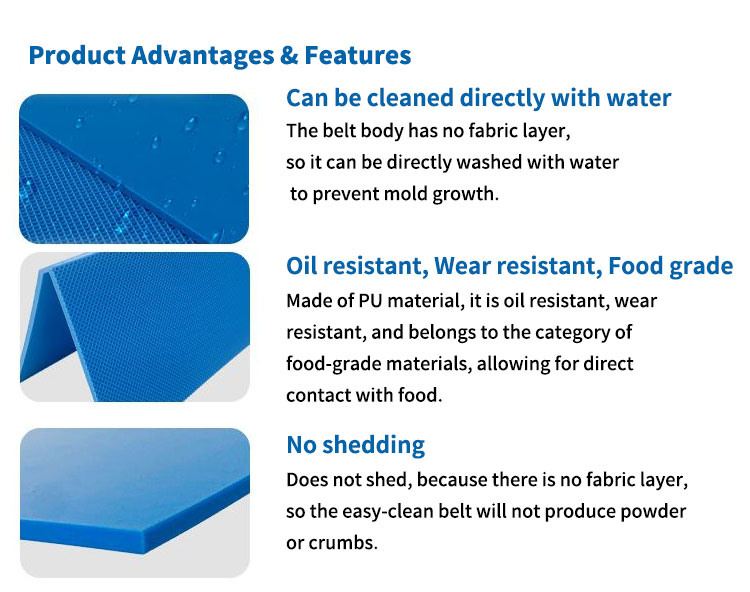
Thermoplastic Polyurethane is inherently flexible, possessing an engineered molecular elasticity that requires zero added plasticizers to maintain its bend radius. This chemical stability makes TPU a strictly “zero-migration” compound. Even when subjected to elevated temperatures, thermal sealing zones, or chemical exposure, TPU guarantees that no volatile toxins or chemical byproducts leach into passing foodstuffs.
PVC: The Plasticizer Dependency Challenge
Polyvinyl Chloride is structurally rigid in its raw polymer form. To achieve the physical flexibility required to wrap around conveyor pulleys, raw PVC must be blended with chemical plasticizers, most notably phthalates. In food-grade applications, these unbound plasticizers pose a significant risk, as they tend to migrate out of the belt matrix when in continuous contact with lipid-heavy or oil-laden food products.
2. Resistance to Oils, Animal Fats, and Aggressive Sanitation Chemicals
Food processing applications expose belting to highly aggressive agents, including animal lipids, plant-based vegetable oils, and volatile caustic sanitizers.
The TPU Advantage: Lipid and Hydrolytic Resistance
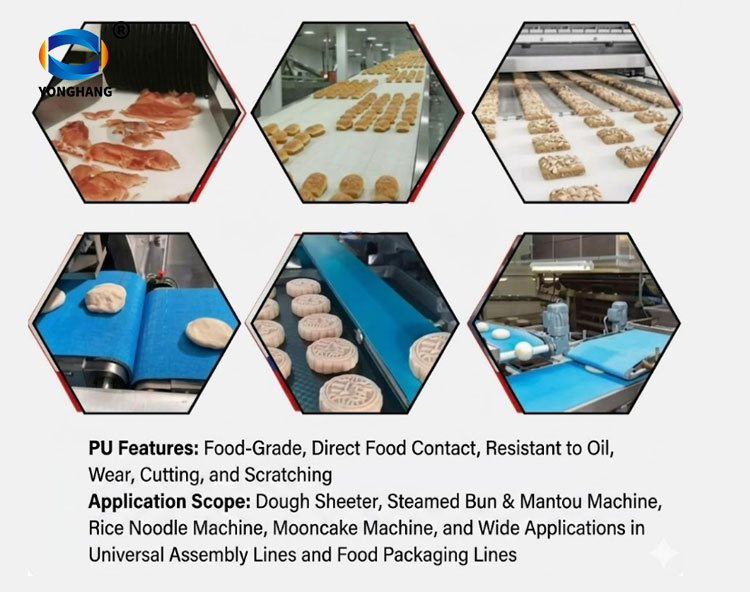
TPU exhibits absolute resistance to fats, greases, and organic oils. The polymer chains repel lipid absorption, ensuring the belt maintains its structural integrity, tensile strength, and durometer hardness without swelling, cracking, or blistering. Consequently, TPU is widely recognized as the industry gold standard for red meat, poultry, and snack food processing.
The PVC Limitation: Oil Absorption and Delamination
Over long-term operational cycles, PVC naturally absorbs ambient oils and fats. This absorption causes the belt cover to plasticize further, leading to structural hardening, edge curling, tracking drift, and eventual ply delamination (peeling of the cover from the fabric core). While PVC handles basic acids and alkalines well during washdowns, its poor resistance to saturated fats severely limits its deployment in direct-contact food lines.
3. Mechanical Tribology: Wear, Cut, and Abrasion Resistance
The operational lifespan of a conveyor belt dictates your facility’s unplanned downtime and scheduled maintenance overhead.
TPU: High Tensile Shear Strength
TPU delivers exceptional shore hardness combined with superior tensile shear and cut resistance. It easily handles high-velocity sorting, sharp bone fragments, frozen food impacts, and metal detector tracking without generating micro-debris or belt dust—a primary cause of foreign-material food contamination.
PVC: Structural Vulnerability to Punctures
Despite offering a lower initial procurement cost, PVC features significantly lower mechanical abrasion resistance. Its surface is easily scored, scratched, or gouged by raw materials or scraping blades. These structural micro-scratches act as dangerous harborages for bacterial bio-films, increasing the difficulty of daily sanitation and CIP (Clean-In-Place) procedures.
Why Global Brands Partner with YONGHANG (China)
When sourcing specialized food-grade belting, the precision of the manufacturing facility is just as vital as the raw material grade. YONGHANG, a premier transmission and conveyor belt factory based in China, has established itself as an international benchmark by blending robust R&D with advanced automated production lines.
By engineering advanced food-grade TPU belts, YONGHANG directly resolves critical processing vulnerabilities through specialized factory configurations:
- Sealed-Edge & Non-Fray Engineering: Eliminates the exposed fabric threads common in low-tier belts, completely preventing thread fraying and moisture capillary absorption.
- Stringent Regulatory Compliance: Every food-grade belt is certified fully compliant with FDA (Food and Drug Administration) and EU (European Union) Regulation No. 10/2011 sanitation standards.
- Homogeneous Customization: YONGHANG specializes in the production of Easy Clean homogeneous belts, as well as custom-molded top profiles, cleats, and textured surface configurations tailored to specific processing sorting dynamics.
By bridging premium polymer raw materials with massive, state-of-the-art manufacturing scales in China, YONGHANG delivers a high-tier, cost-effective solution: premium OEM-equivalent quality at a highly competitive global price point.
4. Strategic Selection Matrix: Aligning Belts to Your Production Line
To optimize your procurement strategy, utilize the operational blueprint below to match the correct polymer matrix to your specific material handling zones.
| Select Premium TPU Belts If: | Select Economical PVC Belts If: |
| Processing raw meats, poultry, dairy, or oil-heavy snack lines. | Conveying fully packaged goods, secondary cartons, or sealed boxes. |
| The system requires aggressive high-pressure chemical washdowns. | The belt operates strictly in a non-food-contact zone with budget limitations. |
| The application demands high cut resistance against bones or hard plastics. | Handling simple, non-abrasive dry fruit and vegetable sorting lines. |
| Your facility prioritizes absolute FDA/EU sanitation compliance. | You require a basic, low-velocity, general-purpose transportation loop. |
Summary: The Long-Term Return on Investment (ROI)
Investing in a high-grade TPU conveyor belt from a reputable manufacturer like YONGHANG may require a higher initial capital expenditure compared to basic PVC. However, when evaluating the drastic reductions in cross-contamination risks, decreased water and sanitation chemical consumption, and extended mechanical lifespans, TPU emerges as the most cost-efficient choice for modern food processing facilities.
Are you looking to optimize your automated production lines? Choosing YONGHANG as your manufacturing partner in China ensures your conveyor belts cease to be simple replacement parts—and instead become the foundation of a safer, more efficient production environment.

-
2026 Complete List of Conveyor Belt Materials
Introduction: Why Conveyor Belt Material Matters to Your Business Every conveyor system starts with one critical decision: choosing the right belt material. The wrong material means product contamination, premature belt failure, or missed compliance requirements — problems that cost your customers money and damage your reputation as a supplier. The right material, on the other…
-
PVC vs. PU Conveyor Belts Material Identification Guide
In modern industrial automation, selecting the correct polymer material for your conveyor framework directly influences production uptime, operational lifespan, and regulatory compliance. Polyvinyl Chloride (PVC) and Polyurethane (PU) represent the two most widely deployed synthetic covers in lightweight material handling. However, deploying the wrong belt chemistry can lead to premature structural failure, oil degradation, or…
-
Food Processing Plants Conveyor Belts: PU Belts, PVC Belts, Silicone Belts—Which one is better?
In food industry production lines, PU (polyurethane), PVC (polyvinyl chloride), and silicone conveyor belts are popular choices for food factories. Each material possesses distinct characteristics suited to different production scenarios. This article provides an in-depth analysis from dimensions such as safety performance, durability, and applicable scenarios to offer guidance for food factories conveyor belt selection….
-
What are the precautions for using PU material easy-clean belts?
Most food conveying processes utilize food-grade, easy-clean belt conveyors. These food-grade belts are non-toxic and odorless, comply with food safety standards, and are FDA-certified. To maintain the longevity of these belts during food transportation, what precautions should be taken during operation? I. Installation and Operation Direction and Compatibility: Ensure the feeding direction aligns with the…