In modern industrial manufacturing, the performance of power transmission systems directly dictates production line efficiency and product quality. As processes such as aluminum extrusion and high-temperature material handling place increasingly stringent demands on transmission components, the PBO felt flat belt is emerging as the preferred solution. Due to its exceptional material properties and reliable performance, it has become a cornerstone for numerous high-heat applications.
I. Material Composition of PBO Felt Belts
The core material of PBO felt flat belts is polybenzoxazole (PBO) fiber, a high-performance synthetic fiber developed in the 1980s. PBO fiber is synthesized by reacting terephthalic acid with 4,6-diaminophenol hydrochloride under specific conditions, resulting in an extraordinary strength-to-weight ratio and superior heat resistance.
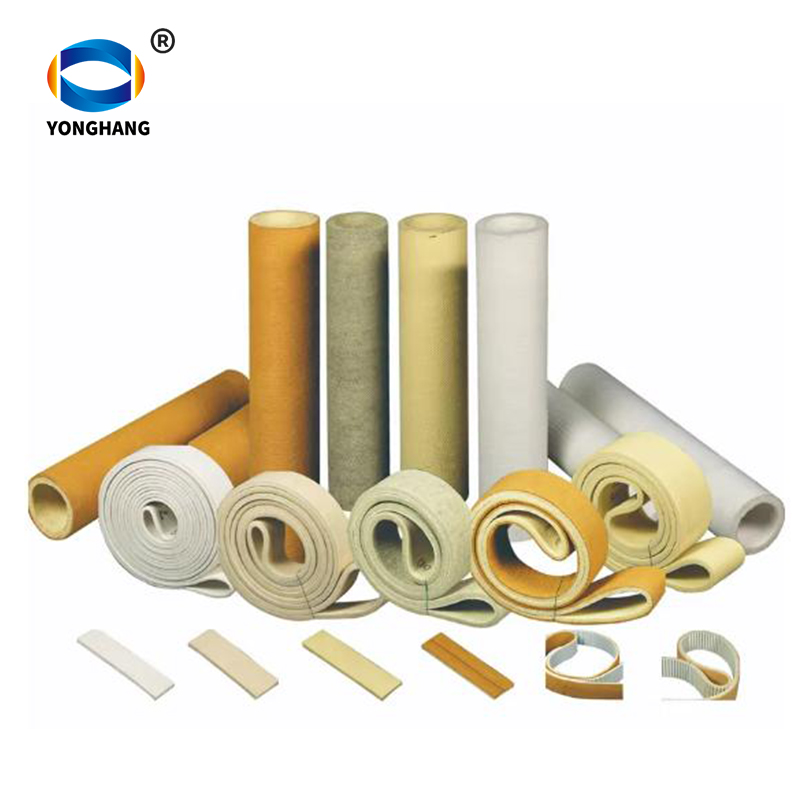
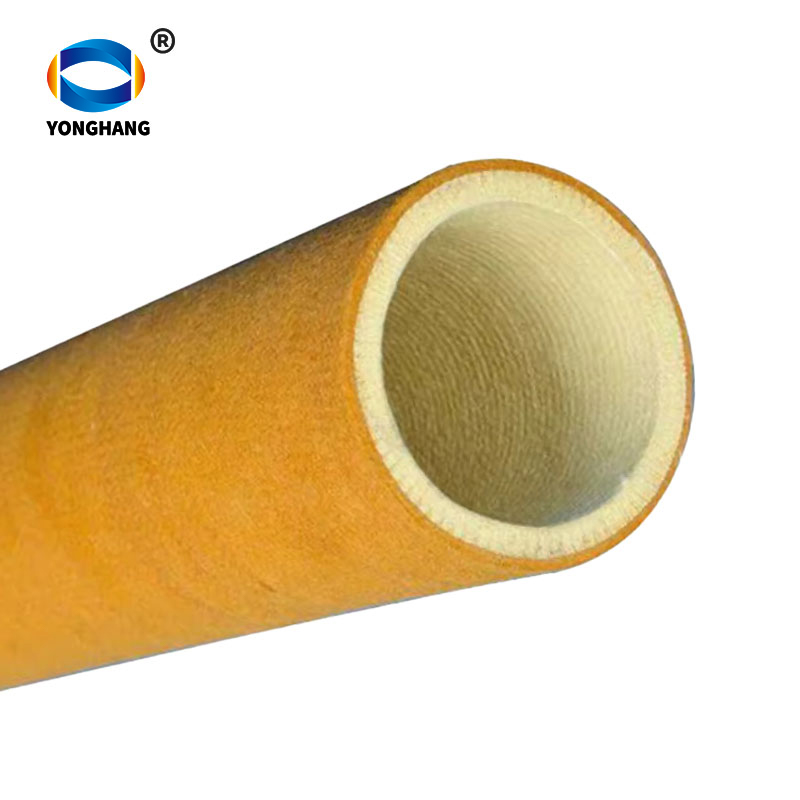
In practical product design, PBO felt belts utilize a composite construction to maximize durability. For example, high-density needle-punched PBO fibers typically form the belt’s outer working surface, while the underside incorporates needle-punched Kevlar fibers to enhance structural integrity. Many high-performance products also include a Nomex tension membrane in the middle layer to further improve tensile strength and dimensional stability. This multi-layer composite structure allows the belts to maintain excellent surface protection without sacrificing overall strength.
Regarding specifications, PBO felt belts can be configured with different layer counts based on application requirements—most commonly five-layer or six-layer structures. These variations correspond to different thicknesses and load-bearing capacities, with thicknesses typically ranging from 5 mm to 14 mm to accommodate diverse operating conditions.
II. Key Performance Advantages
PBO felt belts stand out among transmission products due to several exceptional performance characteristics:
Extreme High-Temperature Resistance: PBO material can operate stably for extended periods in environments as hot as 600°C (1,112°F). Remarkably, even under extreme thermal stress, PBO does not undergo significant thermal expansion, maintaining precise dimensional accuracy and smooth operation.
Exceptional Tensile Strength: PBO fibers possess a tensile modulus far exceeding traditional materials. Specifically, these belts can achieve a tensile modulus of up to 35 N/mm at 1% constant elongation. This ensures that the belt maintains a stable form and resists elongation or deformation even under high-tension, heavy-load conditions.
Superior Surface Protection: Manufactured via a precision needle-punching process, these belts feature a smooth, uniform surface free of seams or splices. This dense, seamless finish effectively prevents scratches or contamination of the conveyed materials, which is critical for products with strict surface quality requirements, such as aluminum profiles.
Wear and Impact Resistance: To further extend service life, many products undergo specialized resin surface treatments. Their low thermal conductivity and high-density structure ensure high impact resistance, even during heavy-duty cycles.
III. Primary Applications
PBO felt belts are primarily utilized in high-temperature, high-demand industrial scenarios, with the aluminum extrusion industry being the most prominent example.
In aluminum extrusion lines, profiles exit the extruder at temperatures reaching several hundred degrees Celsius. Standard conveyor belts would suffer rapid wear or thermal failure under these conditions. However, with a 600°C temperature rating, PBO felt belts can reliably receive hot aluminum profiles immediately after extrusion, conveying them smoothly toward cooling, cutting, and aging processes. Throughout this journey, the belts protect the aluminum surface, preventing defects such as scratches and “black marks,” thereby significantly improving the final product yield.
Beyond aluminum extrusion, PBO felt belts are vital in other sectors:
Textile Machinery: Providing heat-resistant transmission for high-speed weaving.
Glass Manufacturing: Safely conveying hot glass products without causing surface stress.
Electronics Assembly: Available in anti-static versions for handling sensitive components in high-heat environments.
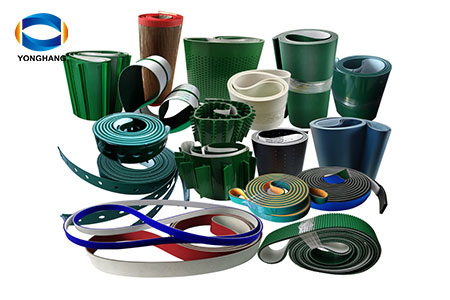
These belts are available as seamless loop belts or flat felt strips, with widths ranging from 20 mm to 1,600 mm and customizable lengths up to 30,000 mm.
IV. Technological Trends
As industrial manufacturing evolves toward higher efficiency and quality, PBO felt belt technology continues to advance:
Material Optimization: Manufacturers are constantly refining fiber blends—adjusting the ratio of PBO to Kevlar—to balance heat resistance, strength, and cost-effectiveness for specific customer needs.
Surface Treatment Innovation: The application of advanced, harder resin coatings is significantly enhancing wear resistance and extending the operational lifespan of the belts.
Strict Quality Control: Leading companies are adopting rigorous quality assurance systems, such as ISO 9001 certification. To ensure top-tier performance, many manufacturers directly import raw PBO fibers from Japan and Kevlar fibers from the United States, guaranteeing quality from the molecular level up.