If you ask a Chinese person what the most important traditional festival in spring is, the answer is likely to be Qingming Festival.
Every year around April 4 or 5, when the sun reaches 15 degrees of the ecliptic, China marks the beginning of the “Qingming” solar term. This is not only one of the twenty-four solar terms but also a traditional festival with a history of more than 2,500 years. It is the only day in China that is both a solar term and a festival.
The Origins of the Festival
The Qingming Festival can be traced back as far as the Zhou Dynasty. Initially, it was merely a solar term used to guide agricultural activities—as the old saying goes, “Around Qingming, plant melons and sow beans,” meaning that by Qingming, temperatures rise and rainfall increases, making it the perfect time for spring plowing and planting.
Later, the Qingming Festival gradually incorporated two ancient festivals: the Hanshi Festival and the Shangsi Festival. The Hanshi Festival featured customs of abstaining from fire and eating cold food, while the Shangsi Festival involved traditions of enjoying the spring scenery and bathing. By the Tang Dynasty, these three festivals, which occurred around the same time, had merged into a single celebration, forming the Qingming Festival as we know it today.
Why Is It Called “Qingming”?
The two characters “Qingming” describe the unique weather conditions of this season. The book *A Hundred Questions on the Seasons* explains it this way: “At this time, all things are growing, and everything is fresh and clear, hence the name ‘Qingming.’” In other words, during this season, all things are thriving, the air is fresh, and the scenery is clear and bright, which is why it is called “Qingming.”
Core Customs of the Qingming Festival
Visiting Graves and Honoring Ancestors
This is the most important activity of the Qingming Festival. The Chinese believe that although their ancestors have passed away, their spirits remain. Every Qingming Festival, people bring flowers, food, incense, and candles to their ancestors’ graves. They clear away weeds, add fresh soil, lay out offerings, and burn joss paper to express their remembrance and respect for their departed loved ones.
Spring Outings
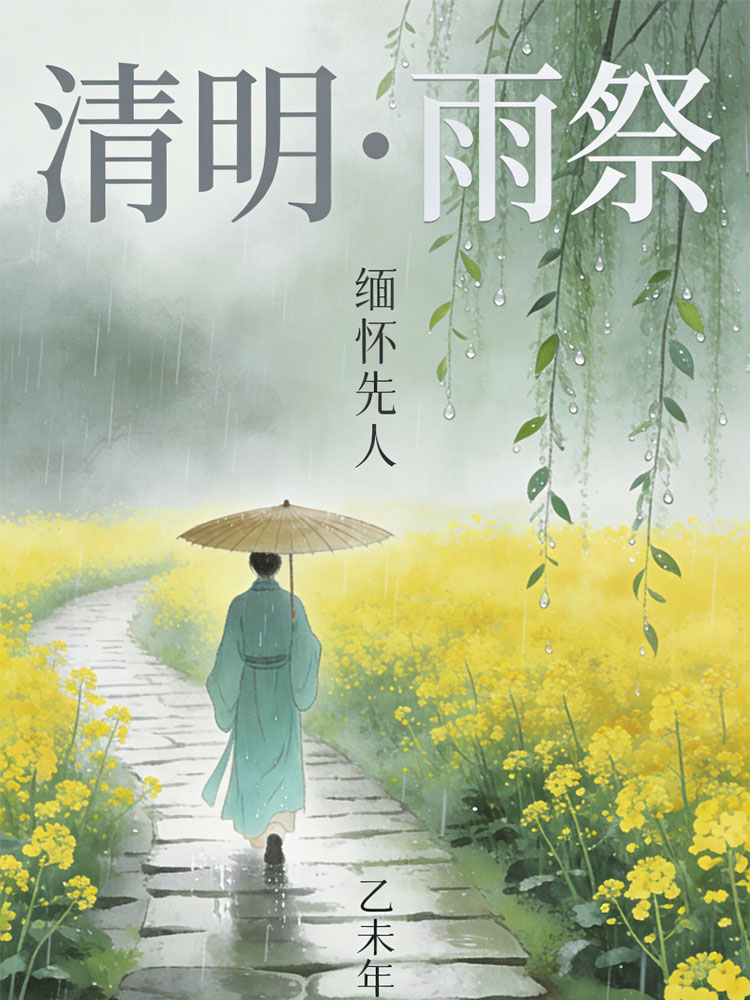
During the Qingming season, the weather is bright and sunny, and plants are sprouting fresh greenery. After visiting the graves, people often take a walk in the countryside to enjoy the spring scenery. The ancients called this “tàqīng” (spring outings). Families stroll through the fields, admiring the blooming flowers and listening to the birdsong, which not only relaxes the mind but also allows them to feel the vitality of life.
Flying Kites
Flying kites during Qingming is an ancient custom. People fly their kites high into the sky; some even cut the string to let the kite drift away with the wind. It is said that this practice drives away bad luck and illness while bringing good fortune.
Decorating with Willow Branches
The Qingming Festival also marks the time when willow trees are at their greenest. People break off willow branches to hang on their doors or weave them into wreaths to wear on their heads. Ancient people believed that willow branches could ward off evil spirits and ghosts, and they also symbolized the hope of retaining the beauty of spring.
What to Eat on Qingming Festival?
Every festival has its own traditional foods, and Qingming Festival is no exception.
Qingtuan: A representative food of the Jiangnan region. Made with a green outer layer of glutinous rice flour mixed with mugwort juice, filled with red bean paste or lotus seed paste, and steamed until it turns a vibrant green. It has a soft, chewy texture and a subtle herbal aroma.
Sanzi: Common in northern regions. A type of deep-fried noodle dish, as thin as hair, crispy and delicious.
Qingming Guo: A specialty of some southern regions, shaped like dumplings, with both savory and sweet fillings.
The Modern Qingming Festival
Today, the Qingming Festival is a statutory public holiday in China, typically lasting three days. People use this holiday to return to their hometowns to visit ancestral graves and reunite with family. At the same time, with growing environmental awareness, more and more people are choosing to offer fresh flowers instead of paper money and to pay respects online instead of visiting graves in person, thereby preserving tradition while protecting the environment.
The Qingming Festival teaches the Chinese people not only to remember the deceased but also to cherish the present. As an ancient Chinese saying goes: “Only by not forgetting the path we have taken can we know the way home.”