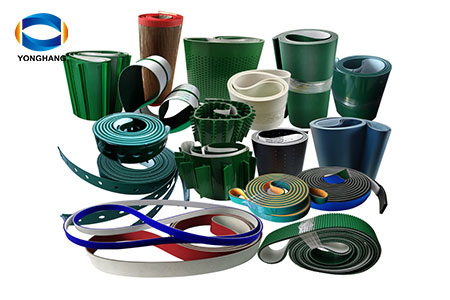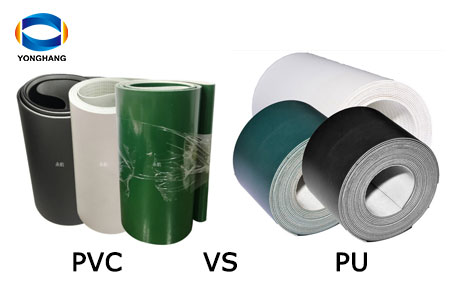
In automated production lines, silicone coated timing belts have become standard components across industries such as sanitary products, food processing, and glass machinery due to their high-temperature resistance, non-stick properties, and high friction coefficient. However, when selecting between “food-grade” and “industrial-grade” specifications, we often face confusion: they appear similar yet carry vastly different price tags. What exactly is the difference? What are we paying extra for?
This article will delve into the core distinctions between the two through four dimensions: compliance standards, material formulations, physical properties, and application scenarios.
I. Compliance Standards: The Presence of an “Identity Document” is the Fundamental Divide
The most essential distinction between food-grade and industrial-grade materials lies in whether they have undergone rigorous certification under food safety regulations.
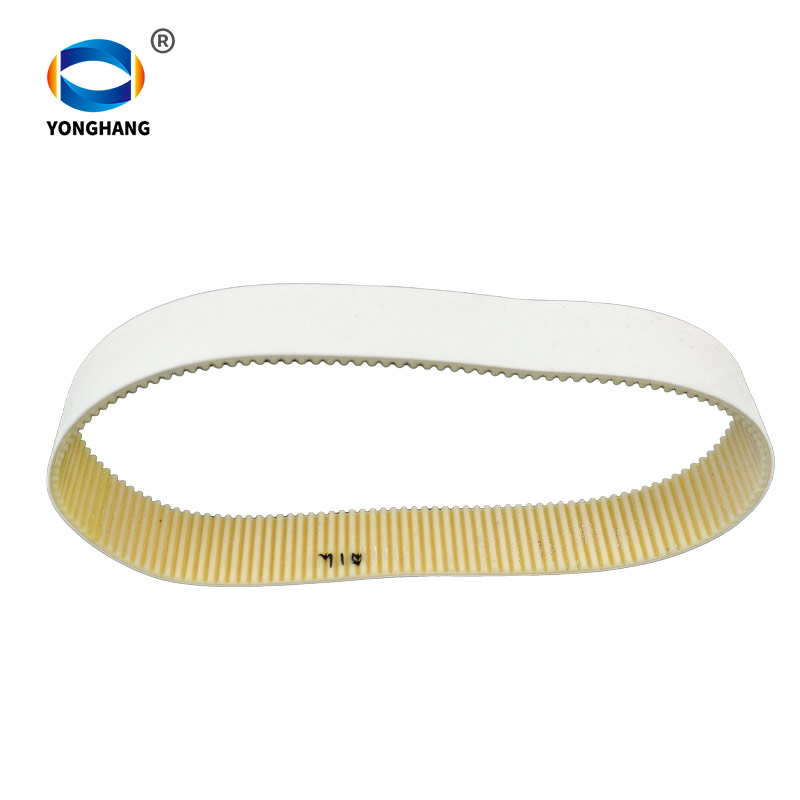
1. Food Grade: Certification Required for Use
In the Chinese market, silicone rubber materials and products intended for food contact must comply with the latest requirements of GB 4806.16-2025, “National Food Safety Standard: Silicone Rubber Materials and Products for Food Contact.” This standard was issued in September 2025 and will take effect in September 2026.
The new national standard imposes extremely stringent technical requirements on food-grade silicone:
| Testing Items | Food-Grade Limit Requirements | Core Significance |
| Sensory Requirements | Color and appearance are normal, with no unusual odors or impurities. | Ensure the material itself is free from contamination. |
| Total Migration | ≤10 mg/dm² (≤60 mg/kg for infants and young children) | Prevent migration of harmful substances into food |
| Potassium Permanganate Consumption | ≤10 mg/kg | Control soluble organic matter content |
| Heavy Metals (as Pb) | ≤1 mg/kg | Eliminate heavy metal contamination such as lead and cadmium |
| Volatile Substances | ≤0.5 g/(100g) | Newly added requirement in the national standard to control the release of oligomers such as cyclic siloxanes. |
Additionally, food-grade silicone must comply with raw material list control requirements—all additives, vulcanizing agents, colorants, and other substances used must be included in the approved positive list. This means that food-grade products undergo strict oversight at every stage, from raw materials to finished goods.
2. Industrial Grade: Performance-Based Compliance Without “Identity Verification”
In contrast, industrial-grade silicone coated timing belts require no food safety certifications. Compliance standards focus solely on physical and mechanical properties such as tensile strength, abrasion resistance, and temperature tolerance. Manufacturers may freely select additives and fillers based on cost optimization without considering migration levels or toxicity concerns.
In a nutshell: Food-grade belts have a “birth certificate,” while industrial-grade belts only have a “work permit.”
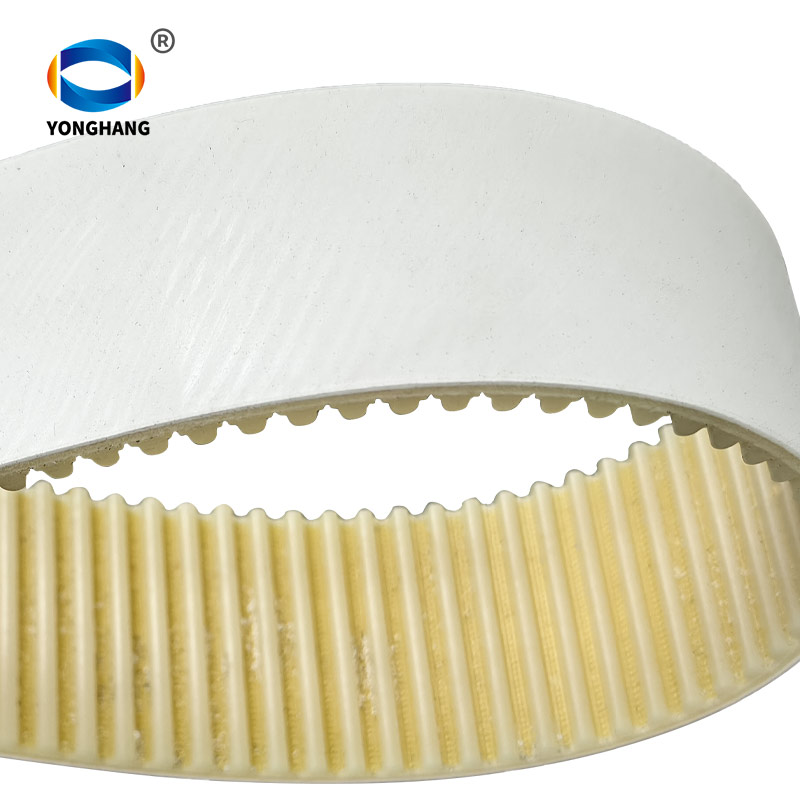
II. Silicone Coated Timing Belt Material Formulation: The Invisible “Ingredient List” Determines Quality
Differences in compliance standards are directly reflected in material formulation choices.
1. Raw Material Purity
Food Grade: Utilizes high-purity silicone, typically imported or top-tier domestic methyl vinyl silicone rubber, with raw rubber purity exceeding 99.9%. Prohibits any plasticizers or low-molecular-weight fillers that may migrate toxic substances.
Industrial Grade: Permits standard industrial silicone. Allows addition of fillers like silica or calcium carbonate to reduce costs, with no strict requirements on low-molecular-weight content.
2. Additive Control
Food Grade: Strictly prohibits heavy metal-containing pigments (e.g., cadmium red, lead yellow). Only organic pigments or food-grade colorants are permitted. Curing systems must employ non-toxic peroxide or platinum-based systems to prevent residual toxic curing agents.
Industrial Grade: Lower-cost standard colorants and universal curing agents may be used, often yielding higher color vibrancy but potentially carrying risks of heavy metal residues.
3. Non-stick and Anti-Adhesion PropertiesInternationally
renowned brands (e.g., Binder Magnetic) emphasize the non-liquid-absorbing and biofilm-resistant characteristics of their food-grade silicone coatings (e.g., SI30/SI50 series). This is achieved through food-grade formulations that control surface energy, creating a denser silicone layer that resists penetration by oils, water, syrups, and other substances, thereby inhibiting bacterial growth. While industrial-grade products also exhibit non-stick properties, prolonged exposure to liquids or high-humidity environments increases susceptibility to issues like permeation, swelling, and biofilm formation.
III. Physical Properties of Silicone-Coated Timing Belts: Similar Appearances, Different Realities
Due to formulation differences, subtle yet significant distinctions exist in their key physical properties.
1. Temperature Resistance
Both typically withstand extreme temperatures from -40°C to +180°C (or even 200°C). However, the differences lie in:
Food-Grade Silicone-Coated Timing Belts: Maintain low volatility after prolonged high-temperature use, without releasing odors or harmful gases.
Industrial-Grade Silicone-Coated Timing Belts: May release trace amounts of low-molecular-weight cyclic siloxanes at high temperatures. While this does not affect mechanical function, it may pose odor or contamination risks in enclosed food processing environments.
2. Hardness and Elasticity
Food-grade silicone typically offers more precise hardness control. For example, Binder Magnetic’s SI30 is 30 Shore A (soft), while SI50 is 50 Shore A (harder), suitable for different applications like labeling, clamping, and weighing. Industrial-grade products often have wider hardness tolerances and may exhibit slightly lower batch consistency.
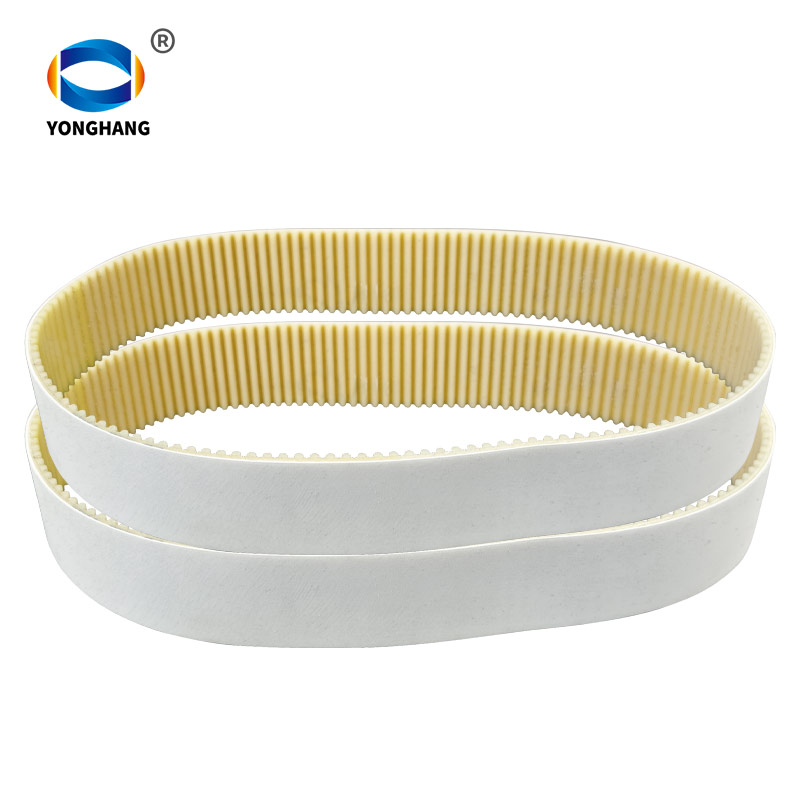
3. Resistance to Cleaning Agents and Disinfectants
The food industry requires frequent cleaning and disinfection. Food-grade silicone must withstand repeated exposure to strong acidic and alkaline cleaning agents, as well as disinfectants like hydrogen peroxide and sodium hypochlorite, without discoloration, swelling, or performance degradation. While industrial-grade products possess some chemical resistance, prolonged contact with potent cleaning agents may accelerate aging.
IV. Application Scenarios: Designated Uses Only, Do Not Substitute
Mandatory Food-Grade Applications
The following scenarios require food-grade silicone-coated timing belts:
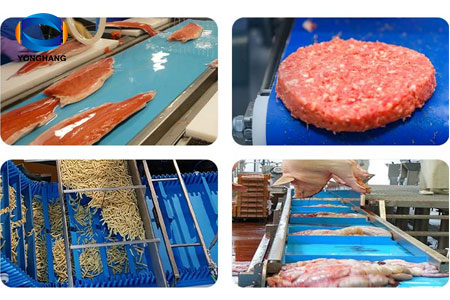
Direct Food Contact: Baking production lines, chocolate tempering, meat product conveyance, fruit and vegetable processing
Direct Pharmaceutical Contact: Tablet conveyance, capsule encapsulation, medical devices
Infant Product Manufacturing: Baby bottles, baby food production lines (stricter migration limits apply)
High Cleanliness Requirements: E-cigarette production, premium cosmetics filling
Using industrial-grade products in these scenarios carries significant legal risks—discovery during market inspections may trigger product recalls, production halts, or even criminal liability.
Industrial-Grade Application Scenarios
Industrial-grade products offer excellent cost-effectiveness in the following scenarios:
Non-direct Product Contact: Transmission components in packaging machinery, sealing machine backing plates, paper product conveyance
High-temperature environments without food contact: Glass annealing furnaces, photovoltaic laminators, heat treatment equipment
Sticky materials but non-food applications: Hygiene product lines (diapers, sanitary pads), hot-melt adhesive bonding, printing machinery
General industrial transmission: Electronics assembly, logistics sorting, textile machinery
Special Note: Exercise Caution with “Gray Area” Products
Some industrial belts on the market claim to be “non-toxic” without food-grade certification. Be aware: “non-toxic” claims unverified by rigorous migration testing hold no legal weight. True food-grade products must provide third-party test reports compliant with GB 4806.16-2025.
V. Selection Guide: How to Make the Right Choice?
Step 1: Confirm Contact Type
Direct contact → Food-grade
Indirect contact or with protection → Depends on risk assessment (e.g., splashes or condensation possible; food-grade recommended)
No contact → Industrial-grade
Step 2: Request Certification Documents
Qualified food-grade suppliers should provide:
Type test reports compliant with GB 4806.16-2025
Declaration of conformity for raw materials
Specific migration test data (for fatty foods, acidic foods, etc.)
Step 3: Focus on Manufacturing Details
Regardless of grade selection, opt for products manufactured via one-piece vulcanization. This process ensures stronger bonding between the silicone layer and base belt, preventing delamination during high-speed/high-temperature operation and extending service life.
Step 4: Weigh Total Cost of Ownership
Food-grade belts typically cost 30%-50% more than industrial-grade alternatives. However, consider:
– Compliance risk mitigation (avoiding legal penalties)
– Reduced downtime losses (food-grade belts withstand cleaning better and resist biofilm growth)