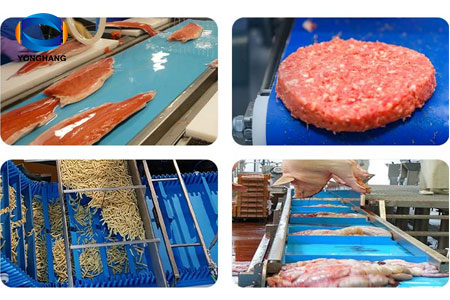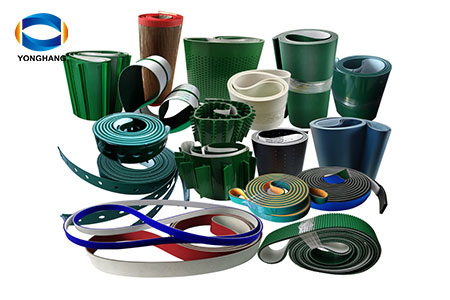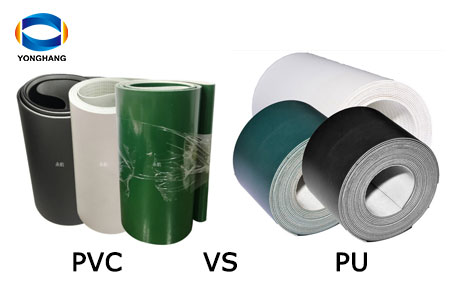
In food industry production lines, PU (polyurethane), PVC (polyvinyl chloride), and silicone conveyor belts are popular choices for food factories. Each material possesses distinct characteristics suited to different production scenarios. This article provides an in-depth analysis from dimensions such as safety performance, durability, and applicable scenarios to offer guidance for food factories conveyor belt selection.
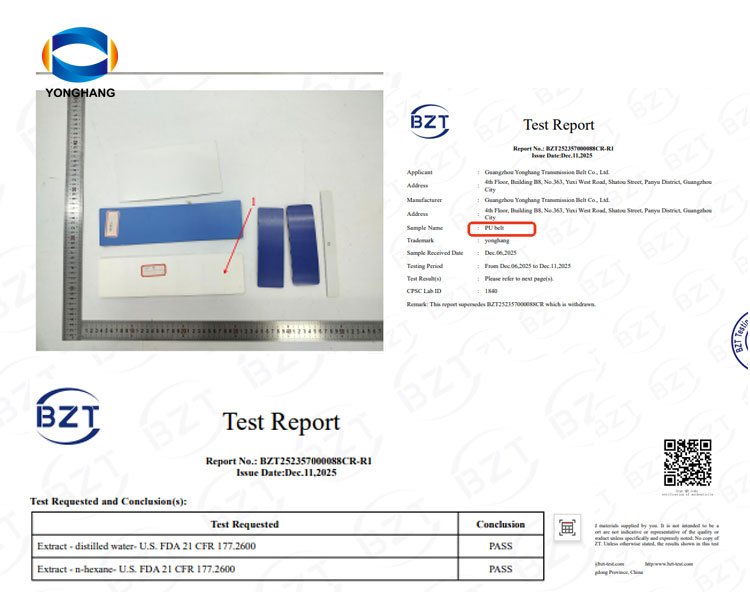
The primary requirement is compliance with national food contact material standards (GB 4806 series) and international FDA certification. This ensures materials are non-toxic, odorless, free from harmful additive migration, and incapable of contaminating food—representing the baseline for “safety” and the foundation of our comparison. At Yonghang, all our food-grade conveyor belts carry FDA certification, ready for your selection!
I. PU Belts: Balanced Performance, Preferred Choice for Food Processing Plants
PU belts (polyurethane conveyor belts) are among the most widely used conveyor belts in the food industry today. Their balanced safety and durability make them the preferred choice for most food processing plants. In terms of safety, high-quality PU belts are manufactured using food-grade polyurethane materials. They contain no harmful components such as plasticizers or heavy metals. The material itself is non-toxic and odorless, compliant with FDA and GB 4806 standards. It does not react chemically with food nor leach harmful substances that could contaminate products. Their surface is dense and smooth, featuring no pores or hard-to-clean corners. Food particles and oils are unlikely to adhere, allowing for easy cleaning with simple wiping or rinsing. This effectively reduces bacterial growth, making them particularly suitable for high-hygiene environments like meat processing, pastry production, and dairy manufacturing.
In terms of durability, PU belts demonstrate exceptional advantages. Their outstanding abrasion resistance, with surface hardness reaching 80-90, effectively withstands friction from various food materials. Long-term use rarely causes surface peeling or cracking, typically extending service life to 3-5 years (with proper maintenance), significantly reducing replacement frequency and costs. Additionally, PU belts demonstrate excellent oil resistance, effortlessly handling high-fat environments like fried foods and meat processing without softening or deforming due to grease exposure. Their superior tear resistance and elasticity adapt well to complex conveyor layouts in food plants. They maintain stable operation with minimal jumping over rollers and resist brittleness in low temperatures, accommodating standard food processing ranges from -20°C to 80°C.
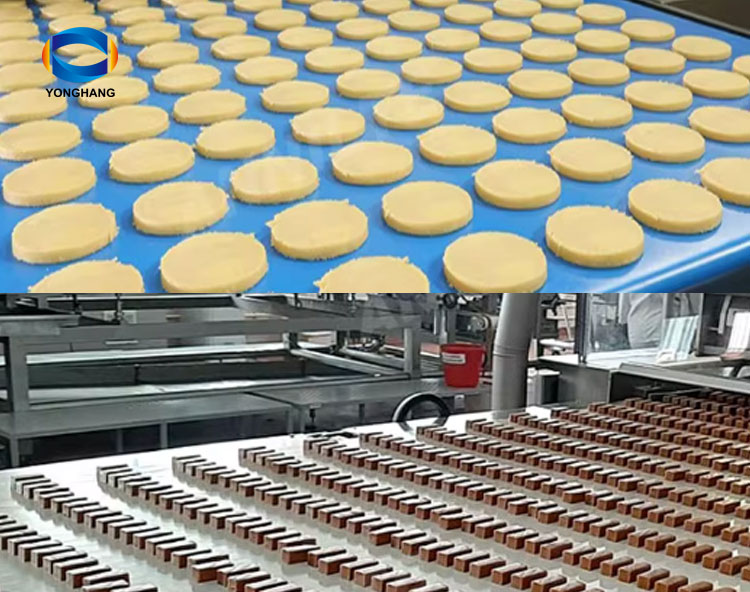
Of course, PU belts also have their drawbacks: their heat resistance is relatively average. Prolonged use in environments exceeding 120°C accelerates aging and shortens their lifespan, making them unsuitable for direct use in high-temperature processes such as baking or high-temperature steaming. Additionally, they are slightly more expensive than PVC belts.
II. PVC Belts: Outstanding Cost-Effectiveness for Standard Ambient Temperature Applications
PVC belts (polyvinyl chloride conveyor belts) are the preferred choice in food processing plants for their low cost and easy processing characteristics, making them particularly suitable for cost-sensitive, standard ambient temperature applications with minimal conveying requirements. Regarding safety, food-grade PVC belts must be manufactured from non-toxic raw materials, incorporate food-grade stabilizers, and be explicitly labeled as “food-grade” to comply with FDA and GB 4806 standards. This prevents migration of harmful additives from standard PVC belts into food products. Qualified PVC belts feature a soft texture and moderately smooth surface, making them suitable for conveying fresh produce, ambient-temperature packaged foods, and grain products. They also exhibit good acid and alkali resistance, capable of withstanding brief contact with acidic fruits.
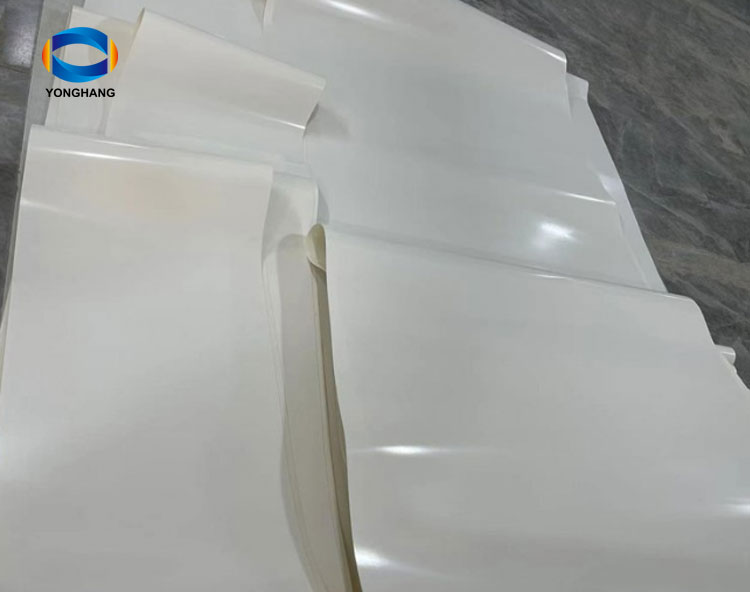
In terms of durability, PVC belts offer average performance. Their high flexibility and good plasticity allow easy adaptation to curved conveyor routes, with simple installation and adjustment. They are suitable for scenarios requiring frequent turns, such as food sorting lines and packaging lines. Under normal temperature and light load conditions, PVC belts meet basic operational requirements with acceptable wear resistance. However, compared to PU belts, their lower hardness leads to surface abrasion and cracking when conveying heavy food items or high-friction materials over extended periods. Their typical service life is 2-3 years, requiring regular maintenance and replacement.
PVC belts have notable limitations: poor oil resistance—prolonged contact with fats causes surface degradation and performance decline, making them unsuitable for oil-rich environments like frying or meat processing; limited heat tolerance with a maximum operating temperature of approximately 60°C, leading to softening and deformation in high-temperature settings, thus incompatible with baking or high-temperature cleaning processes. Additionally, some low-cost PVC belts may pose risks of additive overdose. Strict verification of certification credentials is essential during procurement to avoid safety hazards.
For food processing plants, we recommend Yonghang’s white food-grade PVC conveyor belt, certified by FDA.
III. Silicone Belts: Designed for High-Temperature Applications, Safe and Non-Stick but with Limited Abrasion Resistance
Silicone belts (food-grade silicone conveyor belts) have become essential for high-temperature food processing due to their outstanding heat resistance, offering the highest safety profile among the three options. Made from food-grade silicone material, it is non-toxic, odorless, and chemically stable, meeting FDA and GB 4806 standards. Even at 200°C, it does not release harmful substances or contaminate food. Its smooth, non-stick surface effectively prevents adhesion of sticky foods like candies, chocolates, and soft pastries. Easy to clean with high-pressure water jets, it eliminates hygiene dead zones and suits high-sanitation environments. Simultaneously, it exhibits an exceptionally wide temperature tolerance, operating stably from -70°C to 220°C or higher. This capability allows it to handle high-temperature processes like baking and steam cooking while also adapting to low-temperature cold chain transportation scenarios.
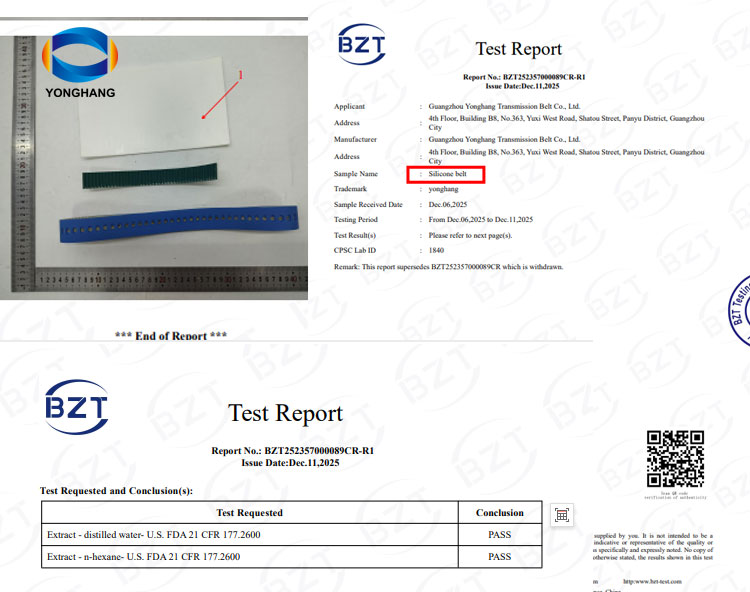
In terms of durability, silicone belts exhibit contrasting performance: under high-temperature, light-load conditions without severe friction, they demonstrate exceptional stability and aging resistance, with a service life of 3-4 years. However, their abrasion resistance and tear strength are relatively weak, and their lower hardness makes them prone to surface wear and tearing when conveying heavy food items, hard materials, or operating under high-tension conditions. This necessitates more frequent maintenance and replacement. Additionally, silicone belts carry a higher price tag, making their initial procurement cost the highest among the three options. They also exhibit rollers exhibit poor passability and lack lateral stability.rendering them unsuitable for conveyor lines operating at high speeds and heavy loads over extended periods.
IV. Core Comparison of the Three & Ultimate Selection Recommendations
Based on the above analysis, we’ve compiled a core performance comparison to help you quickly distinguish between the three:
1. Safety: Silicone belt > PU belt ≈ PVC belt (All must meet food-grade certification. Silicone belts release no harmful substances at high temperatures. PU belts are easy to clean with no residue. PVC belts require strict selection of qualified products);
2. Durability: PU belt > PVC belt > silicone belt (PU offers comprehensive resistance to abrasion, oil, and tearing; PVC suits light loads at room temperature; silicone has noticeable wear limitations);
3. Cost-effectiveness: PVC belt > PU belt > silicone belt;
4. Suitable Applications: PU belts are ideal for meat, pastries, dairy products, and other standard ambient-temperature, medium-to-light-load scenarios requiring moderate oil resistance; PVC belts suit fresh produce, ambient-temperature packaged foods, sorting/packaging lines, and other cost-sensitive, ambient-temperature, light-load applications; silicone belts excel in baking, high-temperature steaming, cold chain logistics, sticky foods, and other high-temperature or stringent hygiene environments.
A crucial reminder for food factory purchasers: There is no universally “safest and most durable” conveyor belt—only the option best suited to your specific operating conditions. Our Yonghang team provides technical support. Share your usage details with us, and we’ll analyze and recommend the optimal, most cost-effective solution.
Additionally, regardless of material choice, routine maintenance significantly extends service life: – Regular cleaning – Avoiding sharp materials that can cut the belt – Controlling conveying speed, load, and exposure to corrosive environments These details maximize the safety and durability of your conveyor belt, safeguarding your food production operations.
Yonghang transmission Belt is a well-known company in China. Our founders and co-founders both have 20 years of experience in the transmission industry. We have a group of employees who have worked for 10 years, 8 years, and 5 years. Our vision is: to ensure that mechanical equipment operates continuously. Our slogan is: never stop, set sail.