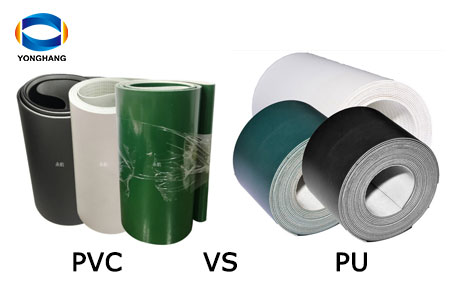
In industrial transmission systems, Haul off belts serve as the “lifeblood” of equipment. Their proper selection directly impacts transmission efficiency, energy consumption levels, and service life. Faced with the vast array of belt types and specifications available on the market, how can one make an informed choice? This article provides a systematic methodology for belt selection.
I. Haul off belts Four Core Evaluation Factors Before Selection
1. Precise Equipment Parameter Matching
Load Characteristic Analysis:
Calculate the rated power and peak load of the transmission system
Determine the duty cycle (continuous/intermittent) and start frequency
Assess load nature: constant load, impact load, or variable load
Speed and Ratio Requirements:
Measure the speed ratio between drive and driven pulleys
Calculate belt line speed (typically ≤40m/s)
Consider need for variable speed transmission
Space Constraints:
Measure available installation dimensions
Determine center distance adjustment range
Evaluate pulley diameter limitations
2. Comprehensive Consideration of Operating Environment
Temperature Range: Standard belts suitable for -20°C to 60°C; high/low-temperature models required for special environments
Humidity and Media: Mold-resistant formulations for humid environments; oil-resistant models for oil contact
Dust Concentration: Anti-static and self-cleaning designs required for high-dust environments
Chemical Exposure: Specialized chemically inert materials for contact with acids, alkalis, or other chemicals
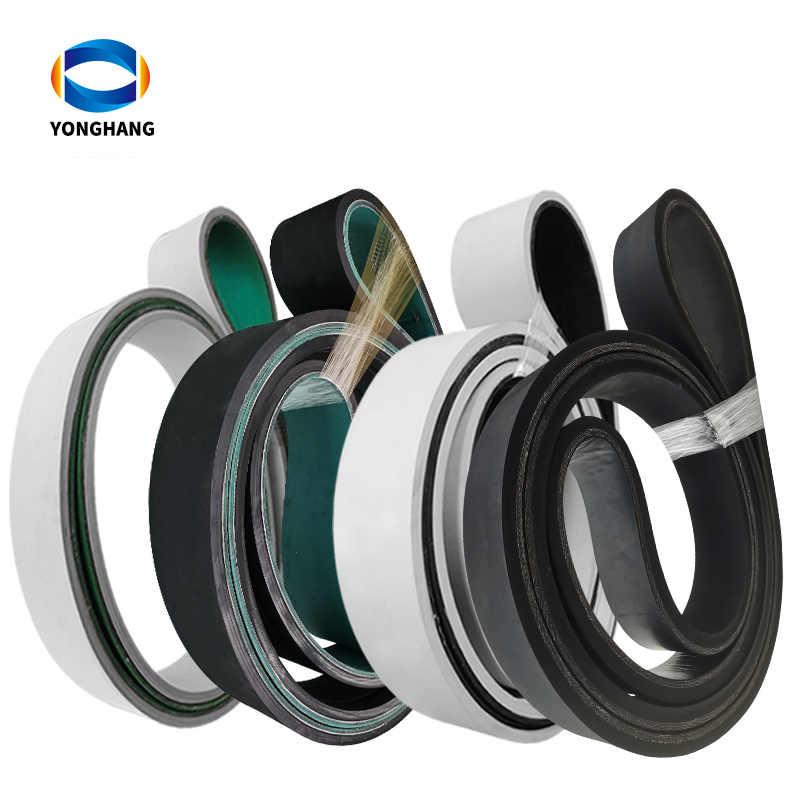
II. Haul off belts Types of Tractor Belts and Their Applications
Flat Belt
Characteristics: Flat, ribbon-like design relying on surface friction for power transmission
Applications: High-speed, large center distances, multi-shaft drives
Advantages: Speeds up to 100 m/s, smooth operation with low noise
Limitations: Requires high tension force, relatively limited power transmission capacity
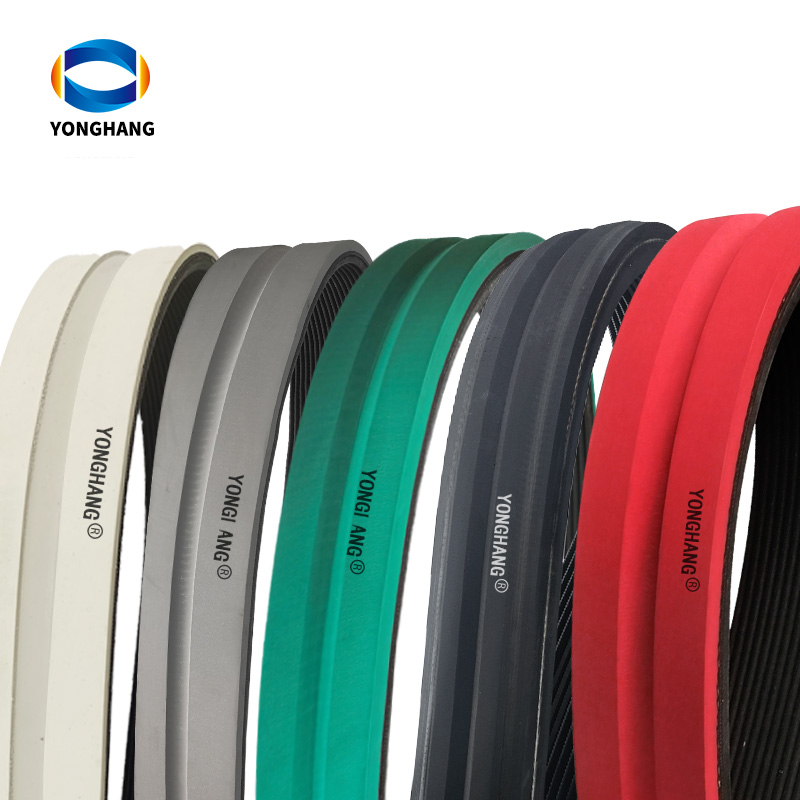
Multi-V Belt
Characteristics: Combines advantages of V-belts and flat belts with multiple longitudinal wedges on inner surface
Applications: Compact multi-pulley transmission systems
Advantages: High transmission ratio, excellent flexibility, space-saving
Limitations: Demands high pulley machining precision
III. Haul off belts Key Parameter Selection Criteria
1. Material Science Selection
Traditional Rubber: High cost-effectiveness, suitable for general industrial environments
Polyurethane (PU): Superior abrasion resistance, suitable for food and packaging industries
Chloroprene Rubber (CR): Oil-resistant and aging-resistant, suitable for automotive and agricultural machinery
Silicone Rubber: Withstands extreme temperatures (-60°C to 250°C), suitable for specialized environments
Fiber Reinforcement Layer: Polyester cord (dimensional stability) vs. Aramid cord (high strength)
2. Precise Dimension Calculation
Pitch Length: Measure center distance between pulleys and calculate using formula L=2C+π(D+d)/2+(D-d)²/4C
Cross-Section Dimensions: Select appropriate width and thickness based on transmitted power
Tooth Profile Matching: Ensure synchronous belt teeth perfectly match pulley profile (e.g., HTD5M, 8M)
3. Performance Grade Evaluation
Tensile Strength: Select specifications with a safety factor ≥8
Elongation Control: Working elongation should be less than 2%
Fatigue Resistance: Review manufacturer’s flexural fatigue test data
Electrical Conductivity: Select antistatic models for explosive environments (resistance value 10⁶-10⁹Ω)
IV. Brand and Supplier Evaluation Criteria
1. Technical Specifications Comparison
Request technical data sheets for each product for cross-comparison
Require submission of actual operating condition test reports
Examine material certifications (e.g., ISO, FDA, RoHS)
2. Quality Assurance System
Is the factory ISO9001 certified?
Are third-party product test reports available?
Compare warranty periods and after-sales policies
3. Service Capability Assessment
Professionalism of technical support team
Availability of stock and emergency delivery capability
Does the supplier offer installation guidance and technical training?
VI. Pre-Installation Verification and Testing Recommendations
Sample Testing: Request samples for real-world testing before critical applications
Compatibility Check: Ensure new belts match existing pulley grooves
Small-Batch Trial: Replace 1-2 belts initially for testing; proceed with bulk replacement after stabilization
Data Logging: Record key parameters like energy consumption, temperature, and vibration during the trial period
Selecting haul off belts should not be viewed as a simple component replacement but as an opportunity to optimize the entire drive system. Wise selection begins with deep understanding of equipment requirements, succeeds through scientific analysis of technical parameters, and culminates in rational evaluation of long-term benefits.
We recommend establishing transmission system archives to document each unit’s belt replacement history, performance metrics, and cost data. Continuously refine selection decisions through data analysis. Forge technical partnerships with suppliers beyond transactional relationships, leveraging expertise to safeguard your equipment efficiency.Remember: The most suitable belt isn’t the most expensive or the cheapest, but the one that best matches your equipment characteristics, operating environment, and production requirements. Investing time in the right choice will pay dividends over the coming years through higher reliability, lower operating costs, and more stable production rhythms.