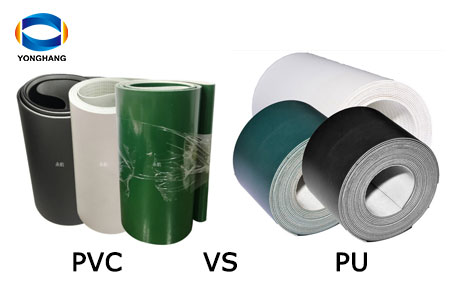
In the precise operation of industrial transmission systems, the haul off belts is like the “artery” of the equipment. The choice of its material directly affects the efficiency, stability and lifespan of the entire production system. When faced with the three major types of belts on the market – rubber, polyurethane and composite materials – how can one make a scientific choice? This article will take you to deeply analyze the characteristics and application scenarios of these three materials.
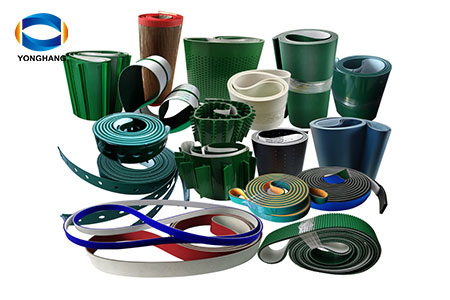
Rubber haul off belts: The classic choice, with outstanding elasticity
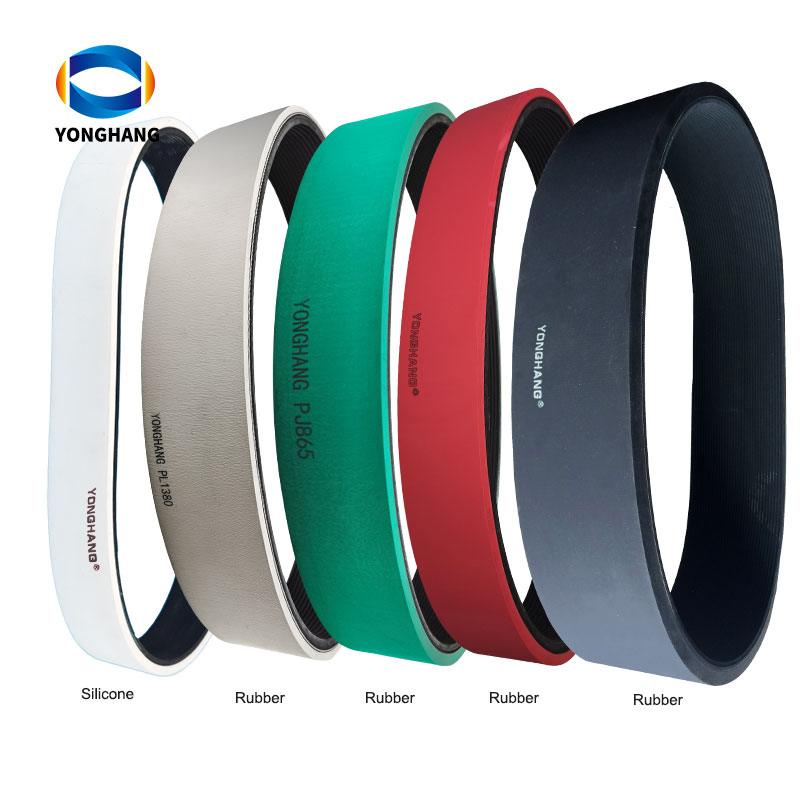
Rubber, as the most traditional material for haul off belts, has undergone long-term technological development and market validation. Its core advantage lies in its excellent elastic buffering performance, which can effectively absorb shocks during heavy-load startup and operation, protecting the transmission system from damage. The naturally high frictional property of the surface makes it perform well in scenarios with high anti-slip requirements. At the same time, the mature manufacturing process gives rubber belts a significant cost advantage, making them the preferred choice for many basic industrial applications.
However, there are also significant limitations to the use of rubber materials. In environments exposed to oils or chemical solvents, rubber is prone to corrosion and expansion; in terms of temperature adaptability, high temperatures accelerate the aging of rubber, while low temperatures cause the material to harden and crack. Moreover, with the increasing emphasis on environmental protection, the degradability of some rubber materials has also become a focus of attention.
Typical application scenarios: mining transportation systems, port loading and unloading equipment, ordinary agricultural machinery, etc. These are industrial environments with medium to low speeds and heavy loads.
Polyurethane haul off belts: Precise transmission, wear-resistant and corrosion-resistant
Polyurethane material represents the development direction of modern precise transmission. Its most prominent feature is excellent wear resistance – its wear resistance can be 5 to 10 times that of ordinary rubber, significantly extending the service life. In terms of oil resistance and chemical corrosion resistance, polyurethane performs exceptionally well and can adapt to various complex industrial environments. What is more noteworthy is its extremely low elongation rate, ensuring a highly stable transmission ratio, especially suitable for automated equipment requiring precise synchronization.
The limitations of polyurethane mainly lie in its relatively weak hydrolysis resistance, prone to degradation in high-temperature and high-humidity environments. At the same time, its elastic recovery ability is relatively poorer than that of rubber, and its buffering performance is limited. The high technical and raw material requirements also lead to its cost being significantly higher than traditional rubber products.
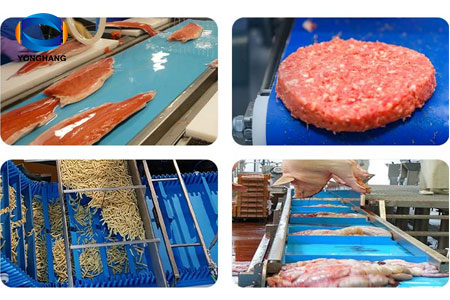
Typical application scenarios: Food processing machinery, pharmaceutical packaging equipment, precision conveying production lines, etc., in fields with high requirements for hygiene standards and transmission accuracy.
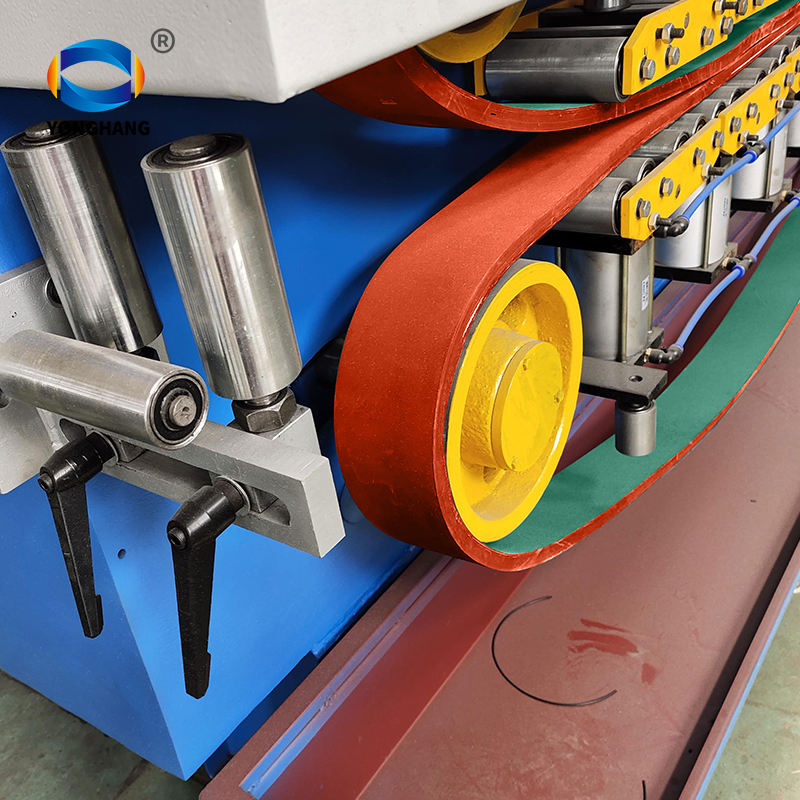
Composite material haul off belts: Technology integration, performance customization
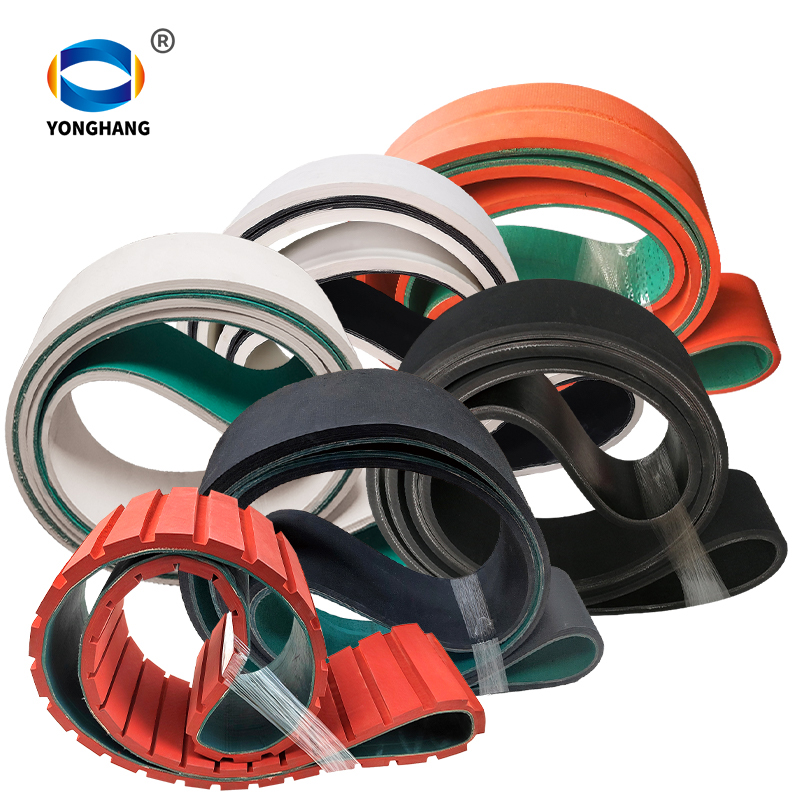
Composite materials represent the future direction of haul off belts technology. Through innovative laminating technology, the advantages of different materials are combined together – for instance, the nylon fiber reinforced layer provides tensile strength, and the special rubber coating ensures friction performance, creating a “1+1>2” synergy effect. The greatest advantage of this material lies in its customizability, enabling targeted design for specific working conditions.
Composite materials can cope with extreme working environments, whether it is a high-temperature smelting workshop or a low-temperature refrigeration environment, and can achieve optimal adaptability through material ratio adjustment. Its high strength and low elongation characteristics are particularly prominent in heavy-load and high-speed scenarios.
Of course, the complex manufacturing process also brings higher technical barriers and cost pressure, and the difficulty of on-site repair is also relatively greater. Typical application scenarios: High-end logistics automated sorting systems, heavy equipment in the steel and metallurgical industries, special engineering vehicles, and other fields with specific performance requirements.
Four dimensions of scientific selection
During the actual selection process, it is recommended to comprehensively consider the following four aspects:
Load characteristic analysis: In heavy-load impact environments, rubber’s buffering and protective properties should be given priority; for high-precision synchronous transmission, the dimensional stability of polyurethane is required; when extreme loads are combined with special environments, composite materials are often the best solution.
Environmental adaptability assessment: For oil-contaminated environments, polyurethane is the preferred choice; for wide temperature range operating conditions, special materials are required; in humid environments, ordinary polyurethane should be avoided and water-resistant models should be selected.
Compliance requirements confirmation: In the food and pharmaceutical industry, materials that meet certifications such as FDA must be selected; in explosion-proof areas, anti-static design is required; for outdoor long-term use, UV protection needs to be considered.
Life cycle cost calculation: Besides the initial purchase cost, the long-term operational costs such as replacement frequency, energy consumption differences, and downtime losses should also be taken into account. Although high-end materials have a higher unit price, they may bring greater overall benefits by extending the service life and reducing malfunctions.
Industry Development Trends and Selection Suggestions
Currently, the material of the haul off belts is evolving in three directions: in terms of environmental protection, bio-based materials and recyclable technologies are rapidly maturing; in terms of intelligence, embedded sensor belts have begun to be applied in predictive maintenance systems; in terms of lightweighting, new high-strength fibers are replacing traditional reinforcing materials.
For most general industrial scenarios, synthetic rubber remains the most cost-effective option; for precision manufacturing and clean environments, polyurethane materials should be given priority consideration; and for those extreme conditions with special technical bottlenecks, composite materials offer groundbreaking solutions.
Finally, it is recommended to collaborate with professional technical teams, such as Guangzhou Yonghang Conveyor Belt Company, etc., to provide detailed operating condition parameters for customized analysis and sample testing. The correct selection of materials can not only increase the equipment efficiency by more than 30%, but also significantly reduce the system failure rate, providing a solid guarantee for the continuity of production.
In the context of Industry 4.0, the haul off belts has evolved from a simple transmission component to a key element that affects the intelligence level of the entire system. Choosing the right material is the foundation for laying the most solid groundwork for the production efficiency and quality stability of the enterprise.