
Timing Belt Accessories
-
Sub-items:
-
Clamping Plates: High-precision aluminum or steel plates for securing belt ends.
-
Nuts & Fasteners: Durable stainless steel or brass nuts designed for ATN and specialized belt profiles.
-
Mechanical False Teeth: CNC-machined stainless steel inserts for unrivaled positioning accuracy and jig attachment.
-
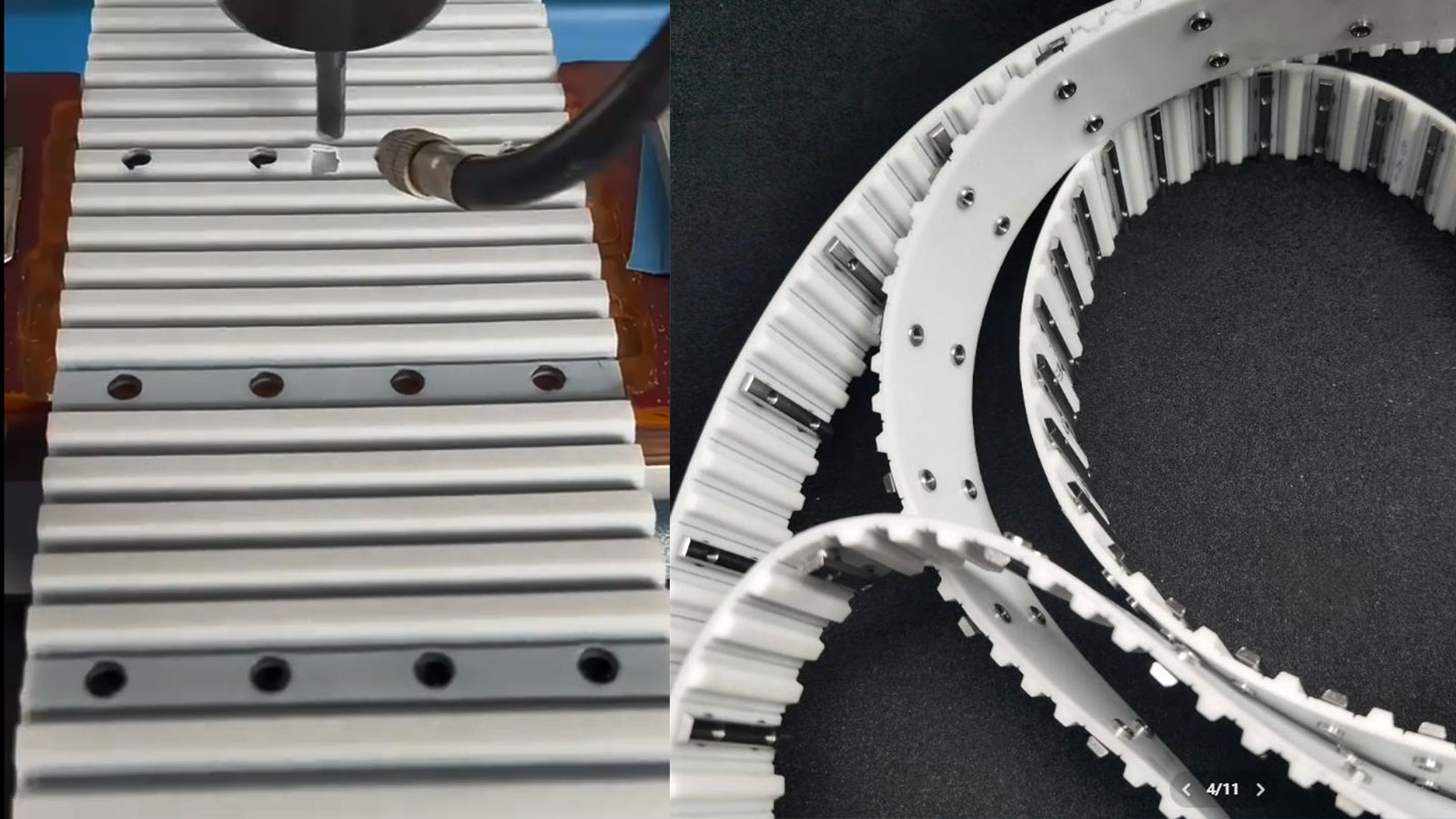
Custom Machining: We offer specialized tooth removal, perforation, and attachment installation services to meet your specific requirements.
-
Our factory has been engaged in production and wholesale for 20 years, including casting false teeth, NCN processing of false teeth, stainless steel nuts, brass nuts, various timing belt mechanical fasteners, steel snap interfaces, steel pin interfaces, etc. We also offer small-batch customization services, including finished products. Welcome to inquire.
Yonghang offers a range of timing belt false teeth, including T10/AT10, T20, AT20, H and XH, HTD8M and 14M, etc. The standard width is 25/30/50/75/100mm. We have warehouse availability for all the most commonly used denture models. We can supply the complete system (timing belt with dentures) with very fast turnaround times. For those who only need dentures, they can be shipped immediately.
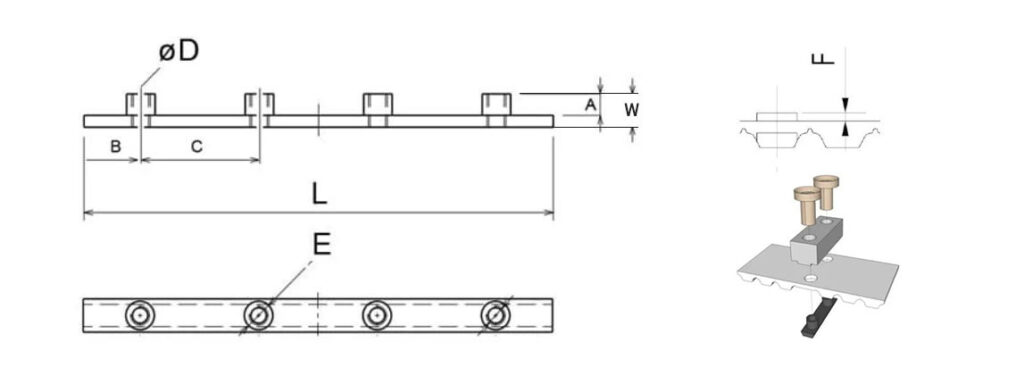
Timing belt false teeth by replacing the teeth of the belt with threaded stainless-steel parts it is possible to screw attachments or devices of any shape and material onto its back. The fastening bushes can be positioned at the desired spacing, and the distance between the attachments can also be determined by the customer, but must be a multiple of the belt pitch.
timing belt accessory
-
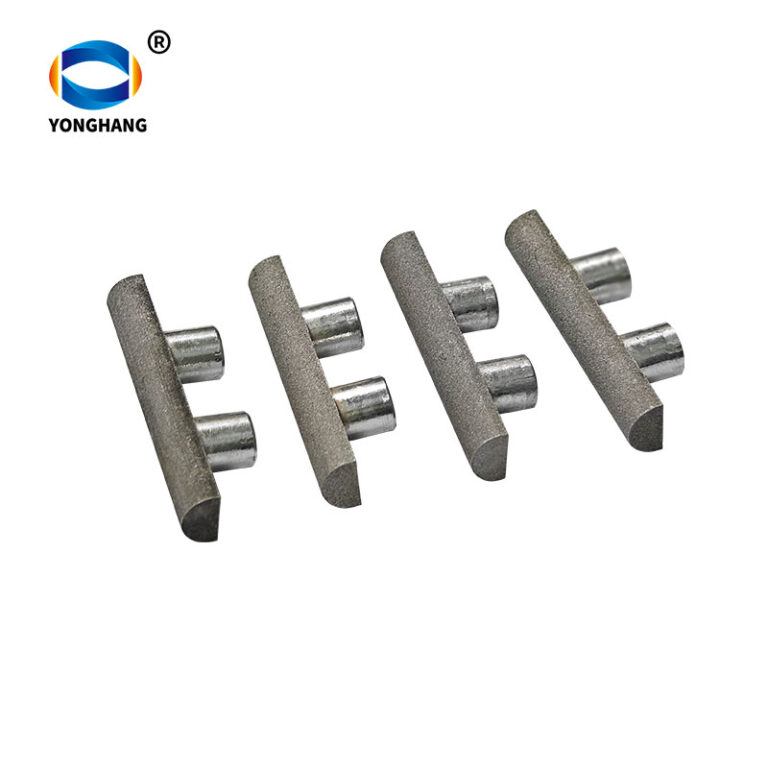
CNC machined false teeth for 14M timing belt
By • 08.05.2026CNC machined false teeth are produced by precision numerical control milling from solid metal blanks, with no melting, casting, or wax molding involved. This digital machining process delivers ultra-high precision, consistent dimensions, dense defect-free material, and smooth surfaces, ideal for high-precision, heavy-load, high-speed automatic transmission and positioning equipment.If you look closely, you can still see the… -
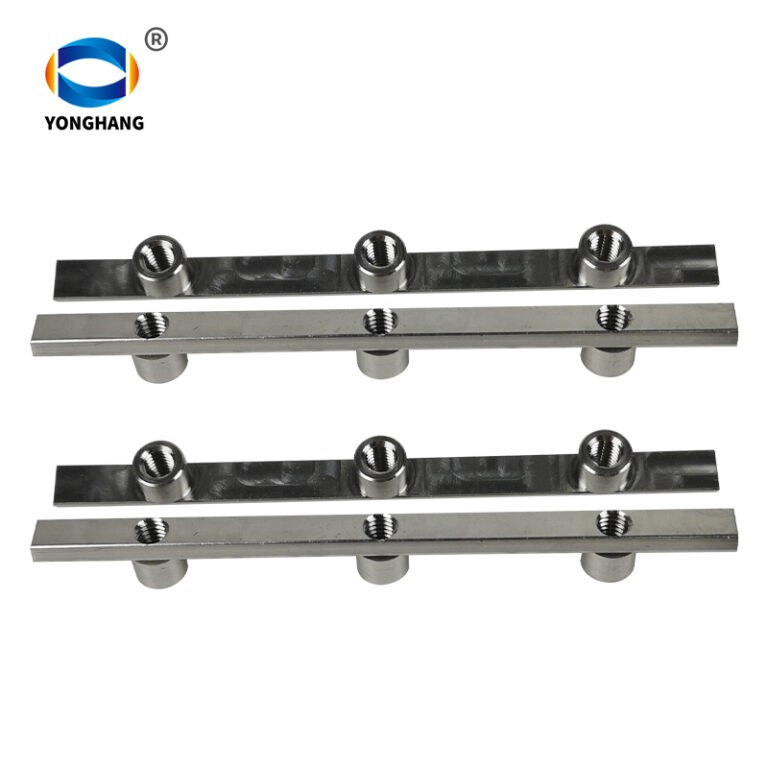
H CNC machined false teeth for timing belt
By • 08.05.2026CNC machined false teeth are produced by precision numerical control milling from solid metal blanks, with no melting, casting, or wax molding involved. This digital machining process delivers ultra-high precision, consistent dimensions, dense defect-free material, and smooth surfaces, ideal for high-precision, heavy-load, high-speed automatic transmission and positioning equipment.If you look closely, you can still see the… -
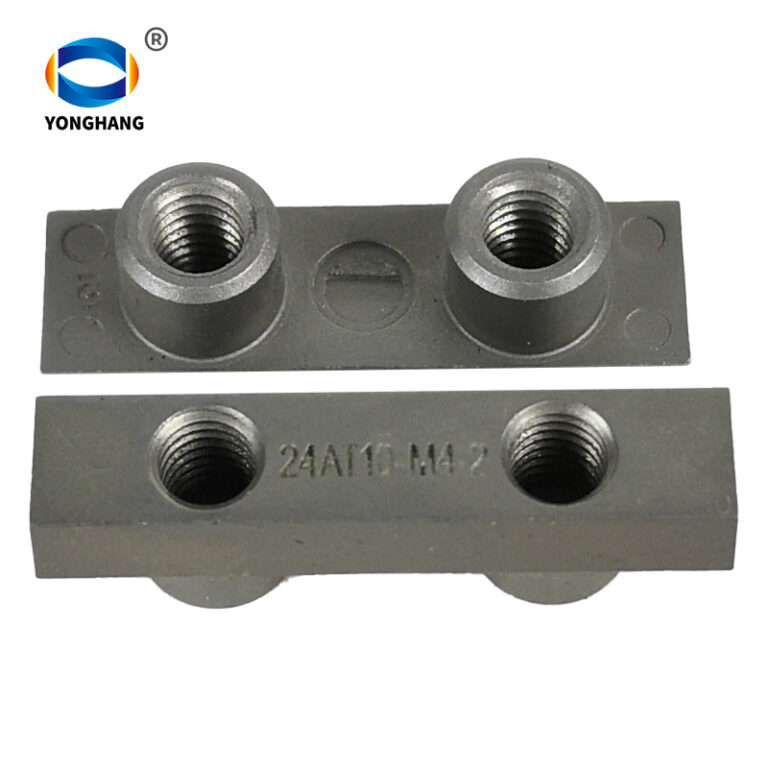
AT10-25 cast Metal False Teeths for Timing Belt
By • 07.05.2026These are cast false teeth from stainless steel, they are quite inexpensive for timing belt. we are able to supply the complete system (timing belt with false teeth) with very fast turnaround times, and for those looking for false teeth only, these can be shipped immediately. (25, 32, 50, 75 100mm). By mechanically attaching the… -
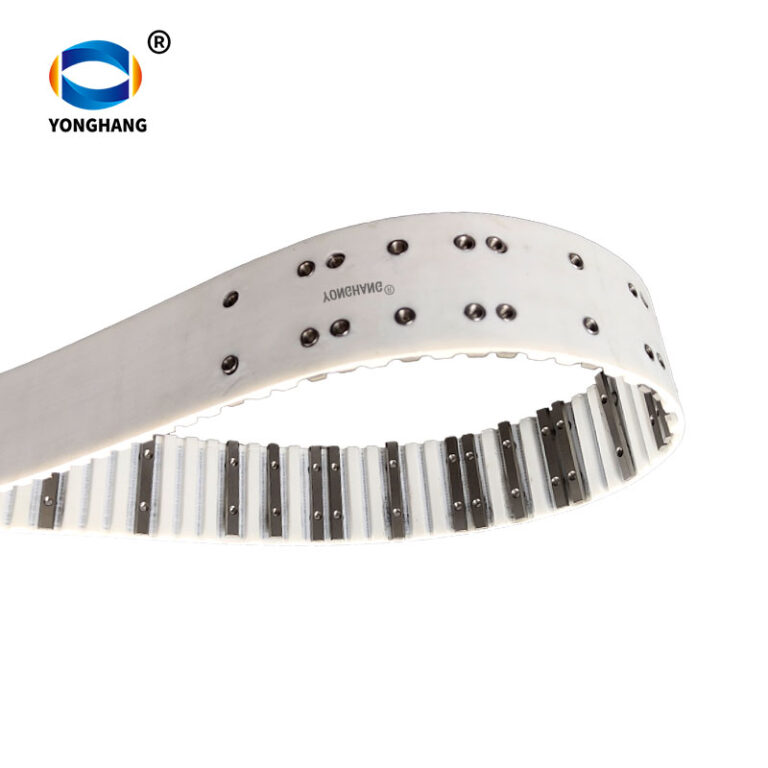
HTD14M Timing Belts with Metal False Teeth
By • 07.05.2026HTD14M Timing Belts with Metal False Teeth: This specialized design requires precise machining—including tooth removal and perforation—to accommodate stainless steel inserts (full-tooth design). Yonghang’s timing belts with metal false teeth provide a high-performance solution where mechanical attachments, commonly known as ‘false teeth,’ are fitted to secure jigs. These false teeth lock the jig onto the… -
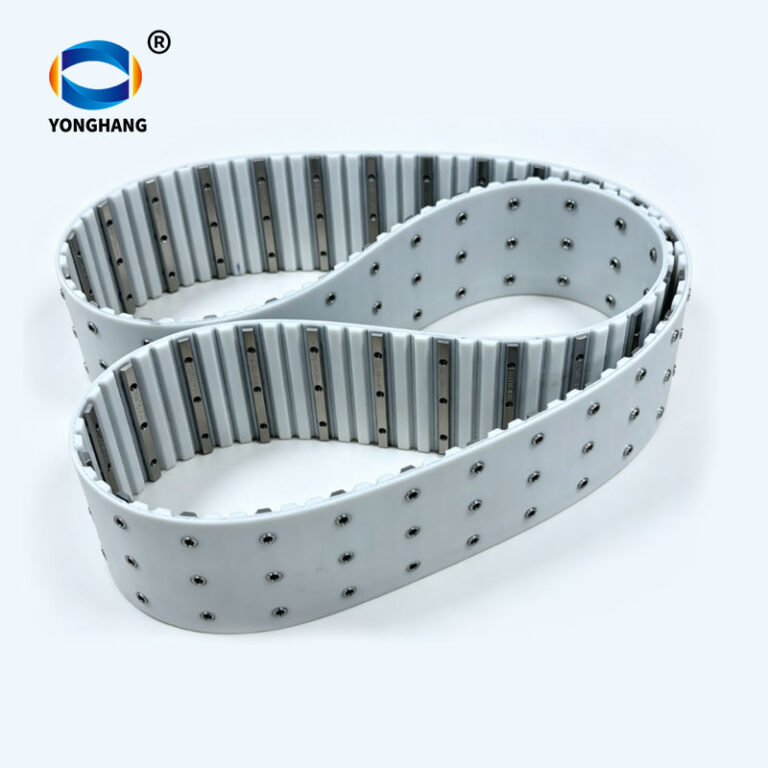
timing belts with false teeth and single-column mechanical attachments
By • 06.05.2026False tooth technology allows timing belts to be transformed into a highly reliable synchronous transport system which combines the robustness of the mechanical system with the flexibility in the choice of materials provided by attachments. Timing belts with false teeth in stainless steel (AISI 304) are widely used in the automatic machinery, packaging and industrial automation… -
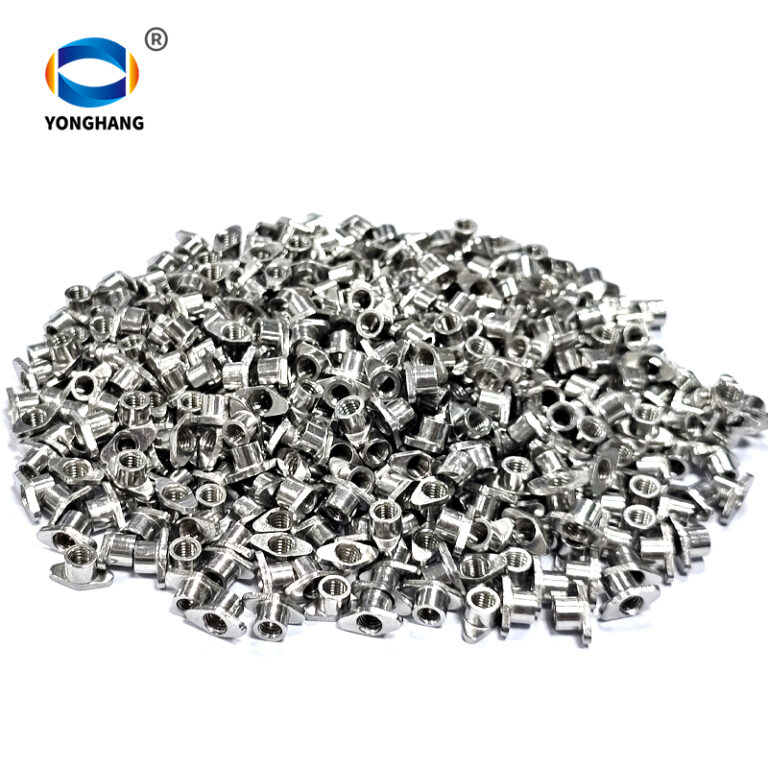
M4 stainless steel nut for ATN10 timing belt
By • 04.05.2026M4 stainless steel nut for ATN10 timing belt parameter Product name M4 stainless steel nut Brand Yonghang Screw thread M4 Material stainless steel304/316 Craft CNC machined Applicable tooth profile ATN10 Description type L (mm) A (mm) B (mm) Ø D (mm) M4*4 12 2.5 1.5 6 M4*4.5 12 3 1.5 6 M4*6 12 4.5 1.5 6…
Application
In combination with timing belts with false teeth, it is also possible to supply mechanical attachments already assembled on the system with the choice of geometry and type of material most suitable for the application.
The screws used to fasten the attachments vary depending on the pitch of the timing belt used; on AT5 pitch M3 screws are used, M4 on AT10, T10 and H, and finally AT20 and T20 use M5 screws.
In the packaging and industrial automation areas plastic attachments tend to be used,However, the more common type is metal accessories, which can all be customized according to the customer’s requirements.
In automated applications, the M4 and M5 nuts of the ATN model are also commonly used here.
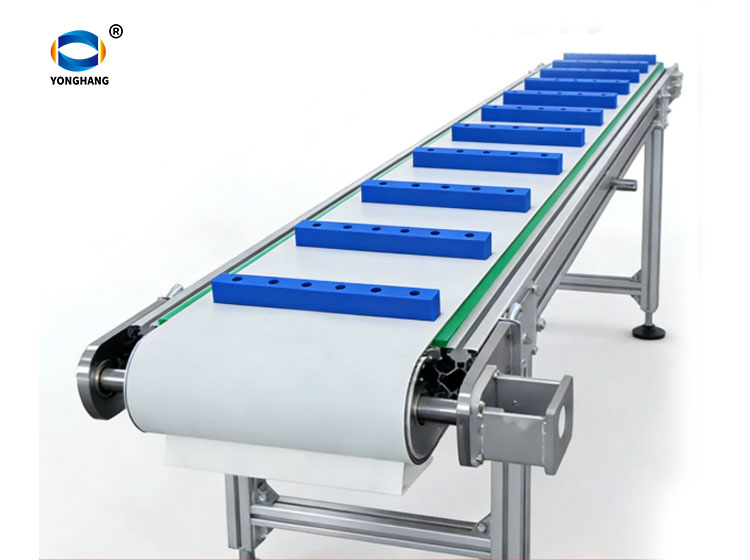 application of false teeth timing belts
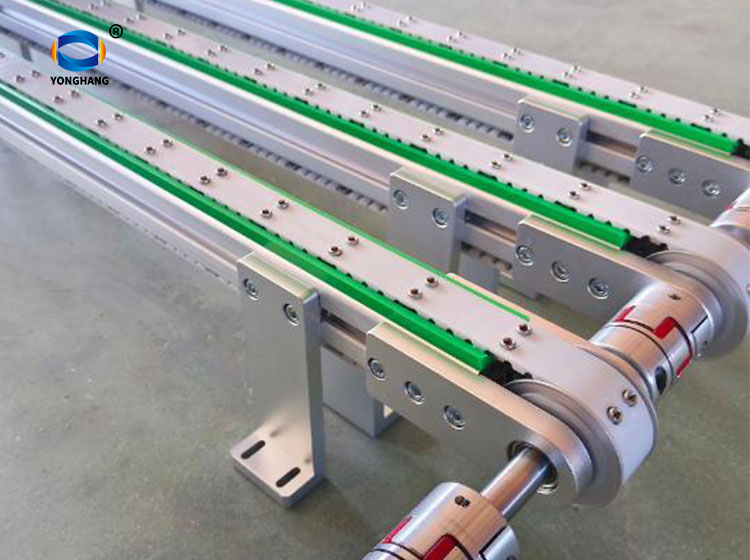 application of false teeth synchronous belts
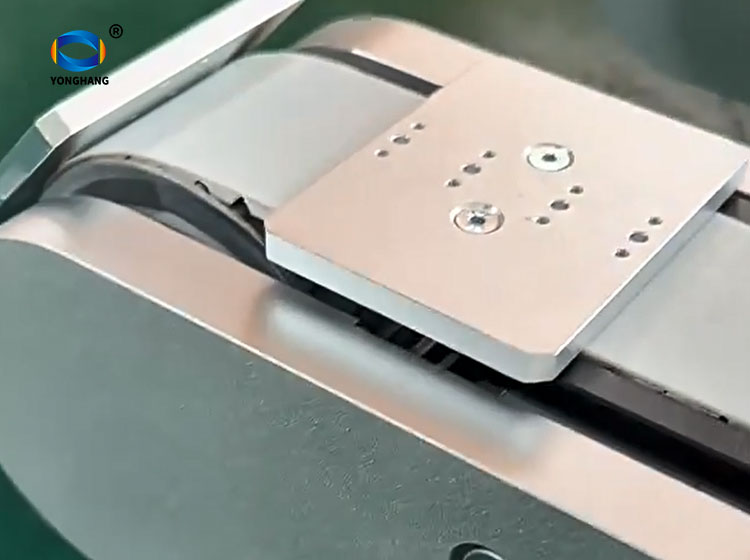 false teeth timing belts application
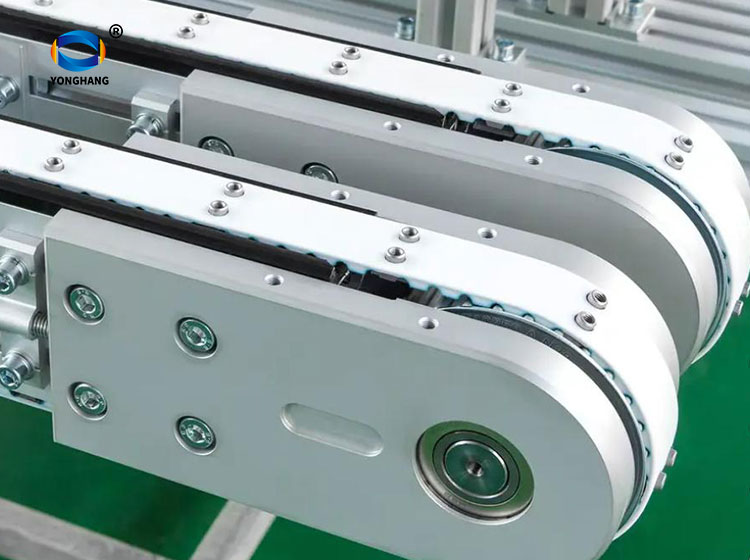 false teeth timing belt application
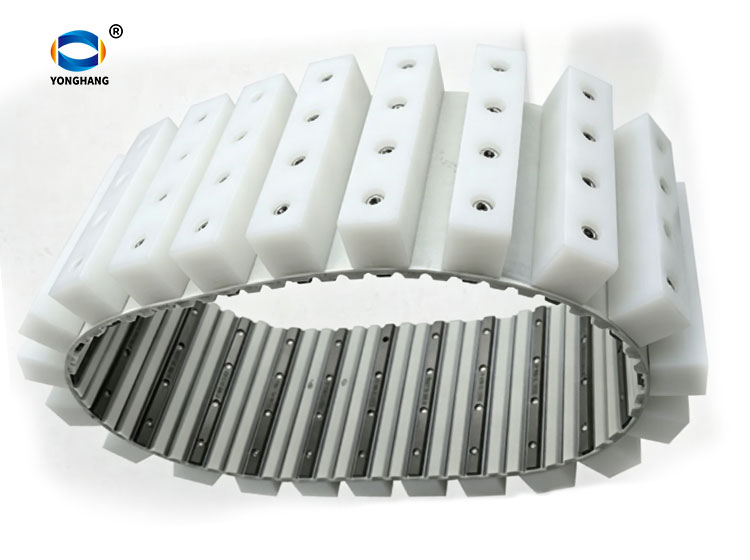 false teeth timing belts with plastic cleats
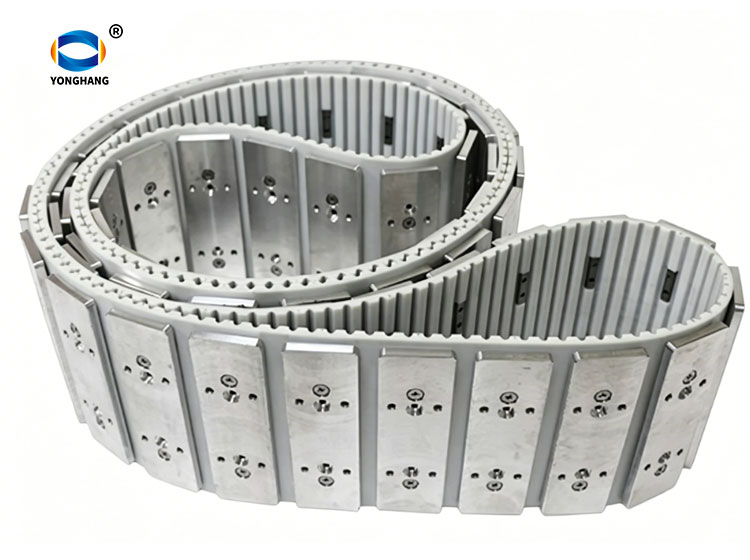 false teeth timing belts with clamp
false teeth Common Sizes in Stock List
| BT = Brass teeth |
| ST = Stainless steel teeth |
The difference between cast false teeth for timing belt and CNC processing false teeth?
We offer two types. Please take a look at the differences. The list of cast false teeth is for your reference. If you need to use a large quantity, the cost of casting will be lower.
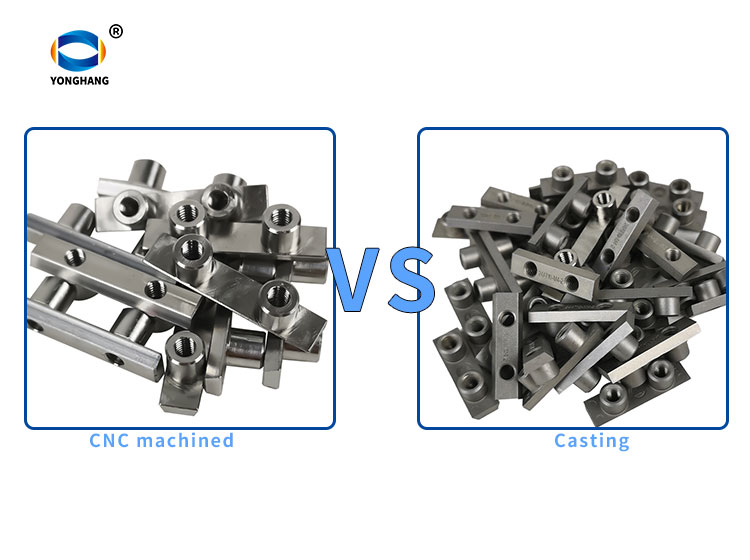
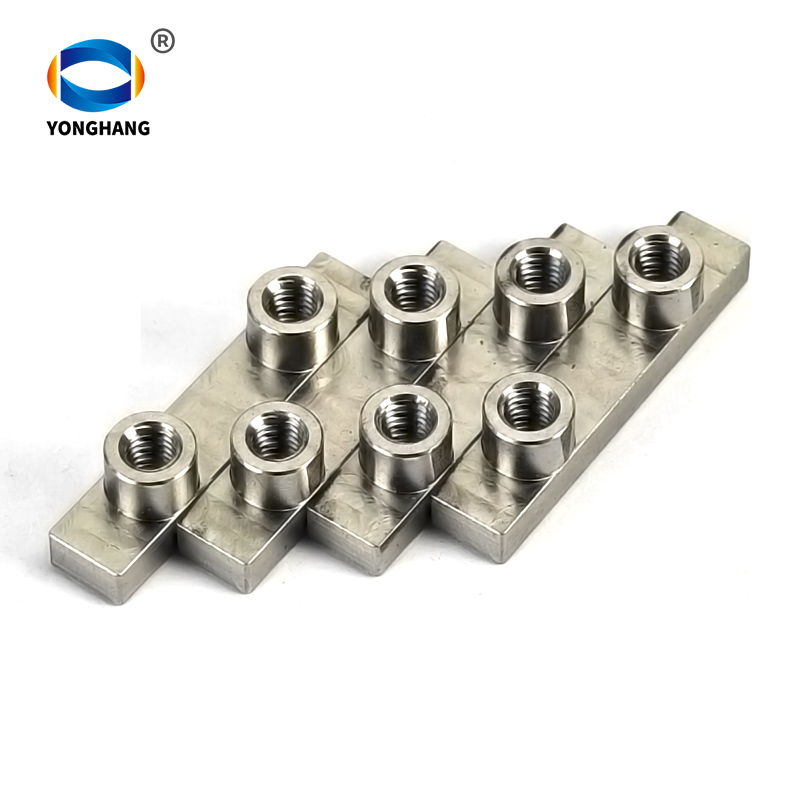
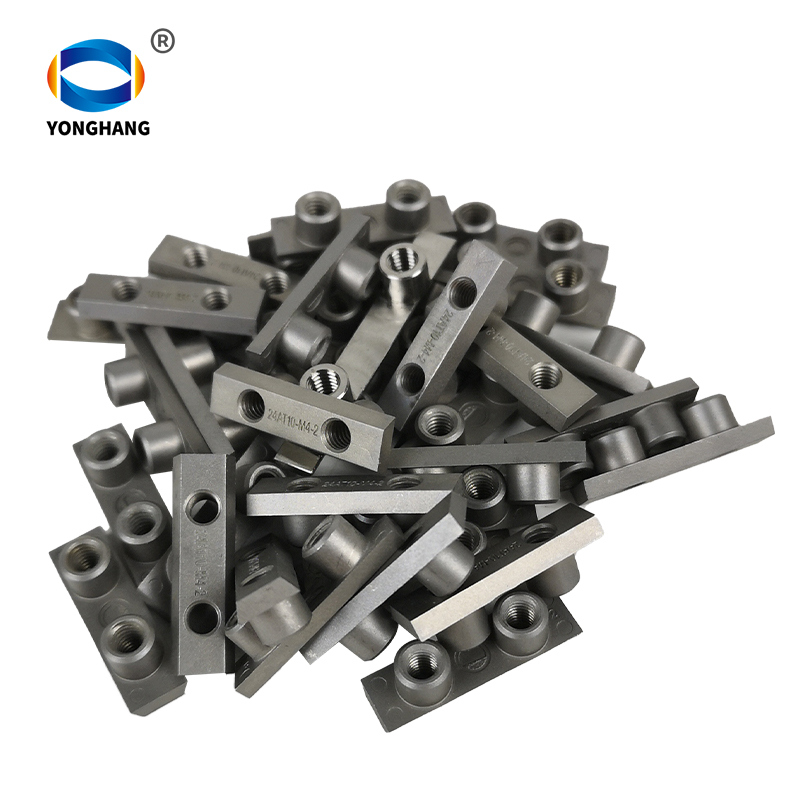
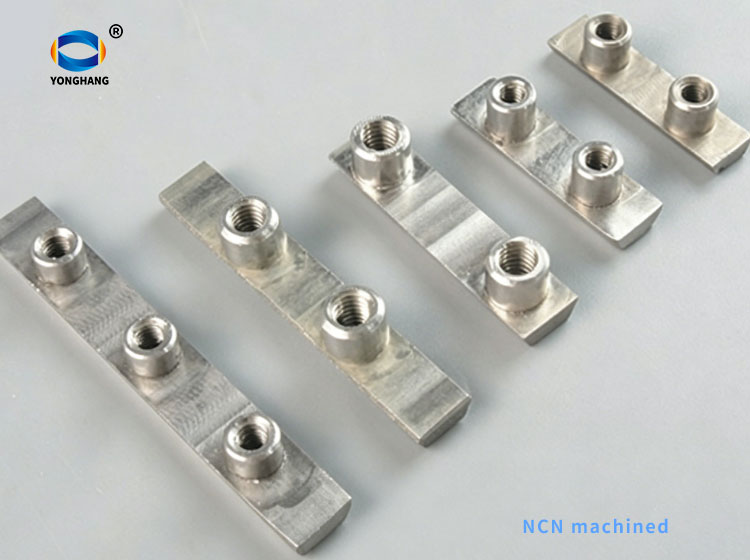
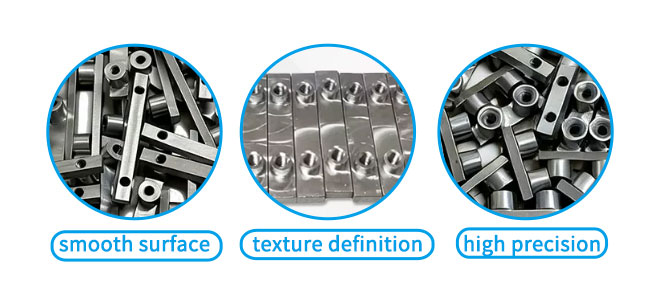
CNC machined false teeth are produced by precision numerical control milling from solid metal blanks, with no melting, casting, or wax molding involved. This digital machining process delivers ultra-high precision, consistent dimensions, dense defect-free material, and smooth surfaces, ideal for high-precision, heavy-load, high-speed automatic transmission and positioning equipment.If you look closely, you can still see the texture left by the NCN blade
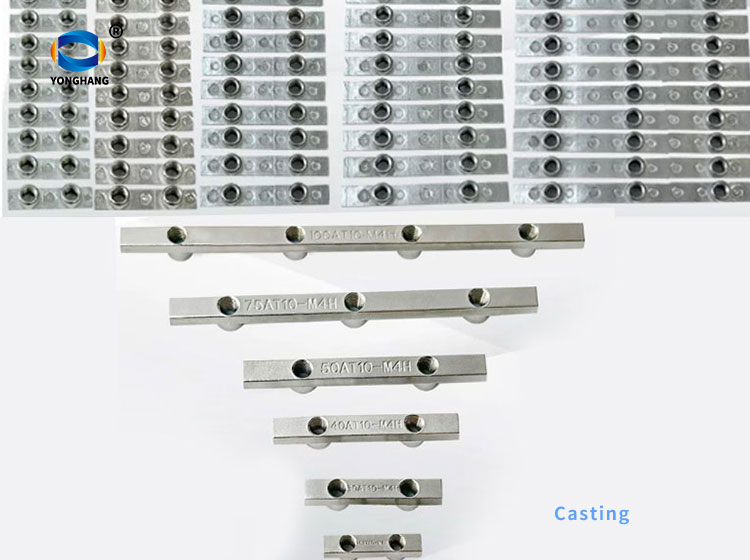
Cast false teeth are manufactured via molten metal casting (investment casting commonly), a traditional molding process with high thermal shrinkage, manual finishing, and inherent material defects. They feature low precision, rough surfaces, and poor durability, suitable only for low-speed, light-load, low-precision transmission scenarios.
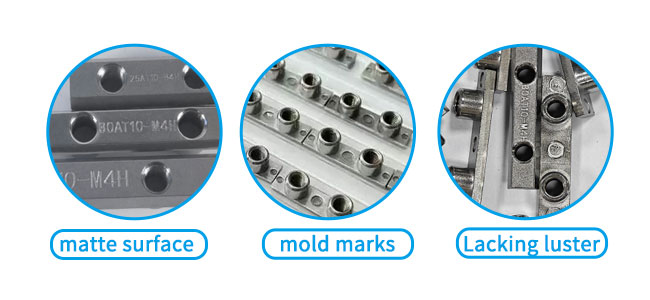
To get straight to the point: Cast false teeth are formed by “melting and casting”, while CNC false teeth are formed by “direct CNC milling of solid metal blocks”. When used on timing belts, the differences are very obvious.
I. Process Differences (Most Fundamental)
-
Cast False Teeth (Investment Casting/Precision Casting)
-
Make a wax mold → Embed in refractory material → High-temperature dewaxing → Cast stainless steel/aluminum/zinc alloy → Trim after cooling.
-
Characteristics: High-temperature melting, liquid forming, manual + mold-driven.
-
-
CNC False Teeth (CNC Machining)
-
Use solid stainless steel/aluminum alloy bar stock → CNC machine tools directly mill the tooth profile, hole positions, and mounting surfaces according to the program.
-
Characteristics: No melting, no casting, full machining, precision guaranteed by equipment.
II. Precision and Consistency (Affecting Positioning Accuracy)
-
Cast
-
Dimensional tolerance: ±0.1~0.3mm
-
Large deviations in tooth pitch, tooth thickness, and mounting hole positions; poor consistency in the same batch.
-
When installed on timing belts: Inaccurate positioning, easy jamming, high noise, and displacement.
-
-
CNC
-
Dimensional tolerance: ±0.01~0.03mm (10–30μm)
-
Tooth profile, hole positions, and pitch are completely consistent with good interchangeability.
-
When installed on timing belts: Accurate positioning, smooth operation, low noise, and stable repeated positioning.
-
III. Material and Strength (Affecting Service Life/Tooth Loss)
-
Cast
-
Internal air holes, shrinkage porosity, and inclusions; low strength and high brittleness.
- Material:Martensitic precipitation-hardening stainless steel, 15–27 HRC
-
Cast stainless steel: Prone to rust, poor wear resistance, and prone to tooth chipping/breakage under heavy load.
-
-
CNC
-
Processed from solid bar stock with continuous metal fibers, no air holes, and high density.
-
Cast: Rough surface with sand holes and many burrs; deviated hole positions; screws are easy to skew and loosen.
- CNC: Smooth surface with clear edges and no burrs; accurate hole positions; screws are smooth, locked firmly, and not easy to loosen.Commonly used materials: 304/316 stainless steel, 7075 aluminum; high strength, wear resistance, and fatigue resistance; not easy to break teeth or deform.
-
-
IV. Appearance and Installation Fit
-
Cast: Rough surface with sand holes and many burrs; deviated hole positions; screws are easy to skew and loosen.
-
CNC: Smooth surface with clear edges and no burrs; accurate hole positions; screws are smooth, locked firmly, and not easy to loosen.
V. Cost and Delivery Time
-
Cast: Low unit price for small batches, but high mold cost; delivery time 7–15 days with many reworks.
-
CNC: Slightly higher unit price for small batches, no mold cost; delivery time 1–3 days with basically no reworks.
VI.Recommendations for Selection
-
Choose CNC False Teeth:
-
Automatic positioning and conveying, SMT, packaging machines, electronic assembly lines;
-
Requirements for accurate positioning, high repeat precision, low noise, and long service life;
-
False teeth need to be frequently disassembled, assembled, and interchanged.
-
-
Choose Cast False Teeth:
-
Ordinary conveyor lines with low speed, light load, and low positioning requirements;
-
Scenarios with tight budget, large batches, and infrequent replacement.
-
Full Comparison Table
| Comparison Item | Cast Timing Belt False Teeth | CNC Machined Timing Belt False Teeth |
| Manufacturing Process | Investment casting/lost wax casting: make wax mold → refractory embedding → dewaxing → high-temperature molten metal pouring → cooling → manual grinding and trimming | CNC precision milling: solid metal blank → digital programming → direct one-time milling of tooth profile, mounting holes and mating surfaces → minor fine polishing |
| Dimensional Precision & Consistency | Low precision, tolerance ±0.1-0.3mm; large batch-to-batch deviation, poor consistency, easy to cause tooth pitch deviation | Ultra-high precision, tolerance ±0.01-0.03mm; 100% consistent size and tooth profile, strong interchangeability, accurate tooth pitch positioning |
| Material & Structural Strength | Internal defects like air holes, shrinkage porosity and slag inclusions are unavoidable; low density, brittle, easy to crack or break under heavy load; poor wear resistance | Made from solid metal blanks (304/316 stainless steel, 7075 aluminum alloy preferred); continuous metal fiber, no internal defects, high density, high strength and strong fatigue resistance; not easy to break teeth |
| Surface Quality | Rough surface, obvious burrs and sand holes; needs heavy manual trimming, uneven finish | Smooth and flat surface, sharp and clear tooth contour, no burrs or rough spots; mirror or fine matte finish optional |
| Installation Fit | Mounting hole position deviation is large, screws are easy to skew and loose; poor fit with timing belt, easy to jam and generate noise | Accurate hole position and mounting surface, firm screw locking, no looseness; perfect fit with timing belt, smooth operation, low noise |
| Production Cycle & Cost | Long cycle (7-15 days), high mold cost for small batches; low unit price for mass production, high rework rate | Short cycle (1-3 days), no mold cost; slightly higher unit price for small batches, almost zero rework, lower long-term use cost |
| Application Scenarios | Low-speed, light-load ordinary conveyor lines, low-precision mechanical transmission; budget-limited and mass-use scenarios | High-precision automation equipment, positioning conveyor lines, packaging machines, electronic assembly lines, heavy-load and high-speed transmission systems; scenarios requiring stable positioning and long service life |
video for timing belts with false teeth processing procedure.
Related Posts
-
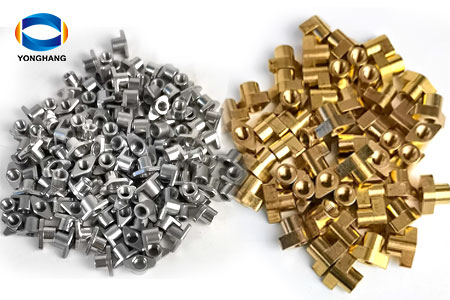
What are differences between Stainless steel nuts and brass nuts used for timing belt
For timing belt (e.g., AT10/T10/H/AT20/ATN12.7/ATN20 profile) connections, stainless steel nuts focus on high strength and corrosion resistance, while brass nuts emphasize self‑lubrication, low friction,…
-
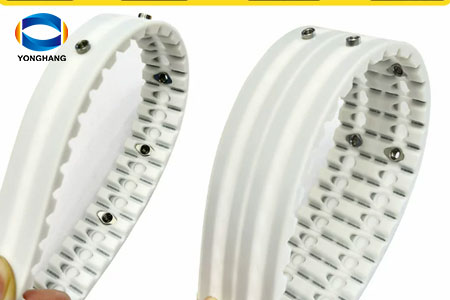
What Are the Differences Between the M3, M4 and M5 rhombus Nuts for ATN Timing Belt?
If you work with ATN timing belts—whether ATN10, ATN12.7, or ATN20—you already know that the hardware securing your profiles to the belt is just…
-
timing belts with false teeth and single-column mechanical attachments
False tooth technology allows timing belts to be transformed into a highly reliable synchronous transport system which combines the robustness of the mechanical system with…
-
False Teeth Belt
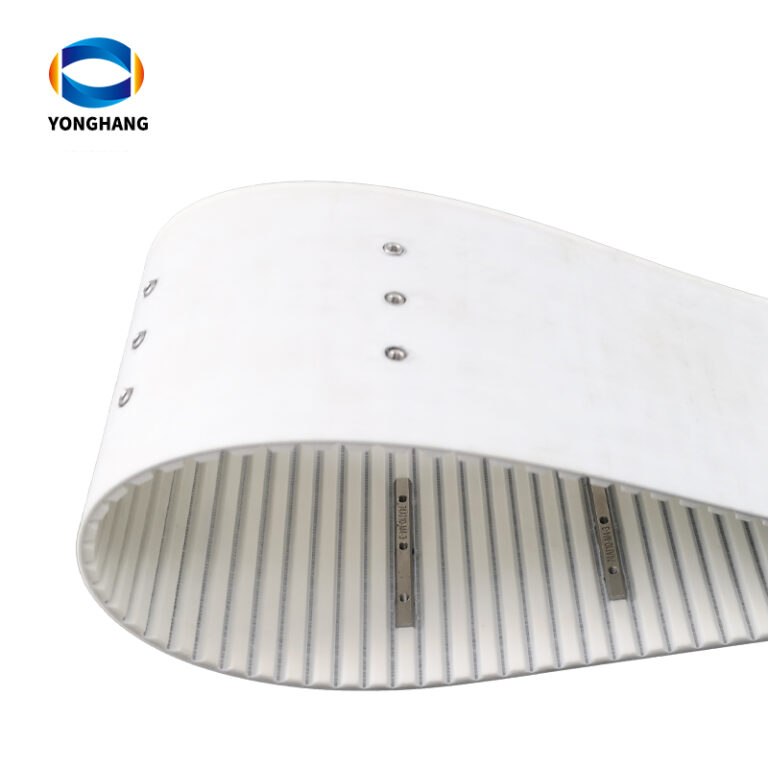
From belt to system: yonghang offers a complete solution that includes not only the belt, but also complementary metal components.false teeth or nut Offered in brass…