For timing belt (e.g., AT10/T10/H/AT20/ATN12.7/ATN20 profile) connections, stainless steel nuts focus on high strength and corrosion resistance, while brass nuts emphasize self‑lubrication, low friction, and electrical conductivity. the decision comes down to your specific operational conditions and performance priorities.
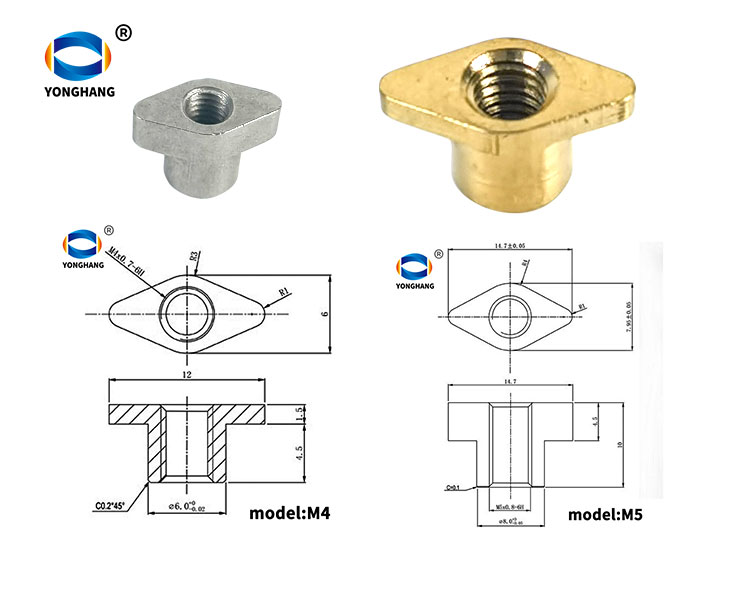
1.Below is a detailed comparison:
1.1Material & Mechanical Properties
| Property | Stainless Steel (304/316) | Brass (Cu‑Zn alloy) |
| Tensile Strength | High (Tensile Strength: 515–750 MPa for 304, ~620 MPa for 316) | Moderate (Tensile Strength: 330–470 MPa) |
| Hardness | High (resists deformation) | Lower (easier to machine) |
| Ductility | Good but prone to galling (thread seizing) | Excellent (absorbs vibration) |
| Corrosion Resistance | Excellent in saltwater, chemicals, and harsh outdoor environments, Resists salt spray for 2000+ hours | Good against freshwater and mild acids. Vulnerable to dezincification in saltwater over time (~800 hours salt spray resistance) |
| Density | ~7.9 g/cm³ | ~8.4 g/cm³ (slightly heavier) |
| Magnetic | slightly magnetic | non-magnetic |
| conductive | Low (~2.5% IACS) | High (~28% IACS), excellent for grounding |
| heat conduction | Low (16 W/m·K) | High (120 W/m·K), transfers heat 7.5x faster; good for heat dissipation |
| Machinability | Tough to machine, increases manufacturing time and cost | Excellent machinability, cost-effective for precision parts |
- Choose Stainless Steel Higher clamping force, better for heavy‑load or high‑tension belts,for heavy-duty performance and longevity
- Choose Brass Softer, prevents damage to belt teeth or aluminum housings,when conductivity, precision, or non-sparking properties are key
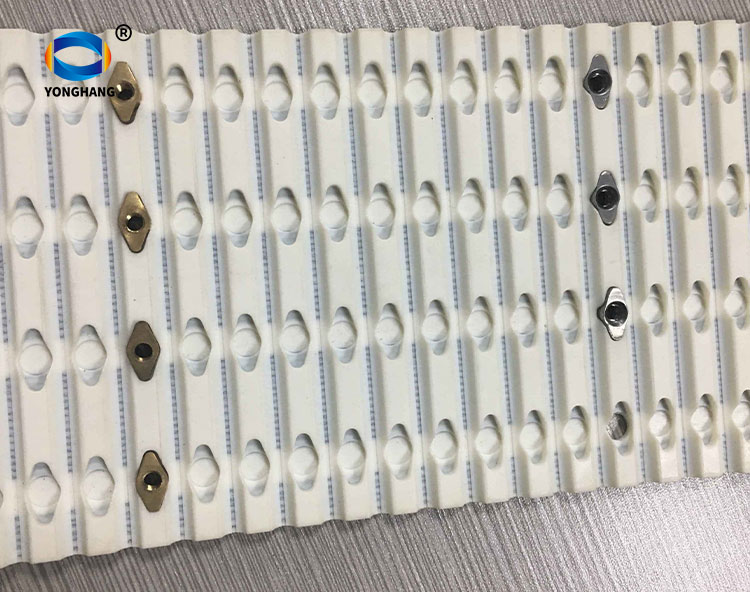
1.2Thread Galling (Anti-Seize Properties)
- Brass: Superior in this category. Brass has natural self-lubricating properties. It is highly resistant to “galling” (where the bolt and nut cold-weld together). This makes brass the best choice for applications requiring frequent repositioning or replacement of cleats and jigs.
- Stainless Steel: Prone to galling, especially if using stainless steel bolts with stainless steel nuts. Frequent disassembly may require the application of anti-seize lubricants to prevent the fasteners from locking permanently.
- Timing belt use: Brass nuts prevent belt tooth abrasion in mechanical joints (e.g., Optibelt ZS/ZSi).
1.3Corrosion Resistance
- Stainless steel: Superior corrosion resistance (316 for saltwater/chemicals); food/pharma safe; no rust even when scratched.
- Brass: Good in fresh water/moist air; poor in saltwater/harsh chemicals (tarnishes/oxidizes); not food‑grade certified.
- Timing belt use: Stainless for washdown/humid environments; brass for dry, low‑corrosion setups.
1.4Electrical & Thermal Properties
- Stainless steel: Poor conductivity; non‑magnetic (304) or slightly magnetic (410).
- Brass: Excellent electrical conductivity (prevents static buildup); high thermal conductivity (dissipates heat).
- Timing belt use: Brass reduces static in high‑speed belts; stainless for non‑conductive applications.
1.5Precision and Wear
- Stainless Steel: Harder and more wear-resistant. The CNC-machined threads remain sharp and precise even after years of high-vibration operation.
- Brass: Easier to machine, but the threads can wear down faster if the fixtures are subjected to constant high-frequency micro-vibrations.
1.6Typical Timing Belt Applications
- Stainless steel nuts:
- AT10/H profile belts (high tension).
- Food/pharma, marine, or outdoor equipment.
- Heavy‑duty linear drives (high load/vibration).
- Brass nuts:
- T10 profile belts (tooth‑side inserts).
- Low‑to‑moderate tension drives (3D printers, conveyors).
- Static‑sensitive or high‑speed dry environment
- Explosive or Sensitive Atmospheres: Its non-sparking and non-magnetic nature is a critical safety feature in environments like munitions facilities or near MRI equipment
2.Key Decision Factors Explained
2.1Galvanic Corrosion Risk:
When pairing with a carbon steel bolt in a wet environment, stainless steel is more likely to cause the bolt to rust. Brass is often a better match for other copper alloys but can also create a weak battery with steel. Aim to match materials in the entire assembly for the best protection.
2.2Common Failure Modes:
Stainless steel nuts can gall or seize without proper lubrication or anti-seize compound-. Brass nuts, being softer, are more susceptible to thread stripping or deformation under excessive torque
3.Summary Recommendation
If your application demands strength, durability, and corrosion resistance, stainless steel is typically the superior long-term investment. If you require excellent conductivity, are working with sensitive electronics, or need non-magnetic and non-sparking properties, brass is the better choice.
For AT20/ATN20 and HTD14M timing belts, Stainless Steel nuts is the industry standard. These large-scale belts are built for “unrivaled” positioning and high-load capacity; using a softer brass nut creates a “weak link” in your mechanical assembly. Only choose brass if your application specifically requires high electrical conductivity or non-sparking properties.
At present,Yonghang has a 1000m² and spare part warehouse & a 5000m²equipment warehouse which cover almost full ranges of timing belts and timing belt pare parts in stock. With the strong stock ability support, we do provide efficient delivery service which is very important to meet urgent requirement from our customers. You can find all your needs from us for timing belts! Good quality, competitive prices and excellent services as our tenet, we sincerely welcome friends from all over the world to visit our company and cooperate with us base on long-term mutual benefits. We will continue to provide high quality products with competitive price for you.