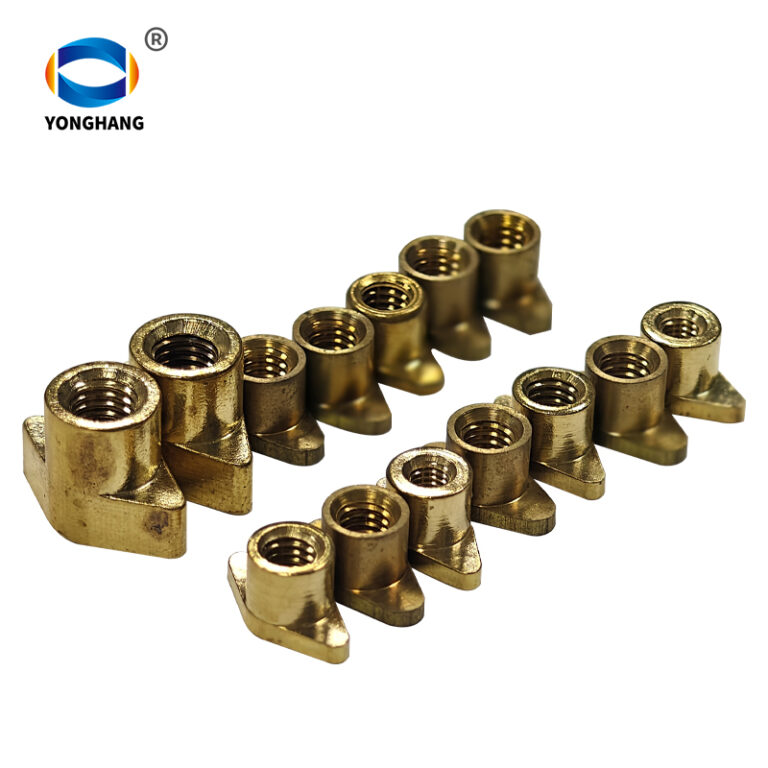
M5 brass nuts for ATN timing belt
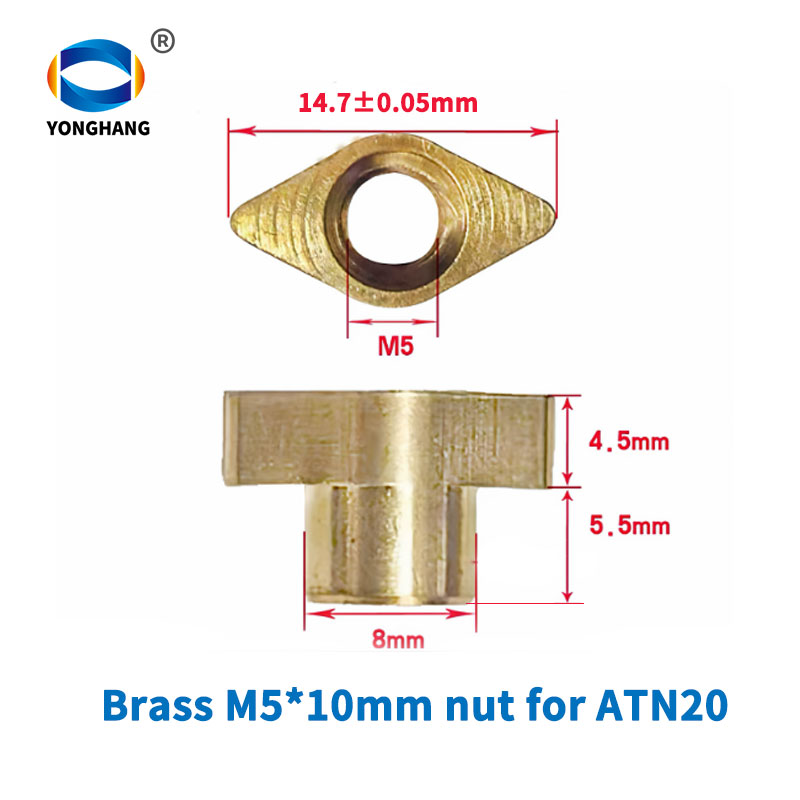
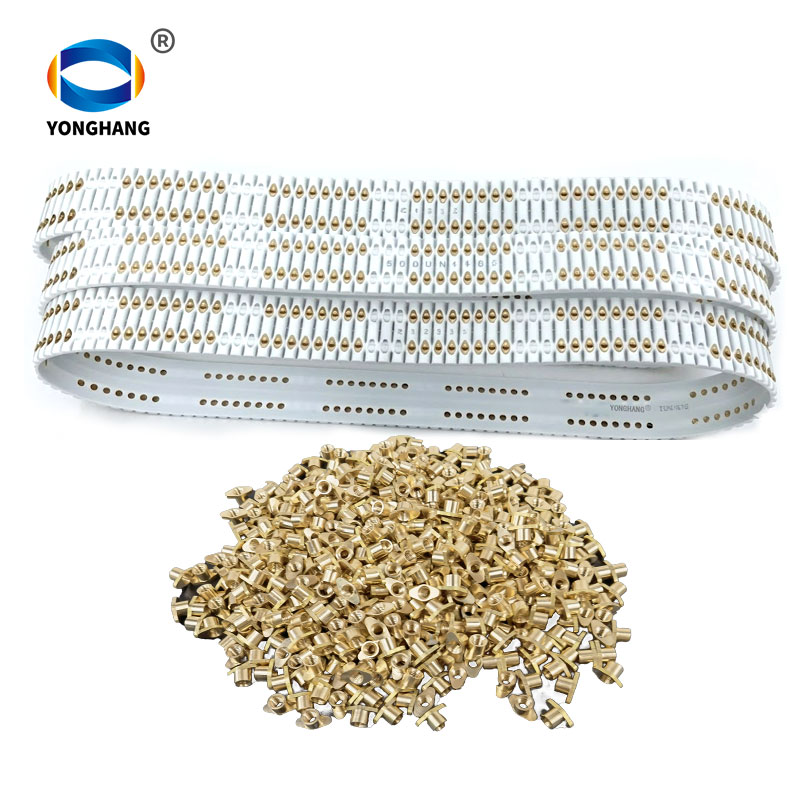
M5 is the most commonly used size in the ATN20 or AT20 belt range. These belts have sufficient polyurethane (PU) thickness to accommodate M5 inserts without compromising the belt’s structural integrity.High clamping force: Compared to M3 or M4, M5 nuts allow for higher tightening torques, which is crucial for securing heavier jigs or for conveying…
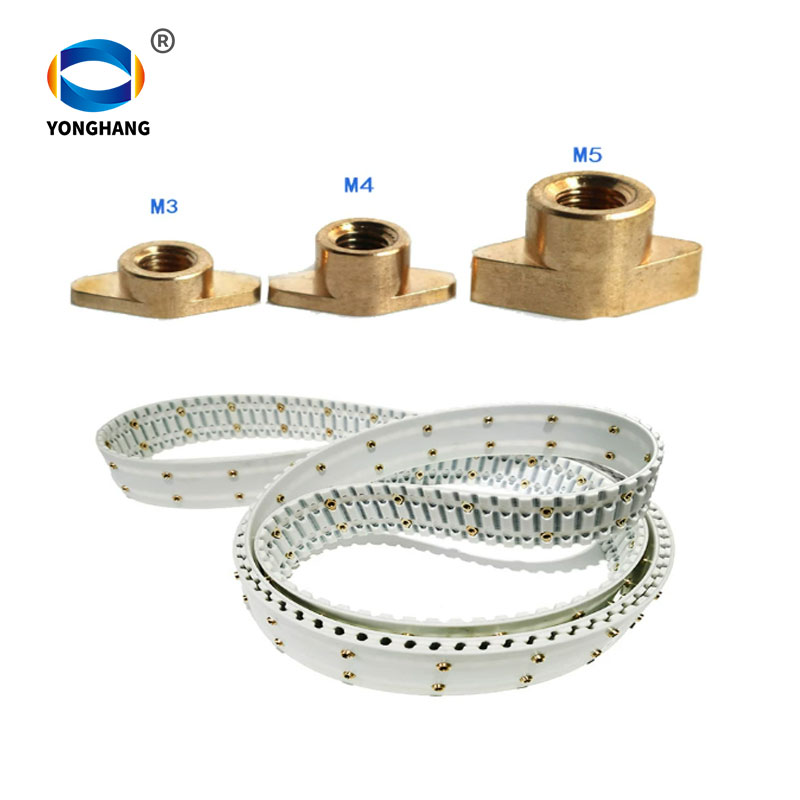
M5 is the most commonly used size in the ATN20 or AT20 belt range. These belts have sufficient polyurethane (PU) thickness to accommodate M5 inserts without compromising the belt’s structural integrity.
High clamping force: Compared to M3 or M4, M5 nuts allow for higher tightening torques, which is crucial for securing heavier jigs or for conveying applications that must withstand high reciprocating inertia.
parameter
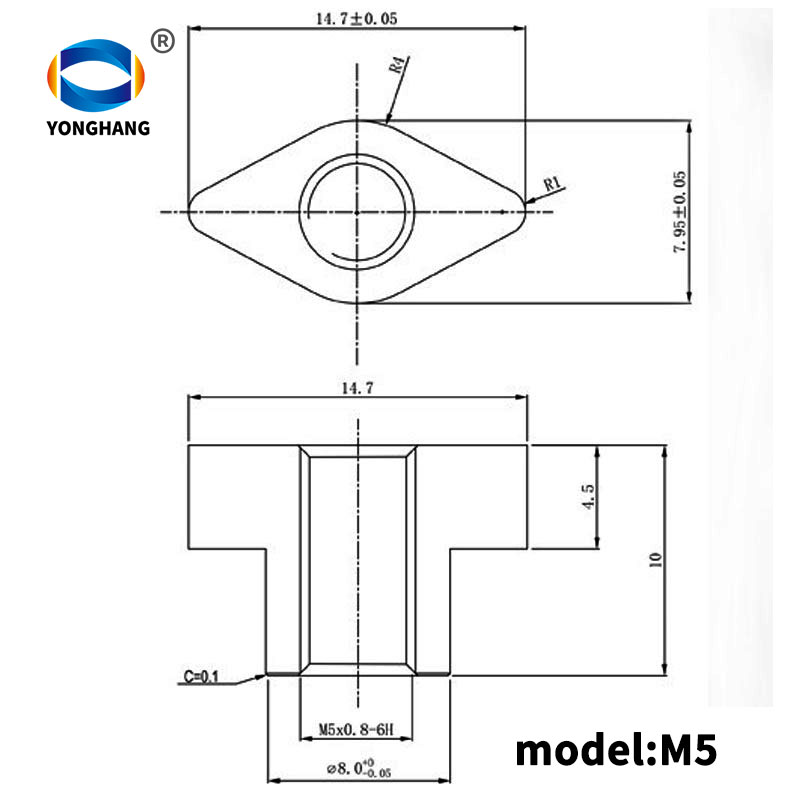
| Product name | M5 brass nuts |
| Brand | Yonghang |
| Screw thread | M5 |
| Material | brass |
| Craft | CNC machined |
| Applicable tooth profile | ATN20/AT20 |
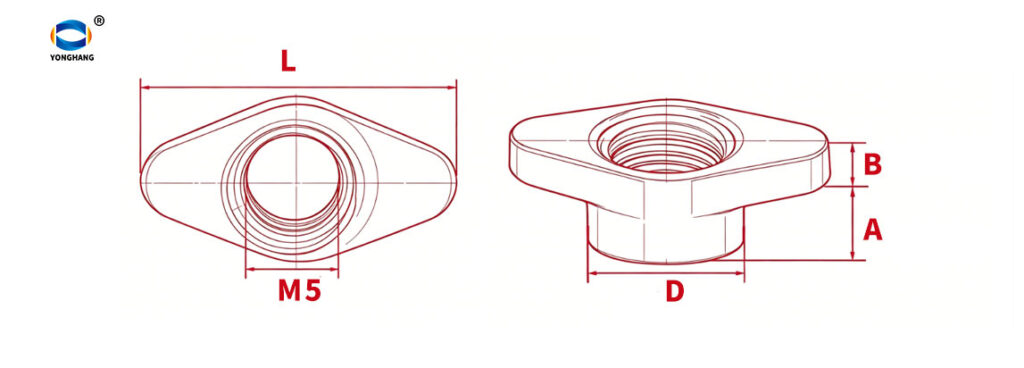
| Description type | L (mm) | A (mm) | B (mm) | Ø D (mm) |
| M5*10 | 14.7±0.05 | 5.5 | 4.5 | 8 |
| M5*8 | 14.7±0.05 | 3.5 | 4.5 | 8 |
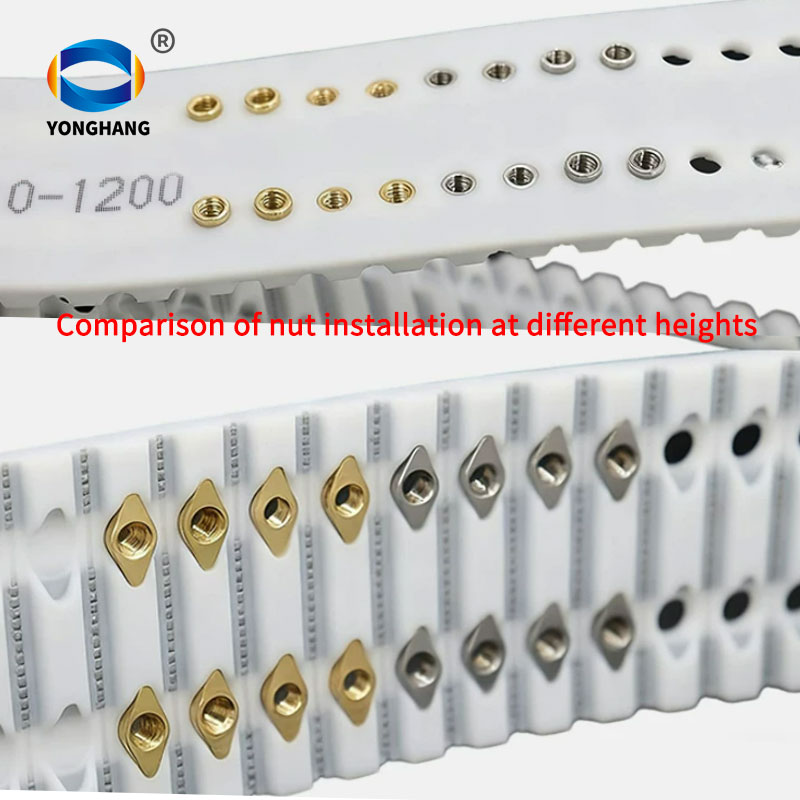
Notice:In the drawing, A can be customized. It can be level with the timing belt or higher than the timing belt surface. If you have different dimensions, CNC processing can be carried out. Please feel free to inquire.
The Advantages of Brass in ATN Systems
Although stainless steel nuts are superior in terms of strength, brass possesses unique ‘engineering properties’ within ATN systems:
Anti-galling: This is brass’s greatest advantage. When fixtures are frequently changed or repositioned, stainless steel bolts and nuts are prone to ‘cold welding’, which can cause them to seize. Brass possesses natural self-lubricating properties, ensuring that threads remain smooth even after repeated assembly and disassembly.
Corrosion Resistance: Unlike ordinary carbon steel, brass does not rust and performs very reliably in generally damp environments or those with minor industrial oil residues.
Electrical Conductivity: If your ATN conveyor line is used for electronic component assembly, brass nuts can help dissipate static electricity accumulated on the fixtures, acting as a static dissipative element.
Installation and Application of the ATN System
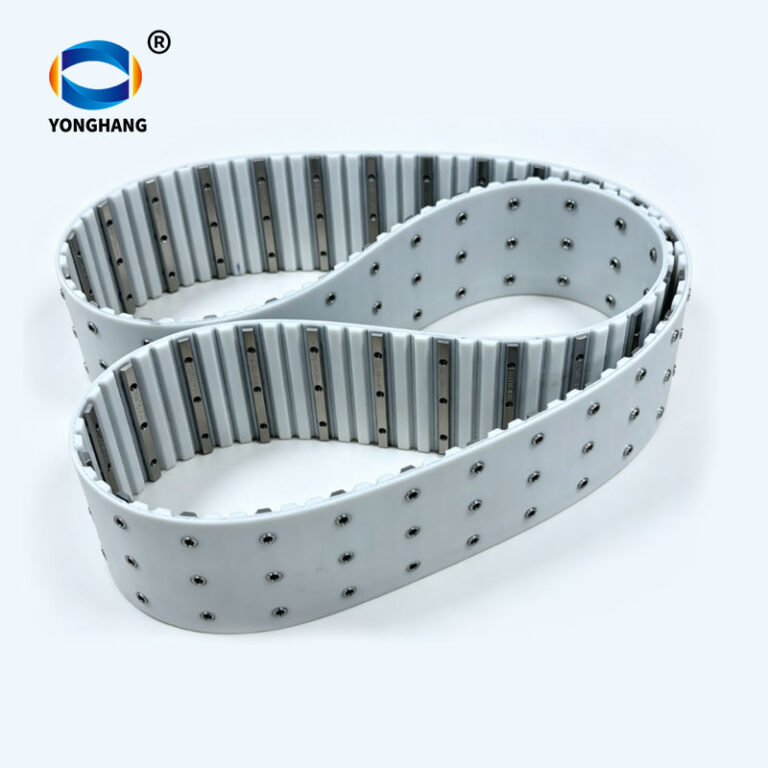
In ATN belts, M5 brass nuts are typically used in conjunction with plastic inserts or metal false teeth:
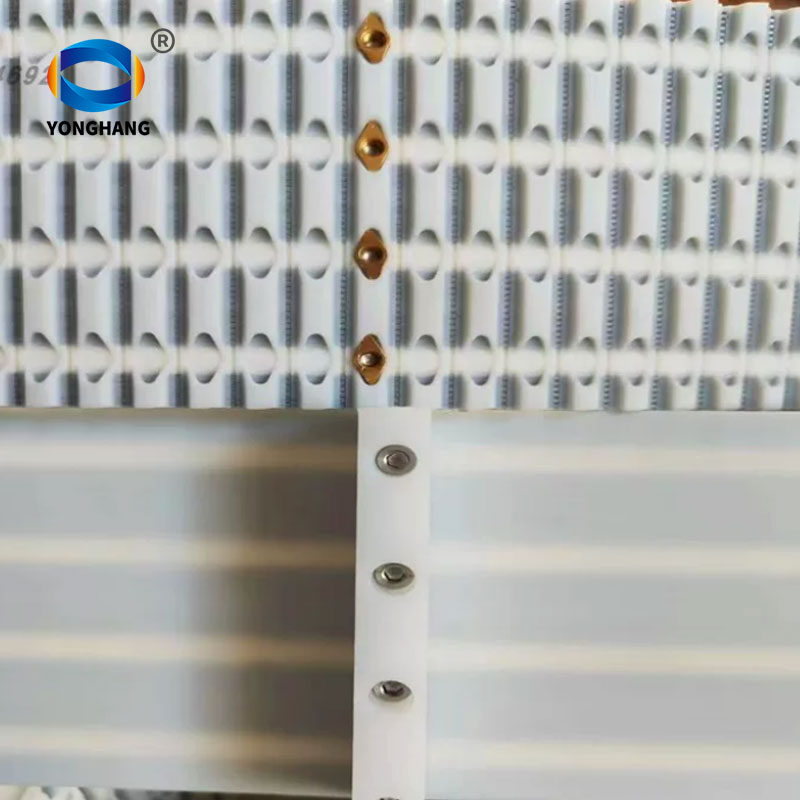
Embedded installation: The nut is inserted into a pre-drilled hole in the belt tooth.
Mechanical hard connection: A bolt passes through the clamp and the back of the belt, locking directly into the M5 brass nut to ensure synchronised operation between the clamp and the belt.
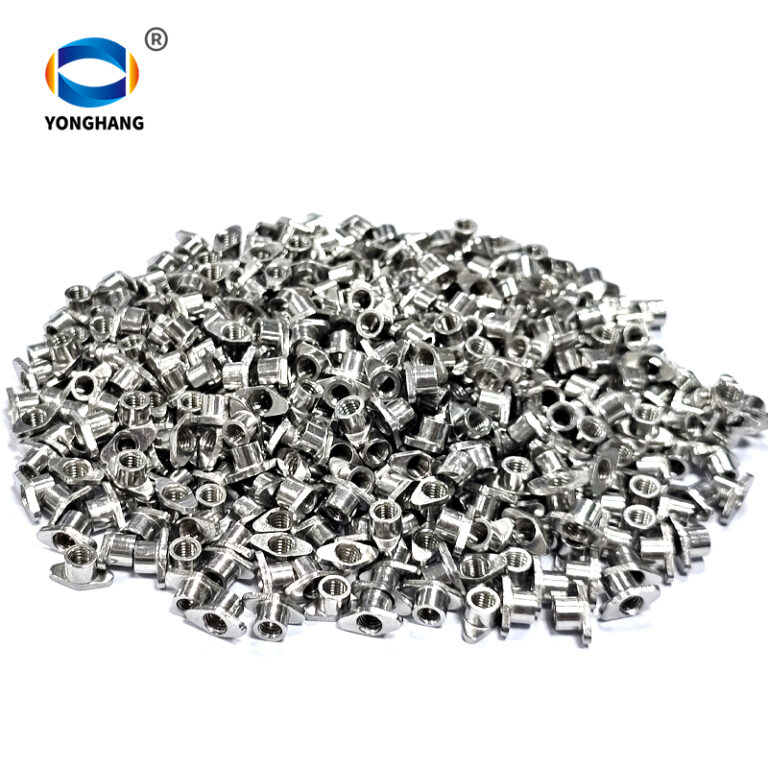
Recommendation: If the ATN system you are designing requires frequent adjustment of fixture positions, and is to be used in smelting or heavy-duty material handling (such as the conveyance of large metal components under the ATN20 specification), where electrical conductivity or thermal conductivity are not required, we recommend using CNC-machined stainless steel nuts to ensure that the threads do not deform under high-intensity vibration.
Comparison: Brass vs. Stainless Steel (for ATN applications)
| characteristic | M5 brass nut | M5 Stainless Steel nut |
| Frequency of disassembly | Excellent (Resistant to thread galling/seizing) | Average (Frequent disassembly requires anti-seize lubricant) |
| tensile strength | Moderate (Sufficient for most packaging lines) | High (Ideal for heavy-duty smelting/material handling) |
| Magnetic | nonmagnetic | Weak magnetic |
| conductive | good | It’s not as good as brass; its resistance is higher. |
| heat conduction | good | It’s not as good as brass |
Yonghang Customisation Tip: We offer M5 nuts and matching metal inserts specifically designed for the ATN10/ATN20 specifications, ensuring a fitting accuracy of within ±0.05mm.