
timing belt coating Factory wholesale
Yonghang can manufacture all types of timing belts coating, including surface coating different materials, varying hardness levels, and pattern designs,different thickness coatings etc.We offer services such as tooth removal, perforation, attachment installation, and guard plate fabrication. We can also customize belt coating according to your requirements.Yonghang, a leading producer of timing belt coating, is dedicated to supply high precision and performance coated synchronous belt for packing industry.
The coating Yonghang supplies natural rubber like Linatex and APL, and synthetic rubber such as EPDM, CR rubbers,elastomer and sponge rubber.food-grade raw material silicone coating and pu coating, high-temperature resistant material felt coating, high friction coefficient pattern coating,etc.
What are differences between different coatings?
| Material | Working temperature | Chemical resistence | Physical properties | Applications |
| Rubber | -20~+110℃ | Resitant against oil,water | good resilience,hard-wearing | Transport or haul-off belts subject to high friction, wood, paper, textil and packing industry |
| PU | -20~+80℃ | Resitant against simple oil and fats, petrol,ozone | Outstanding abrasion resistance, high load-bearing capacity, and tear strength | General transport tasks, transport of glass, sheet metal, transport mechanically aggressive parts |
| Silicone | -20~+230℃ | Food grade, non-stick, resistant to oil and water, resistant to common acids and alkalis | Excellent flexibility, durability and comfortable touch | Foodstuff industry |
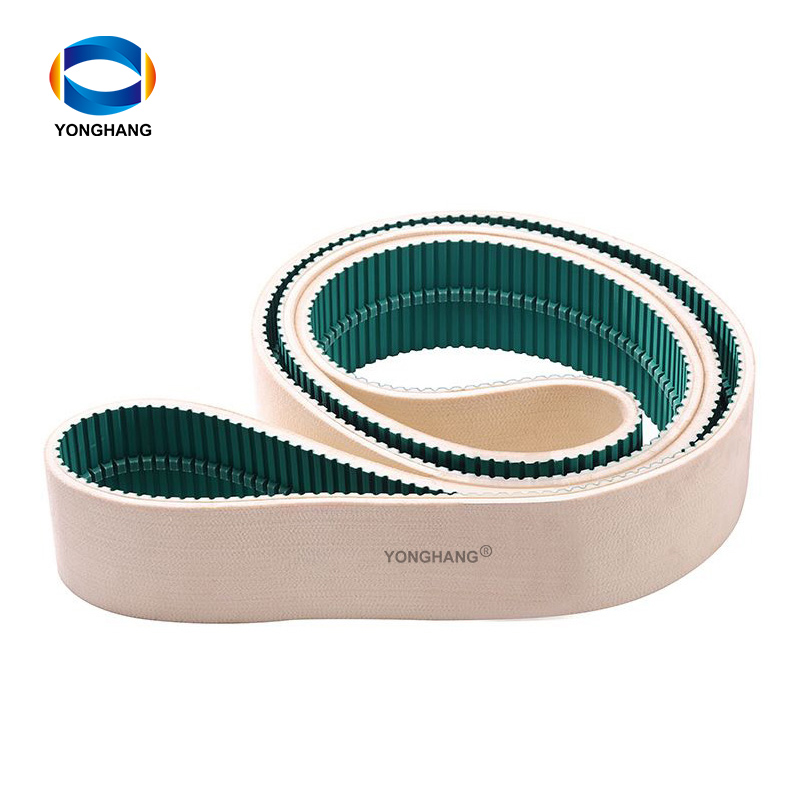
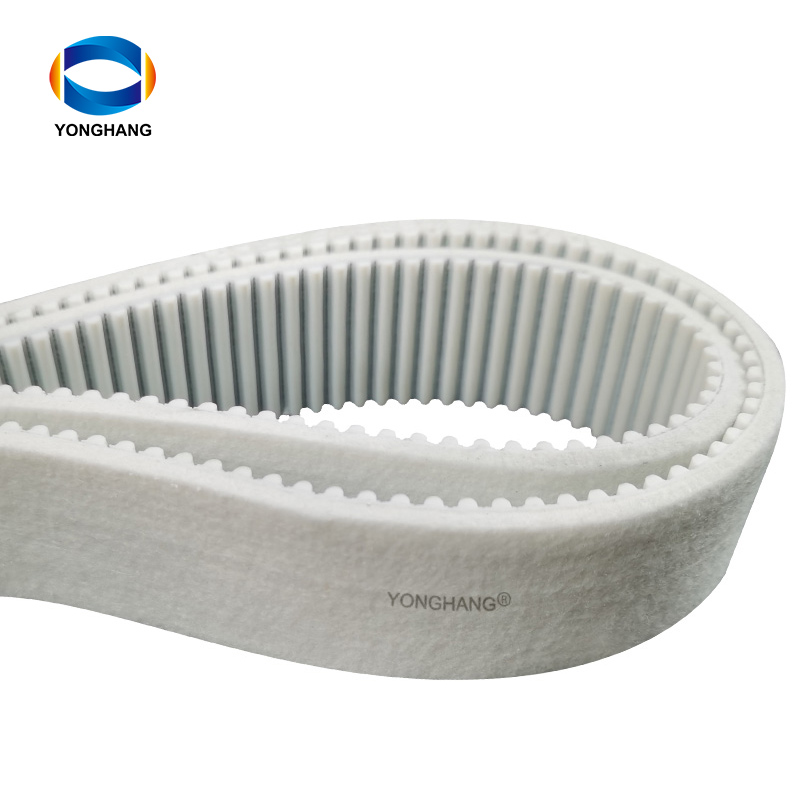
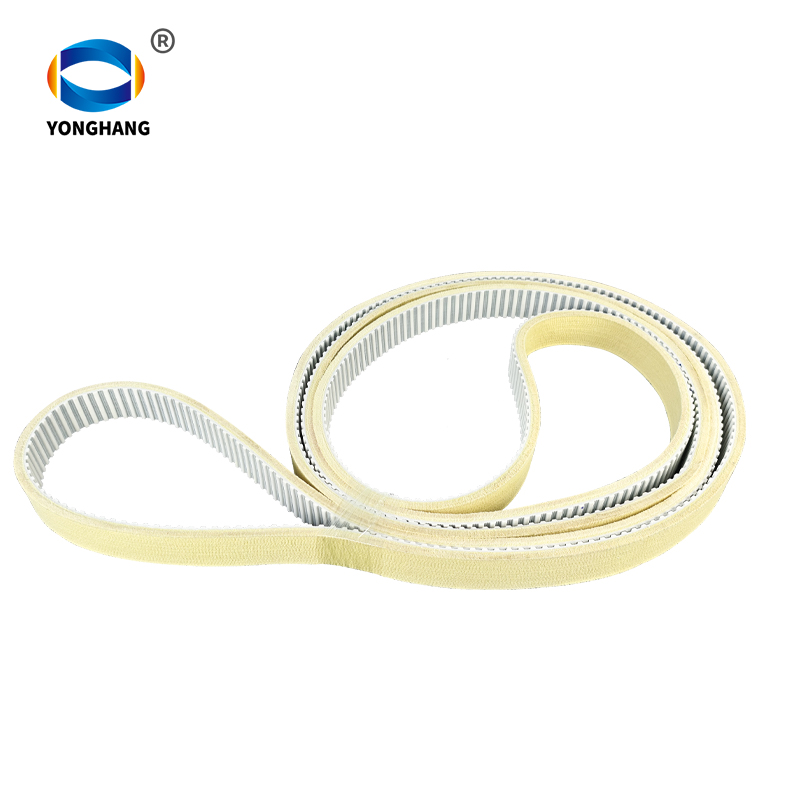
| Felt | -20~+600℃ | High temperature resistant | Light in weight, soft in texture | Aluminum materials / glass / metal sheet conveying, high-temperature product mechanical conveying components |
| PVC Pattern | -20~+80℃ | Resistant against simple oil and fats, acids,lyes | Provide anti-slip and decorative textures | Well suitable for inclined conveying,Used in the ceramic, glass, elevator, wood and paper industries. |
| Sponge | -20℃ to+50℃ | Depending on the different materials, they are generally not resistant to high temperatures. | Good water absorption property,Highly resilient,Light weight | Well suitable for Light and fragile items conveying |
| Foam | -20℃ to+50℃ | Depending on the different materials, they are generally not resistant to high temperatures. | The hardness range is wide, and the water absorption rate varies depending on the different materials. | Well suitable for Light and fragile items conveying |
.jpg)
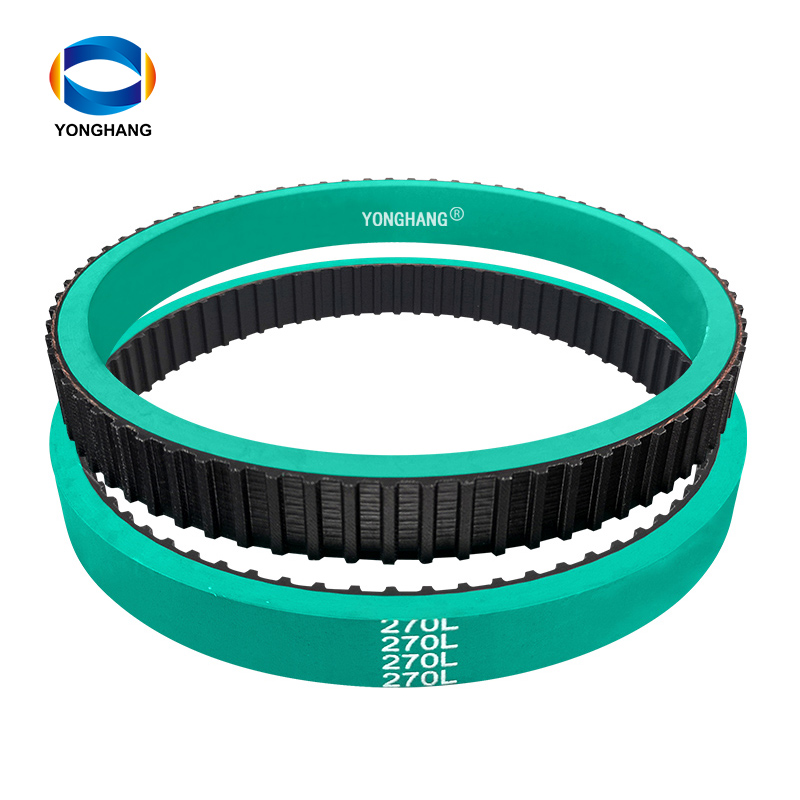
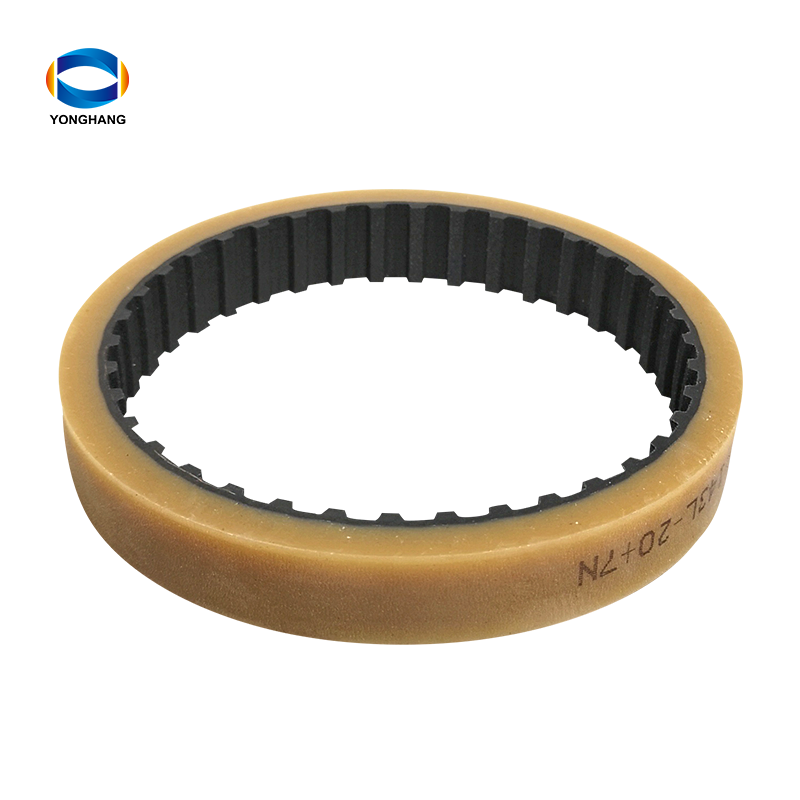
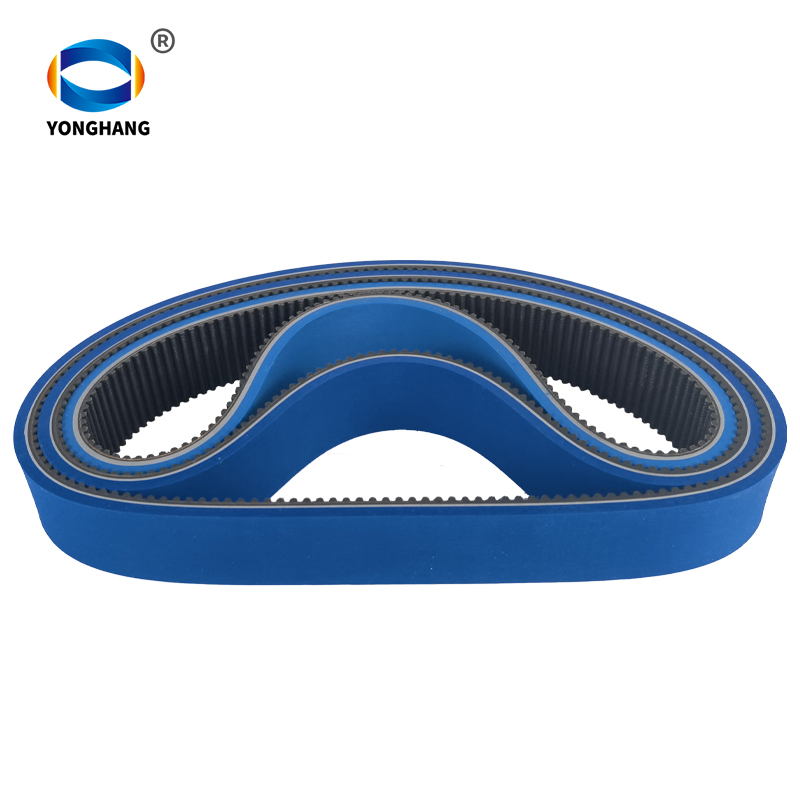
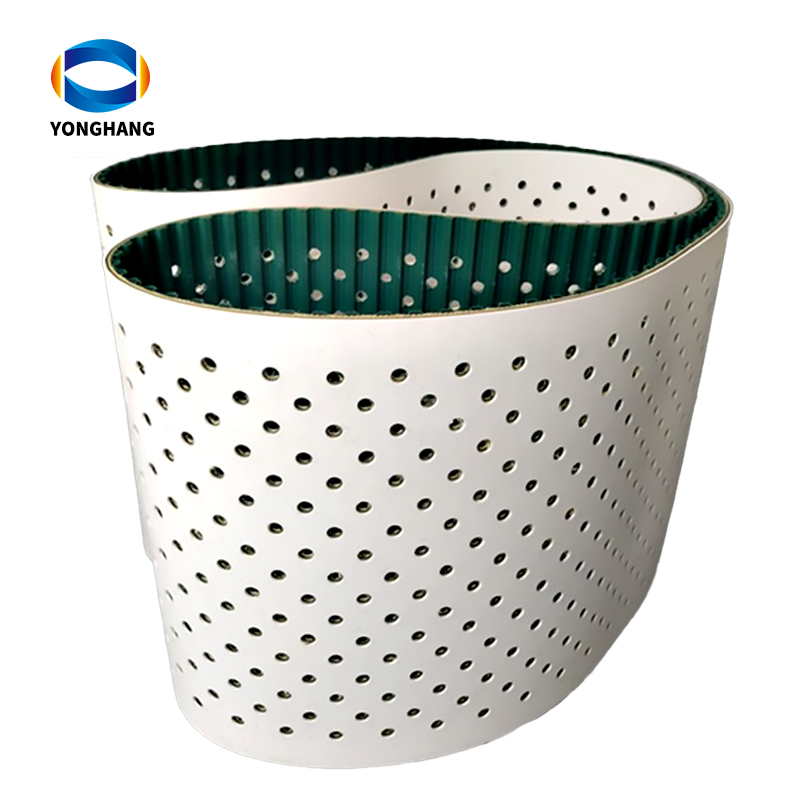
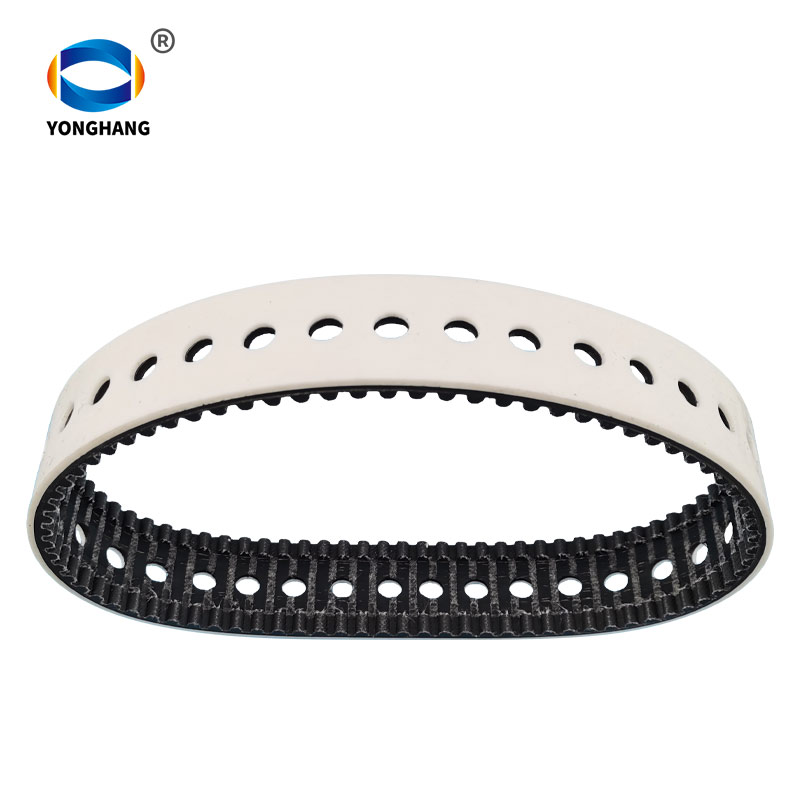
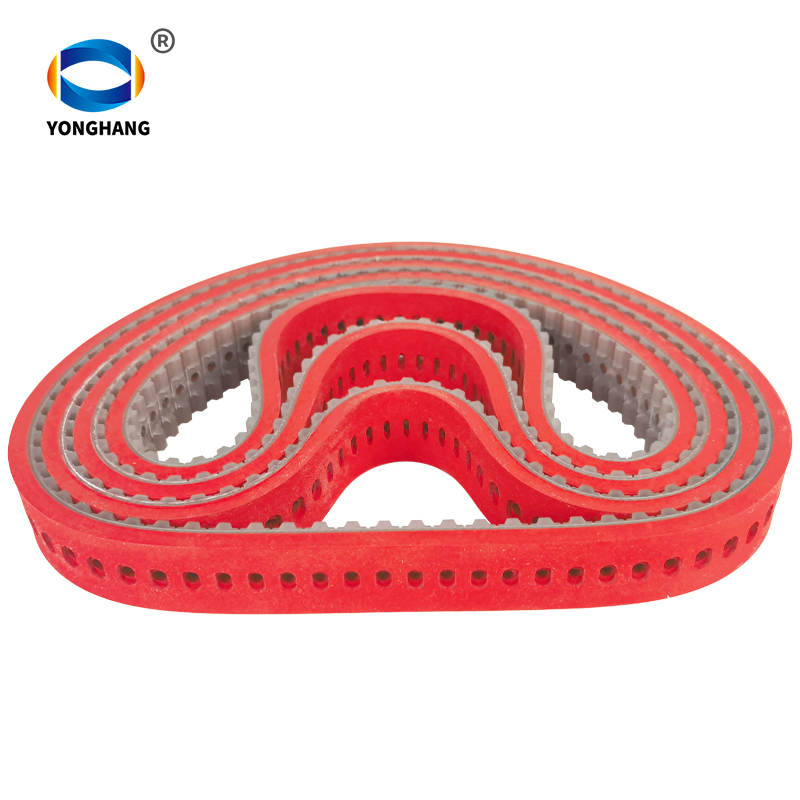
timing belt Sponge coating
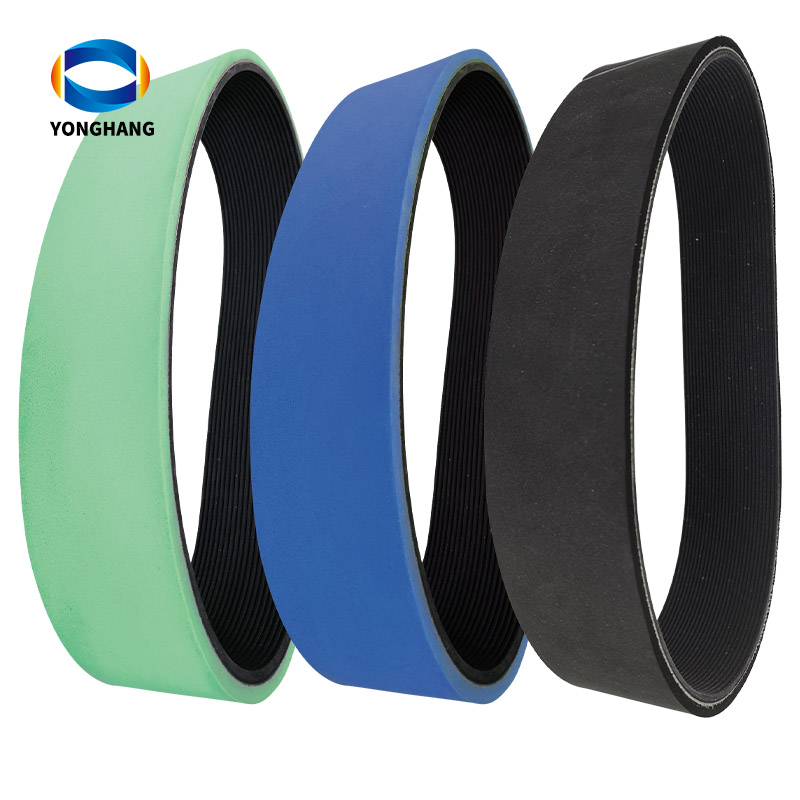 Multi-ribbed belt with foam
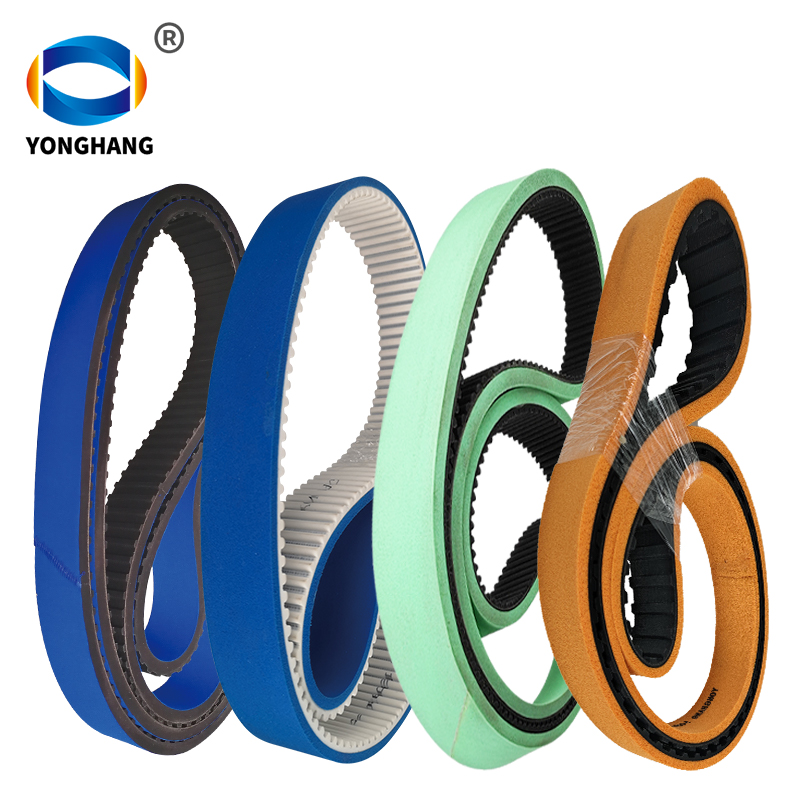 timing belt with foam
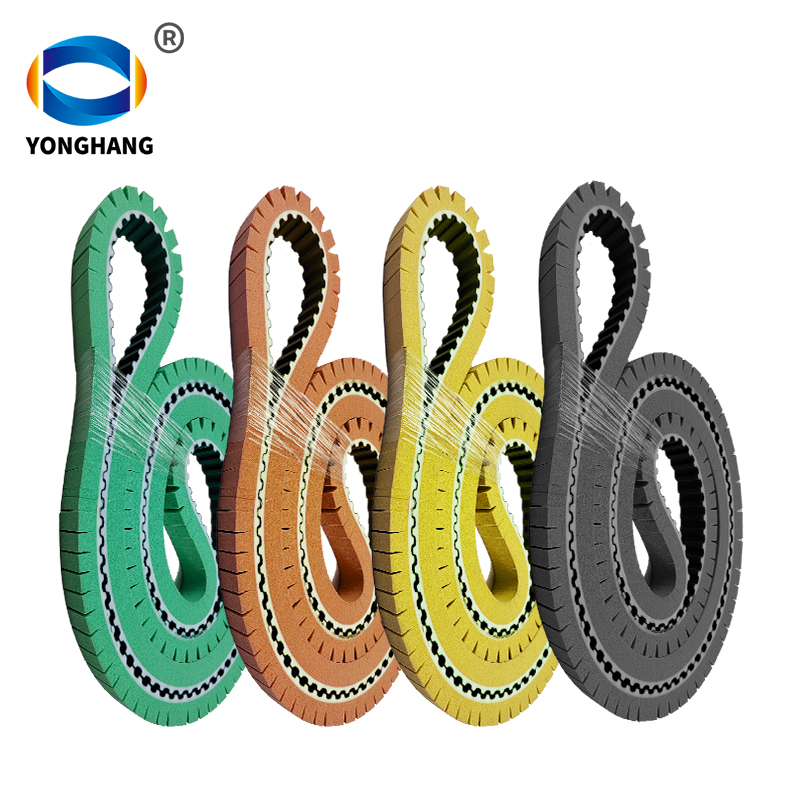 timing belt with foam grooves
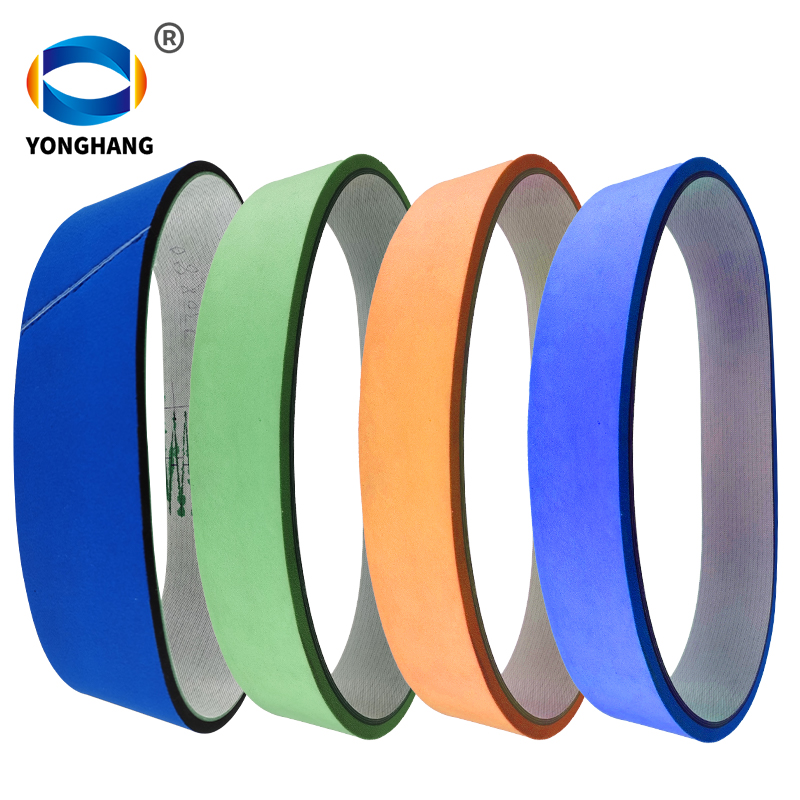 PVC with foam
PU coating
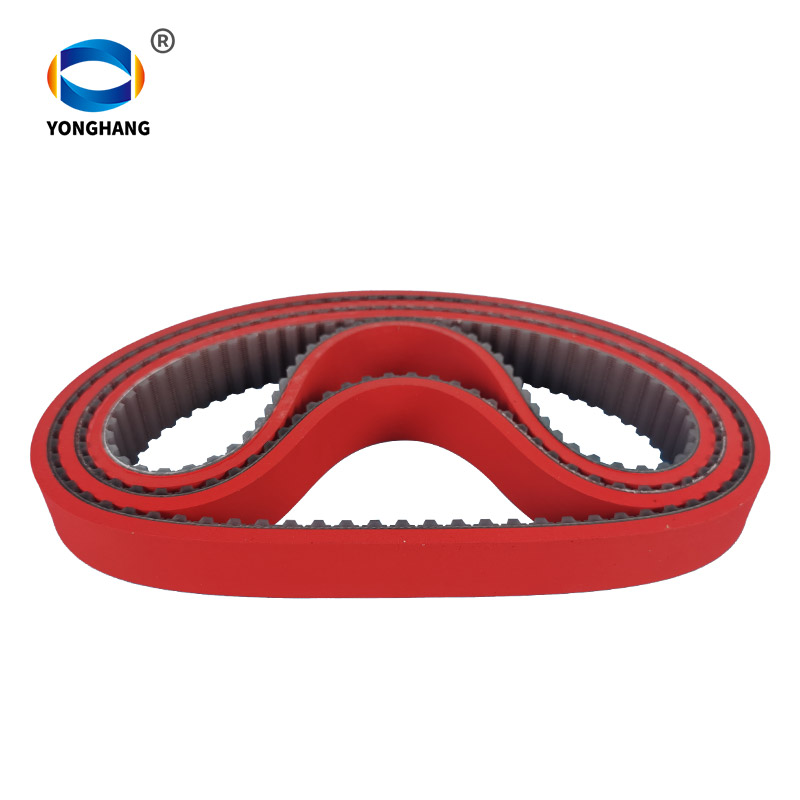
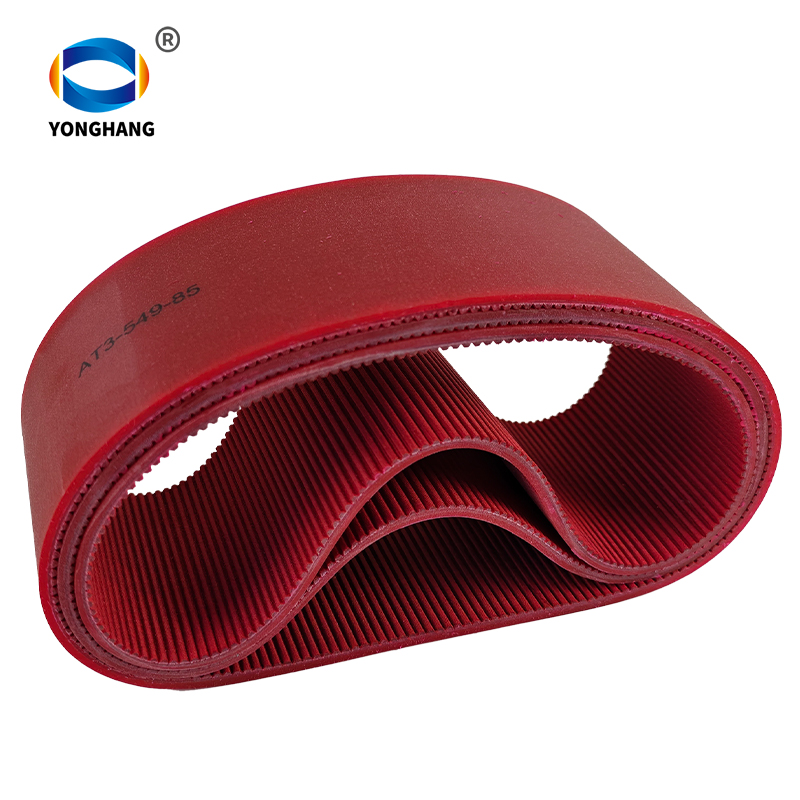 AT3 pu timing belt with red pu coated

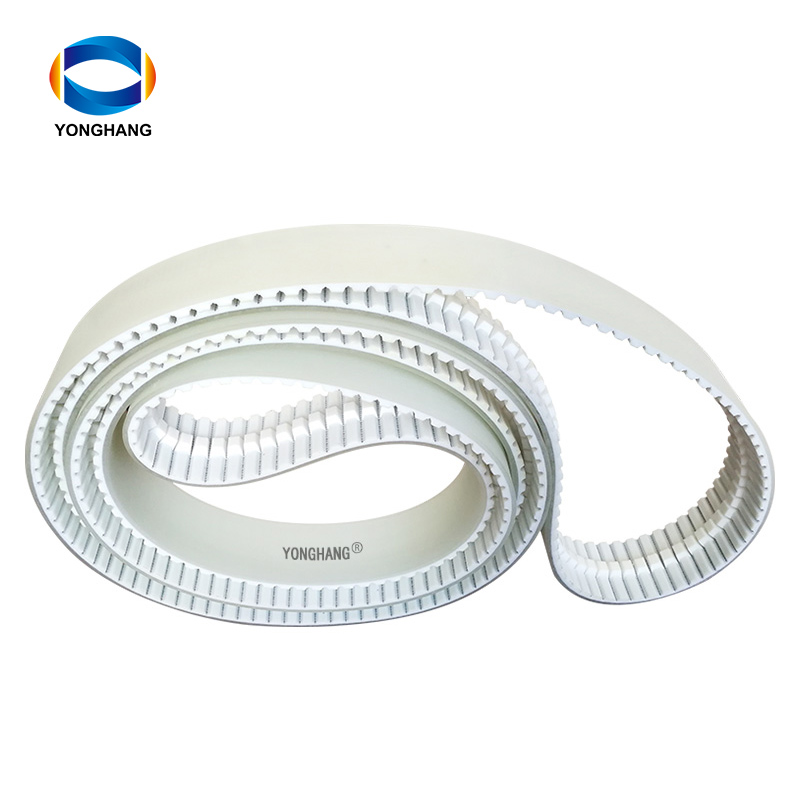
timing belt with Pattern coating
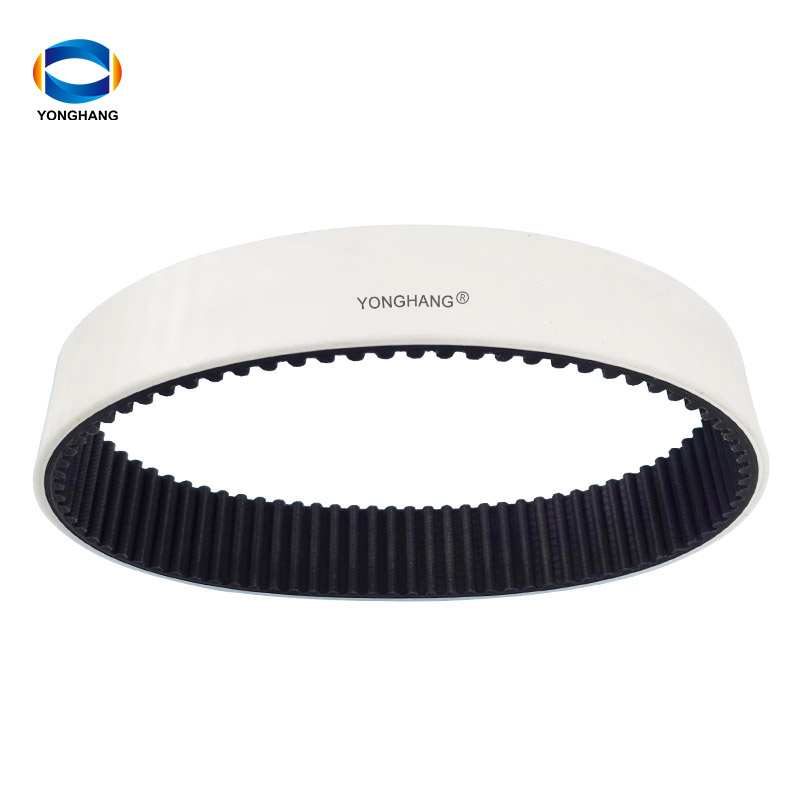
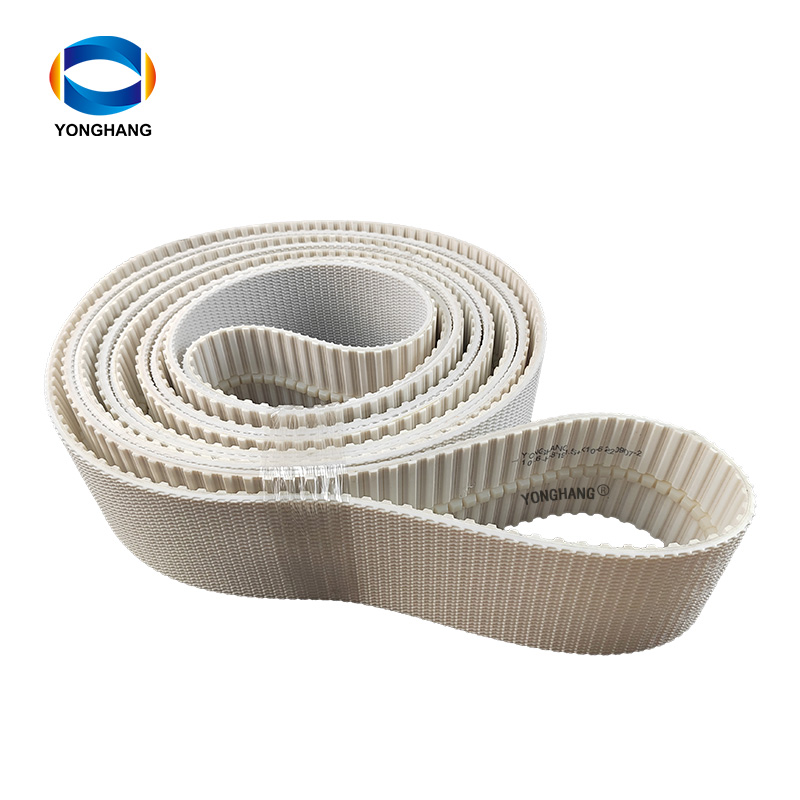 white pvc patterns coated Pu timing belt
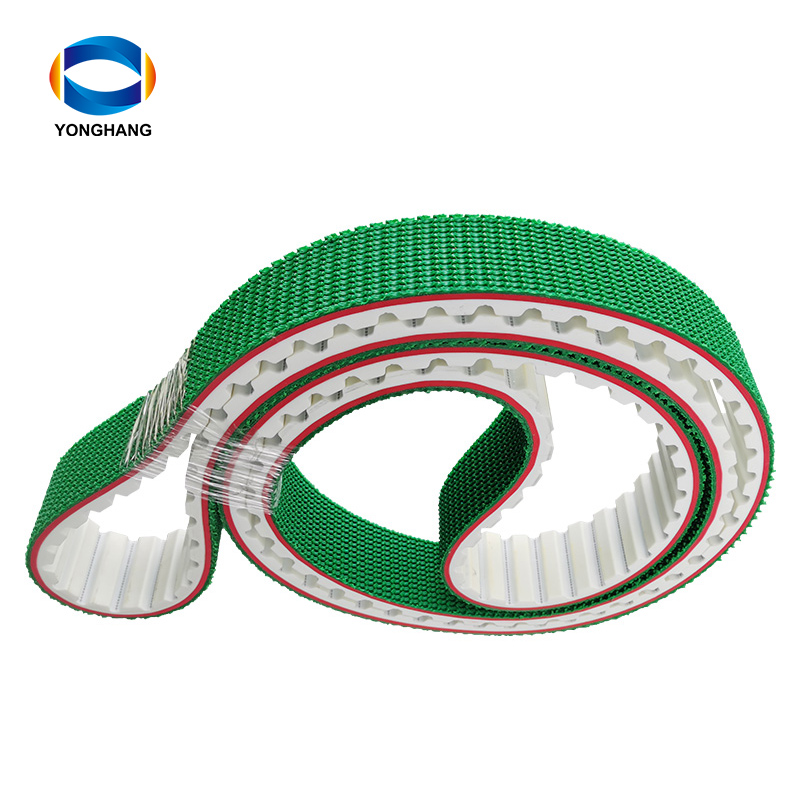
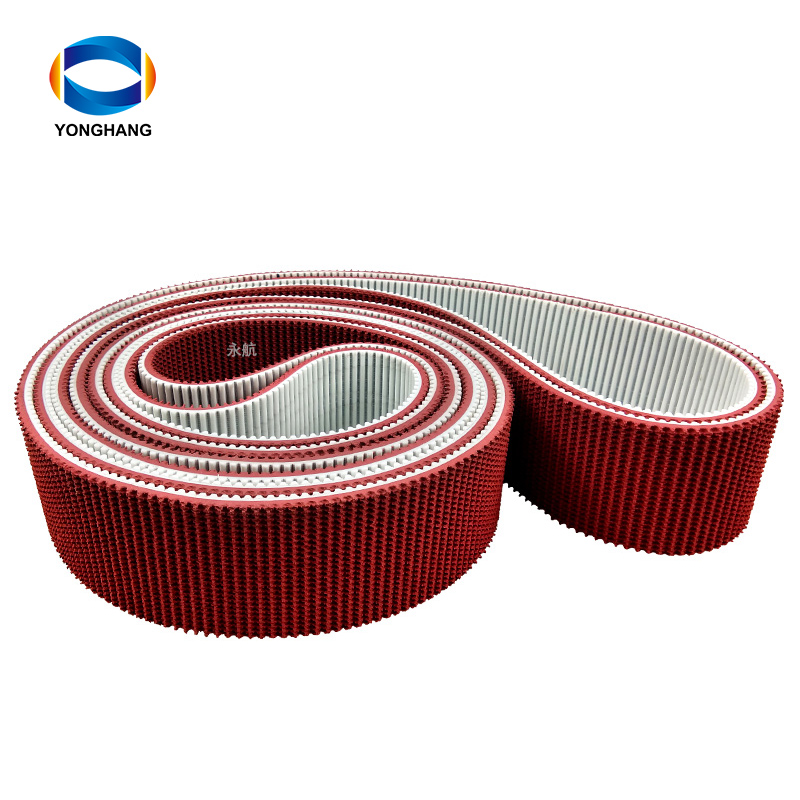
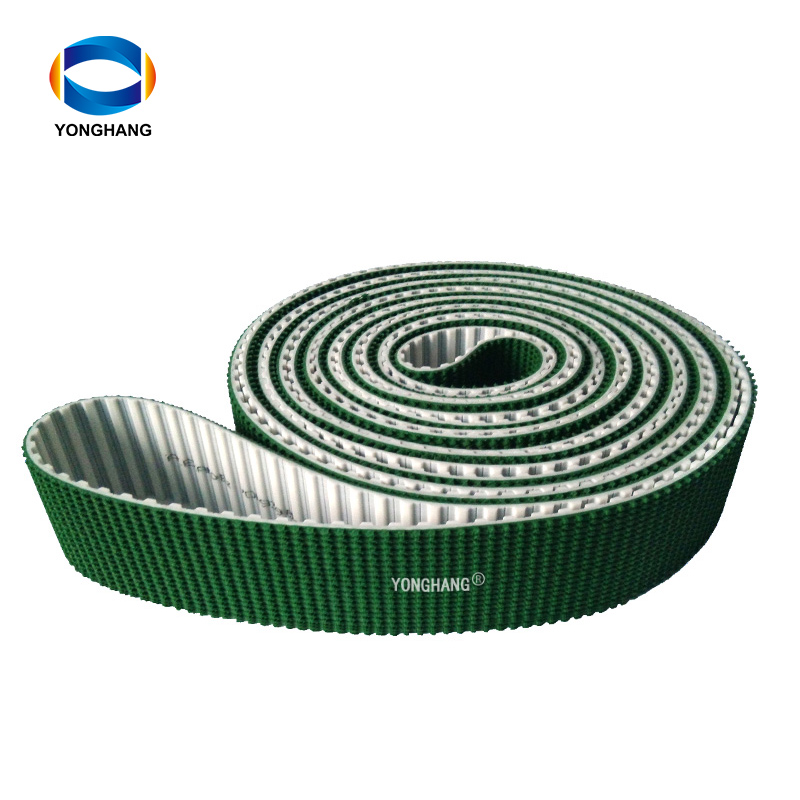
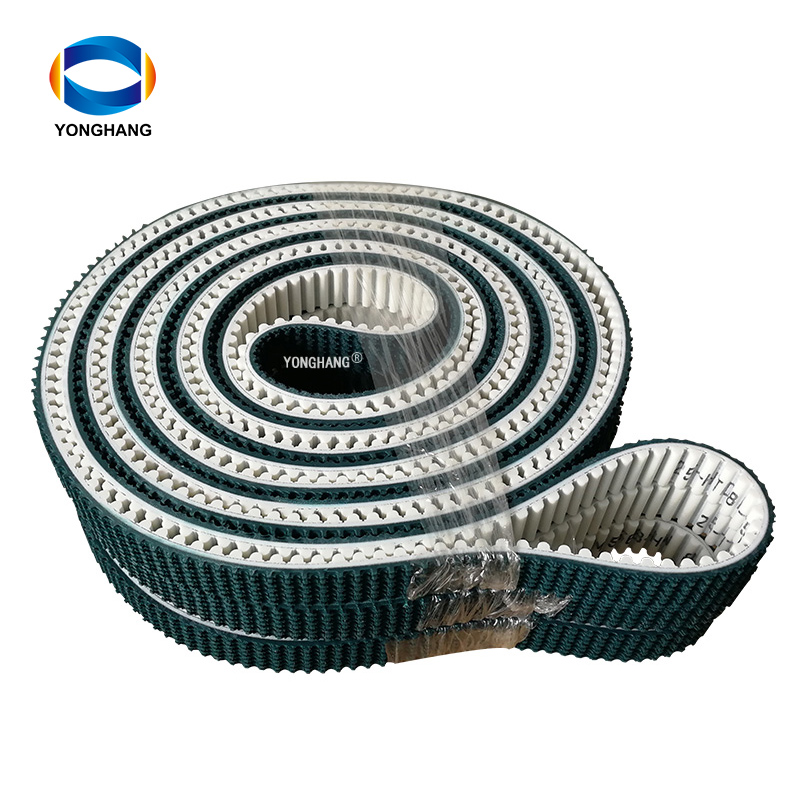
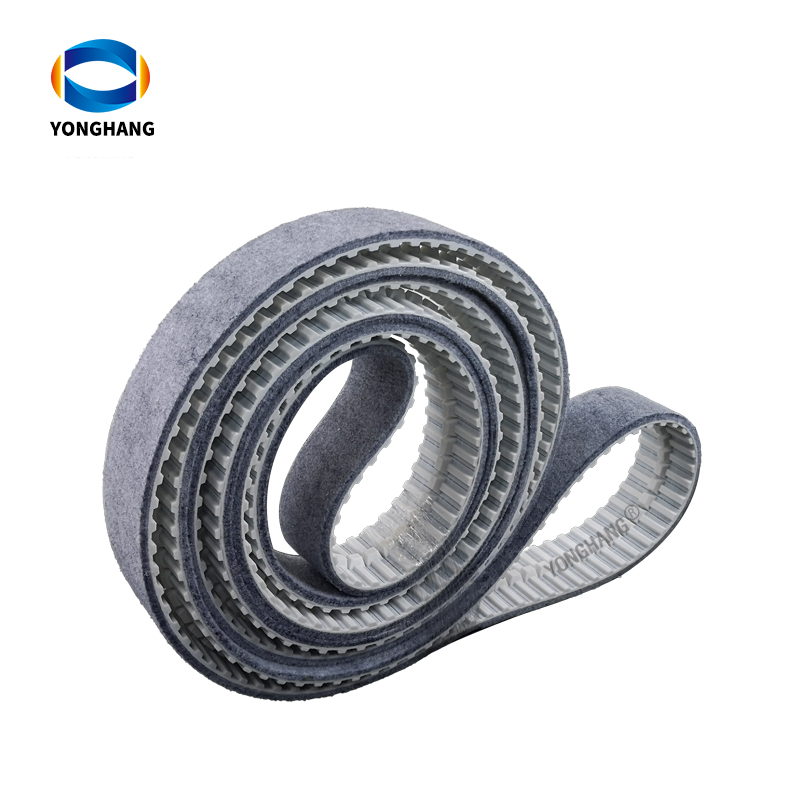
Applications of yonghang coated timing belts
Yonghang transmission belts serve as comprehensive drive system solutions widely applied across diverse industries and scenarios.coatings can be applied to PU timing belts, and rubber timing belts, We can help you optimize your design and recommend the right solution, including custom-made synchronous belts and surfaces plus Silicone /holes/rubber/sponge/foam/Drilling and slotting, etc.
Applications
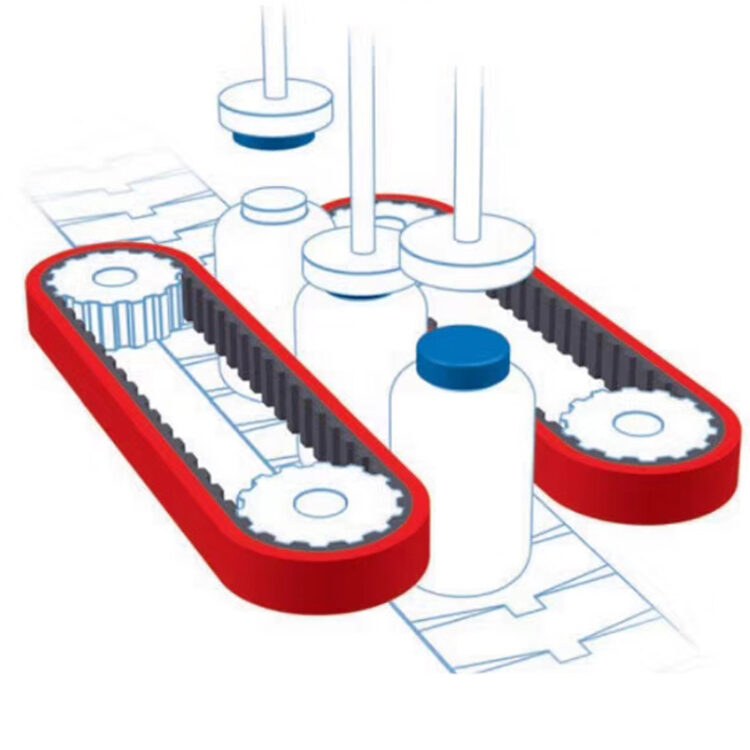
- Packaging Industry: Film wrapping, sealing, labeling, carton folding lines
- Food Processing: Chocolate coating, bakery conveyors, drying lines
- Textile Industry: Fabric feeding and traction belts
- Electronics & PCB Manufacturing: Precise transport under heat conditions
- Printing & Paper Industry: Folding, laminating, and feeding machines
- Glass & Plastic Industry: Sheet conveying and surface protection systems
Coating hardness
| Description | Material | Color | Hardness / density |
| CR | Rubber | Red | 50º Sh. A |
| CR | Rubber | Green | 45º Sh. A |
| APL | Rubber | Red | 45º Sh. A |
| CR | Rubber | White | 50º Sh. A |
| CR | Rubber | Black | 50º Sh. A |
| Silicone | Silicone | White /Blue/Grey | 40º Sh. A |
| PU | PU | Black/White/Black/Red/Yellow/Transparent | 85º Sh. A |
| PU | PU | Transparent | 55º Sh. A |
| Foam | Foam | Black/Green/Orange/Blue | RD300 |
| Felt | Felt | White/Grey/beige | n.a. |
| Super Grip PU | PU | Dark green | 40º Shore A |
| Super Grip PVC | PVC | Green | 45º Shore A |
| Super Grip Rubber | Rubber | Red | 45º Shore A |
| Super Grip PU | PU | Black/Grey/Green etc | 50º Shore A |
| longitudinal groove | PU | Black/Transparent | 60° Shore A |
| Anti-static | Fabric | Black/Green | n.a. |
| Brush | Pig bristles/ nylon | Black/Brown/White | n.a. |
| Fishbone | PVC | Green | 65º Shore A |
| Magnetic | Rubber | Black | n.a |
| Silicone Red | Silicone | Red | 35°ShoreA |
| CR | Rubber | Yellow | 45º Sh. A |
Related Products
-
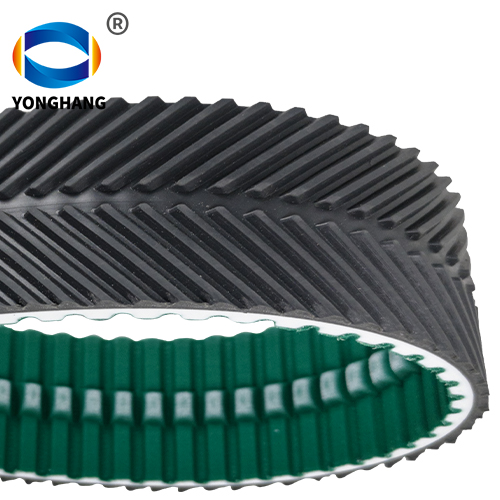
PVC Fishbone Black Coating
By • 20.01.2026PU timing belts with PVC Fishbone Black Coating are functional composite belts featuring a layer of herringbone-patterned polyurethane strips thermally bonded or vulcanised onto the surface of polyurethane synchronous belts. Primarily employed to enhance slip resistance in conveying applications, they are suitable for inclined conveying scenarios requiring high friction to prevent material backflow or slippage…. -
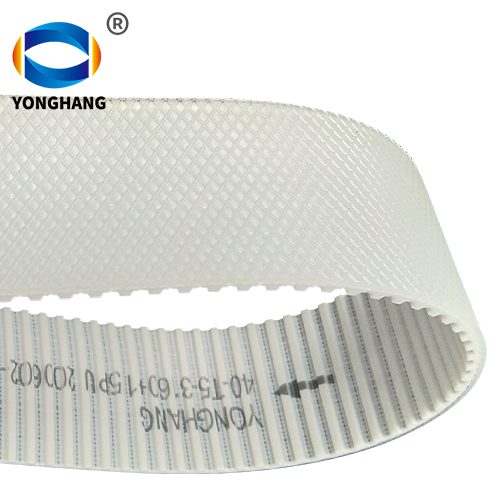
Diamond PU Coating
By • 20.01.2026Yonghangbelt All types of timing belts can be manufactured with Diamond PU Coating Product Informatie For Diamond PU Coating Coating Material PU Colour White/Transparent Hardness/Density Approx.85ShA Working Temperature -20°C To +90°C Thickness 1-15mm Minimum Pulley Diameter 30 X Thickness Features Resistant Against Simple Oils And Fats, Good Wear Resistance -
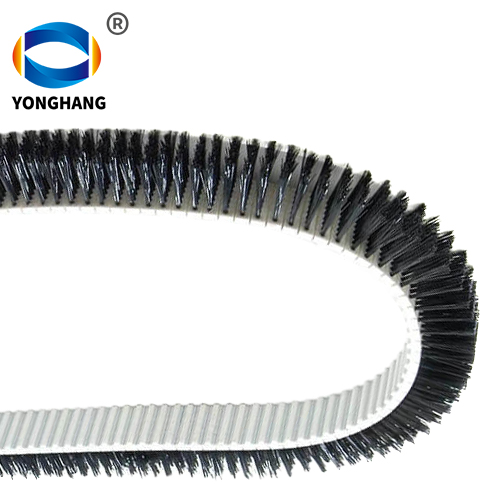
Brush Coating
By • 20.01.2026The timing belt with brush coating is a composite product that combines brush functionality with the precision transmission capabilities of a standard synchronous belt. It simultaneously performs transmission, cleaning, and polishing functions, making it widely applicable in production lines demanding high precision and cleanliness standards. Product informatie for Brush Coating Coating material Pig bristles/ nylon… -
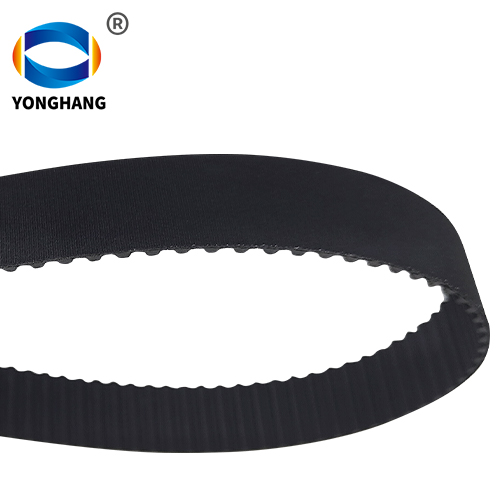
Anti-Static Fabric Coating
By • 20.01.2026Yonghang Timing belt with Anti-Static Fabric Coating is in the manufacture of timing belt PU in the addition of conductive components (such as the addition of metal wire) or the use of conductive plastic anti-static is the resistance of 10 times 4 ohms or more, conductive is 10 times 6 times below, such as 4… -
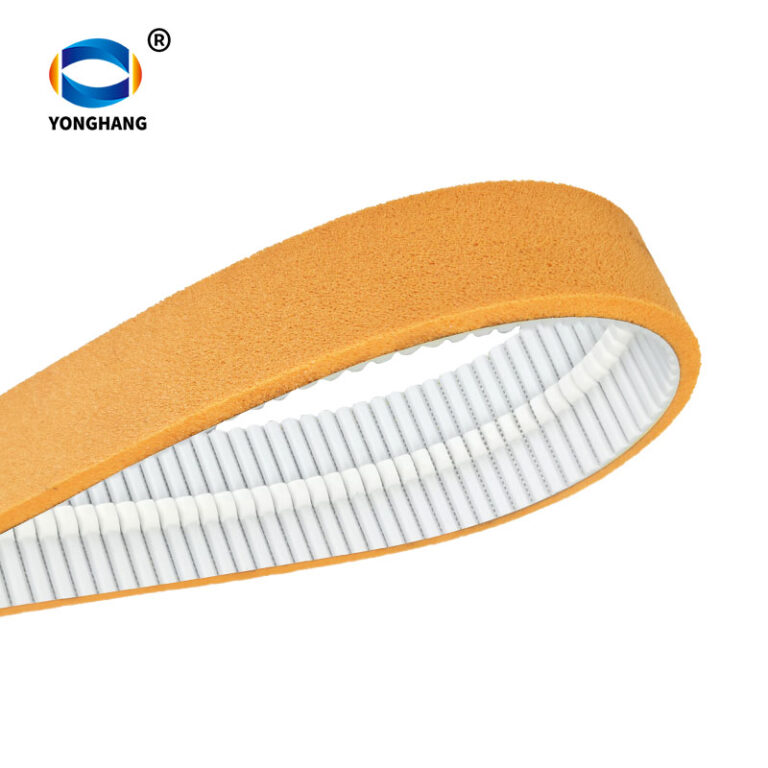
Sylomer Orange Coating
By • 19.01.2026Sylomer Orange Coating ,closed-cell foam laminated onto the tooth surface or backing of conventional polyurethane synchronous belts. They combine the precise transmission and slip-free operation of synchronous belts with superior vibration damping, noise reduction, cushioning properties, and static friction. Product information Sylomer Orange Coating material Polyurethane foam Colour Orange Hardness/density RG160 Thickness 3 to 15mm Minimum… -
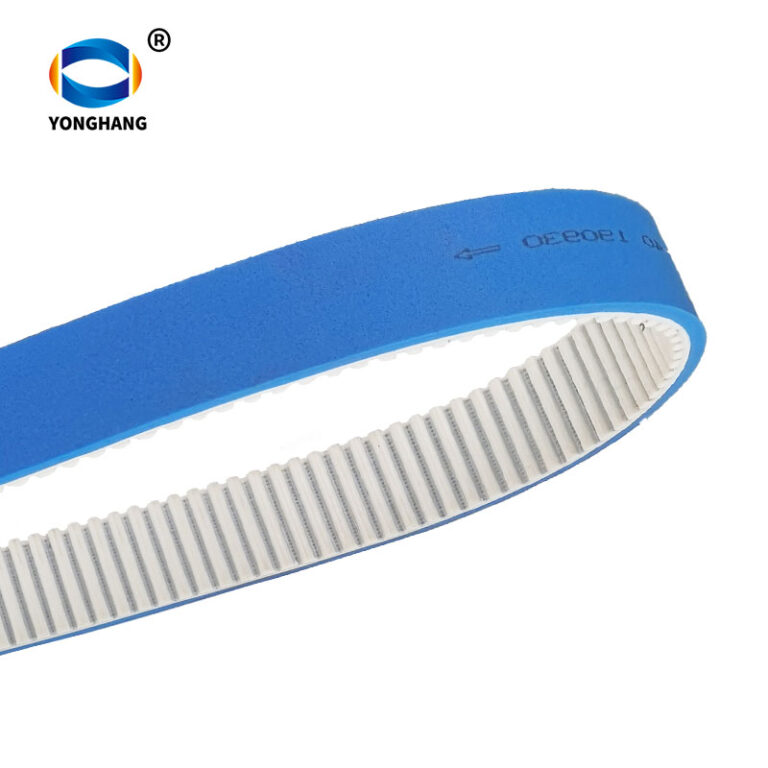
Sylomer Blue Coating
By • 19.01.2026Sylomer Blue Coating,closed-cell foam laminated onto the tooth surface or backing of conventional polyurethane synchronous belts. They combine the precise transmission and slip-free operation of synchronous belts with superior vibration damping, noise reduction, cushioning properties, and static friction. Blue Sylomer is a medium density cellular polyurethane elastomer. It has good wear resistance and can be…