Related products for our timing belt cleats
Manufacturing of the cleats
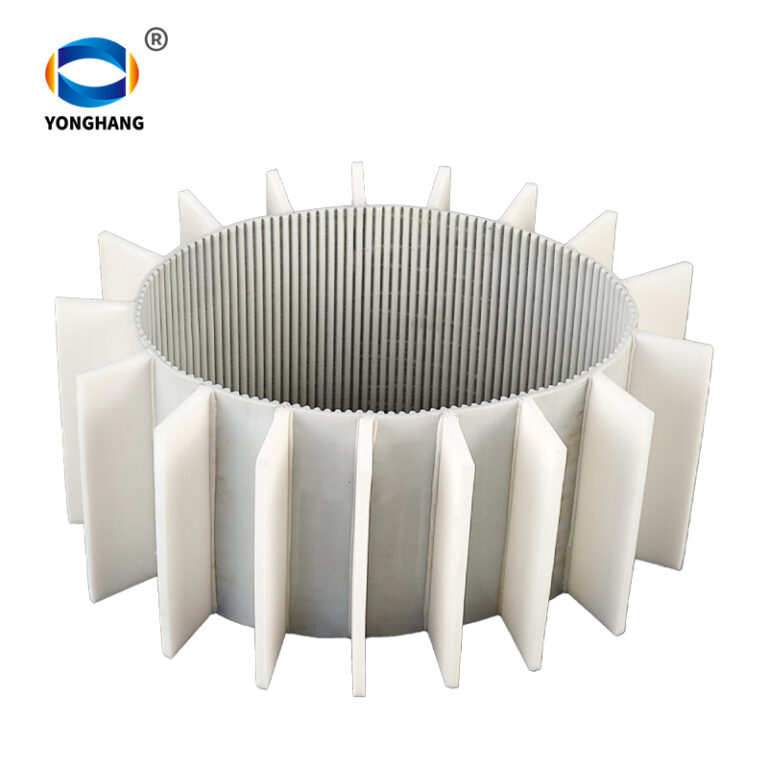
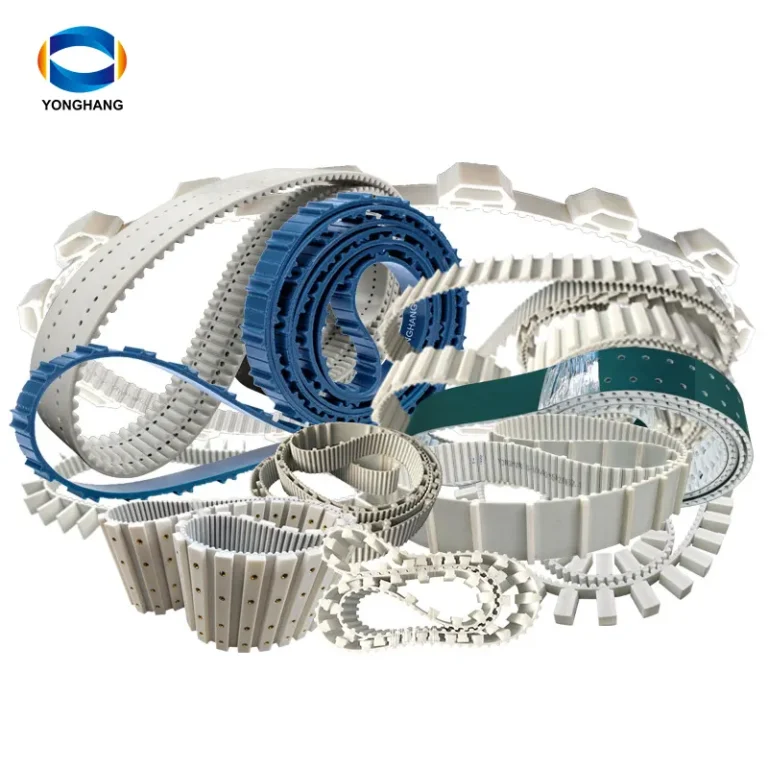
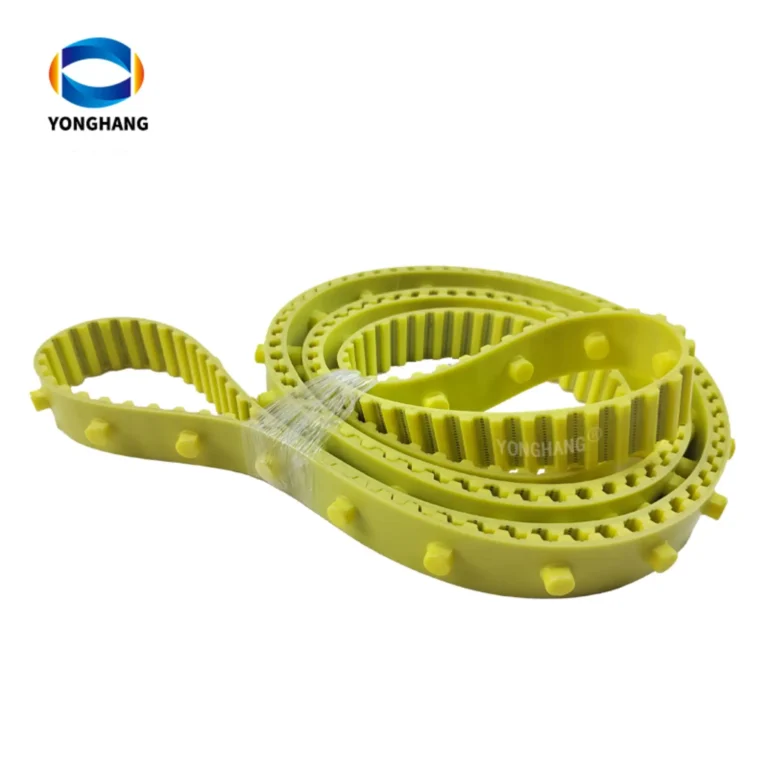
Cleats are usually made of PU by injection molding. For our broad assortment of cleats, we currently have several thousand different molds available, with additional variants being added continuously. Of course, we produce customized cleats according to your specifications upon request. We are also glad to produce individual small batches. If necessary, we resort to manufacturing by hand or 3D printing.
Welding the cleats onto the belt back
For a permanent fastening, the cleats are welded directly onto the back of the conveyor belt. The spacings between the cleats can be chosen freely. If required, they can be tooth-synchronized, but this is not mandatory.
Nut cleats with feather keys
This Nut cleat system, also called “ATN”, is nuts on feather keys which are embedded in the teeth of the timing belt. Depending on the width of the feather keys, these are provided with a certain number of screw-in threads to which the interchangeable cleat is nuts. ATN system belts, which we also supply on request, are designed with a similar functionality.
Bolted cleats with inlay False Teeth
Bolted cleats for inlay false teeth, each replacing an entire tooth. During manufacture, the teeth are removed at the positions where cleats are to be fastened and replaced by inlay bars made of brass, stainless steel or aluminium alloy and other special materials, The inlay false teeth include several screw-in threads which serve as the base for the interchangeable cleats.
Interchangeable cleats with magnetic system
A relatively new method is the attachment of the cleats by means of a magnet system. Neodymium magnets are applied here, which offer an extreme adhesive force while requiring very little space. The magnets are embedded directly into the timing belt body. The cleats, which are likewise magnetic, can now be simply attached and removed. Compared to other replacement systems, this method enables the fastest and easiest replacement of the cleats.
Cleats with bristles
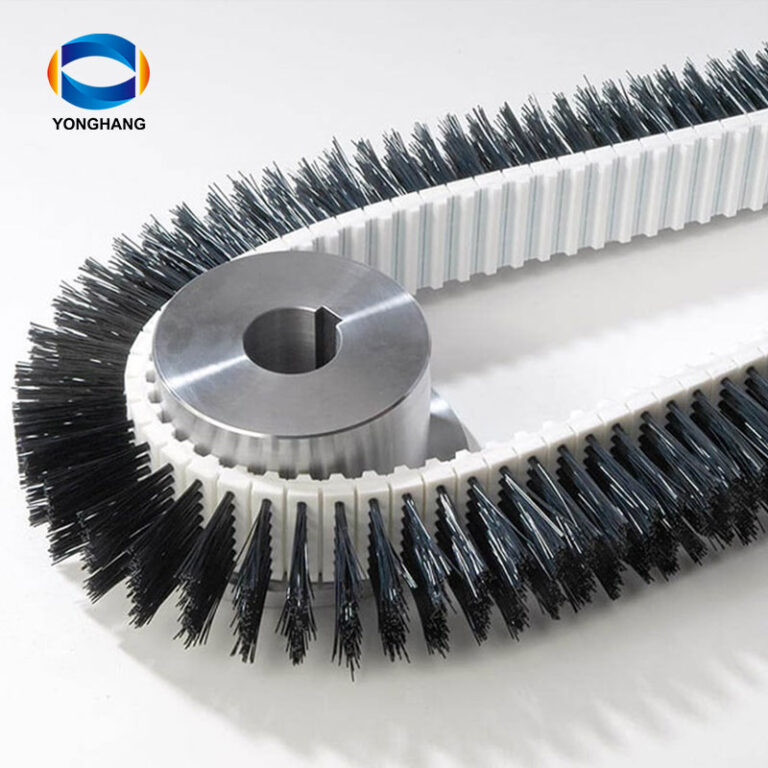
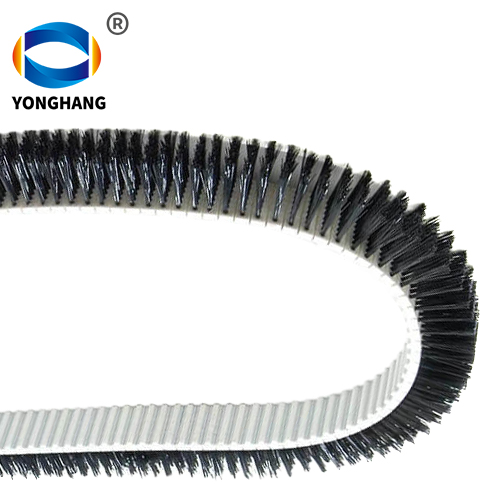
For the gentle handling of particularly sensitive goods such as textile fabrics, cams with bristles are recommended. The height of the bristles, their material and the distance between the cams can be chosen as required.