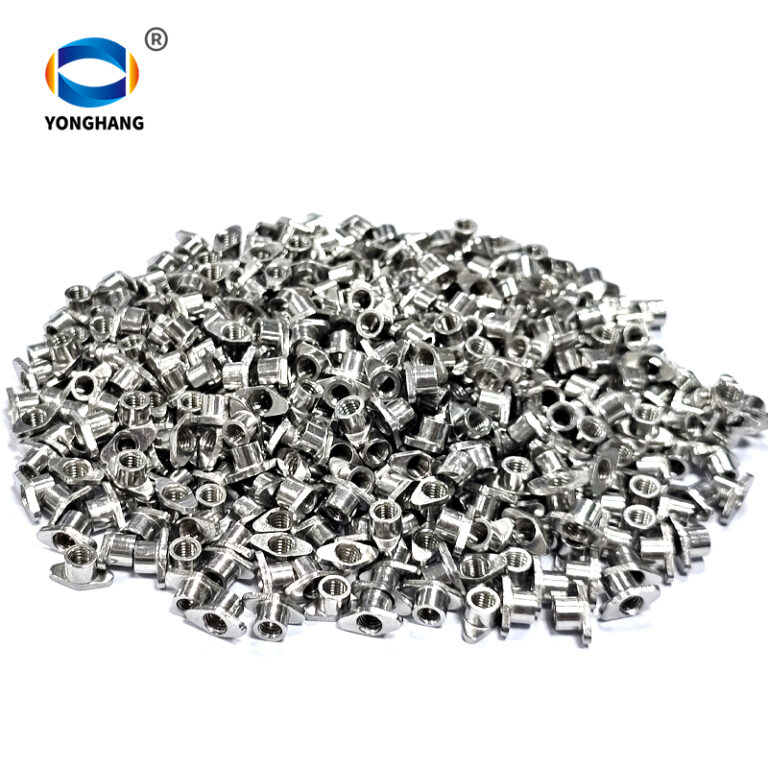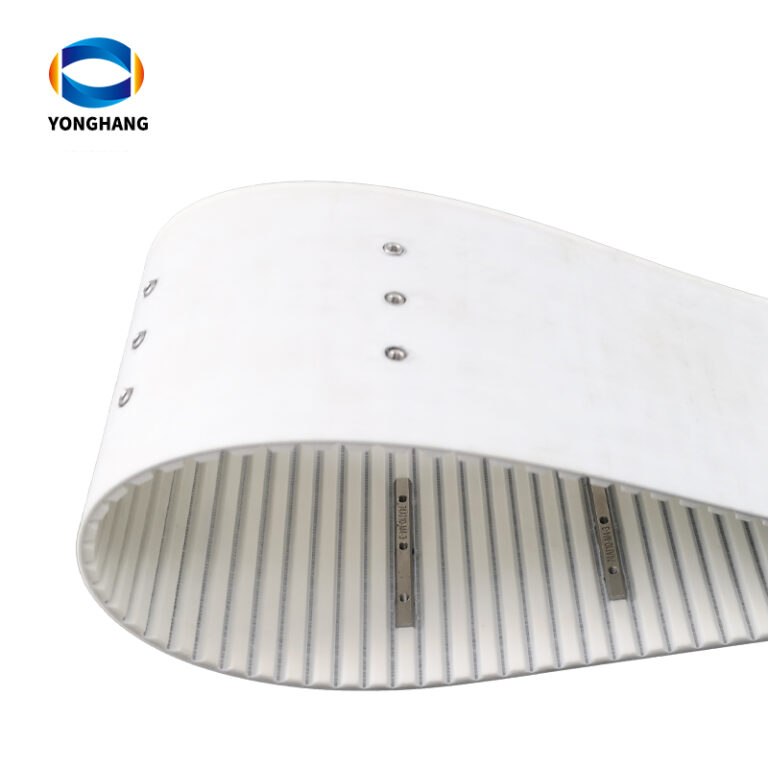
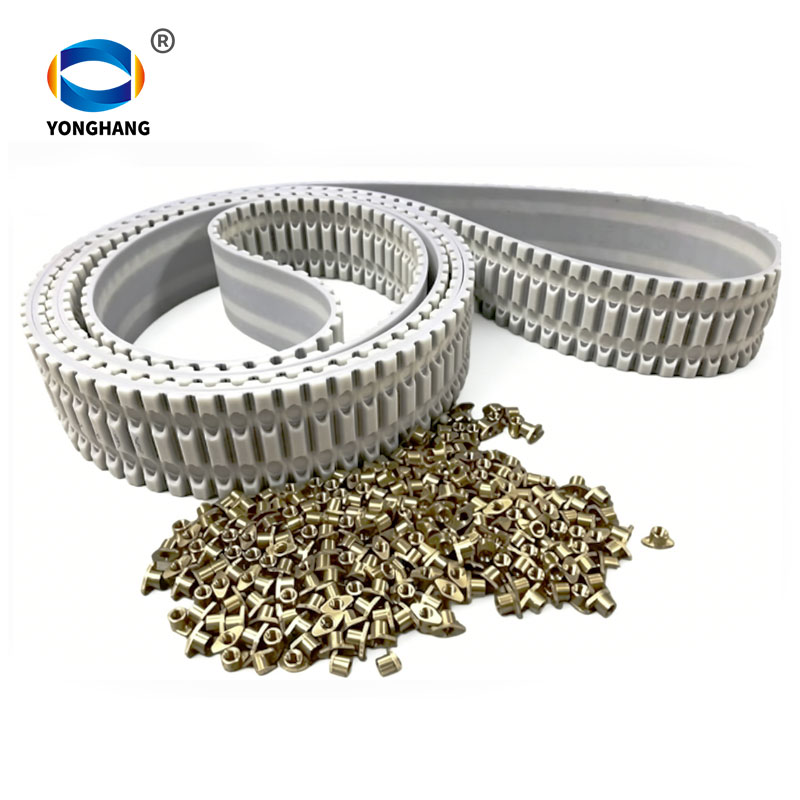
M4 brass nuts for timing belt
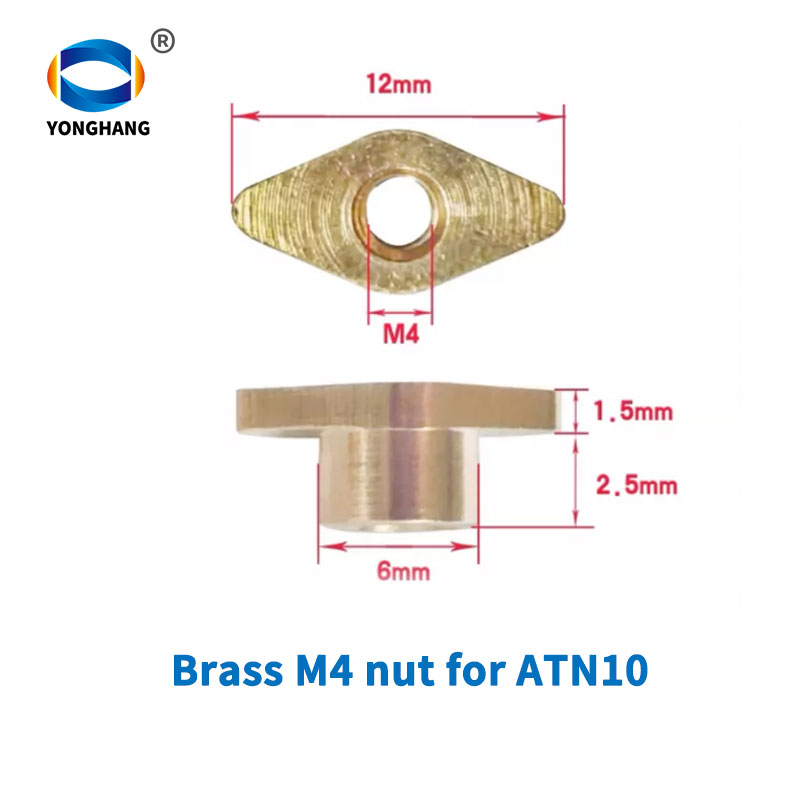
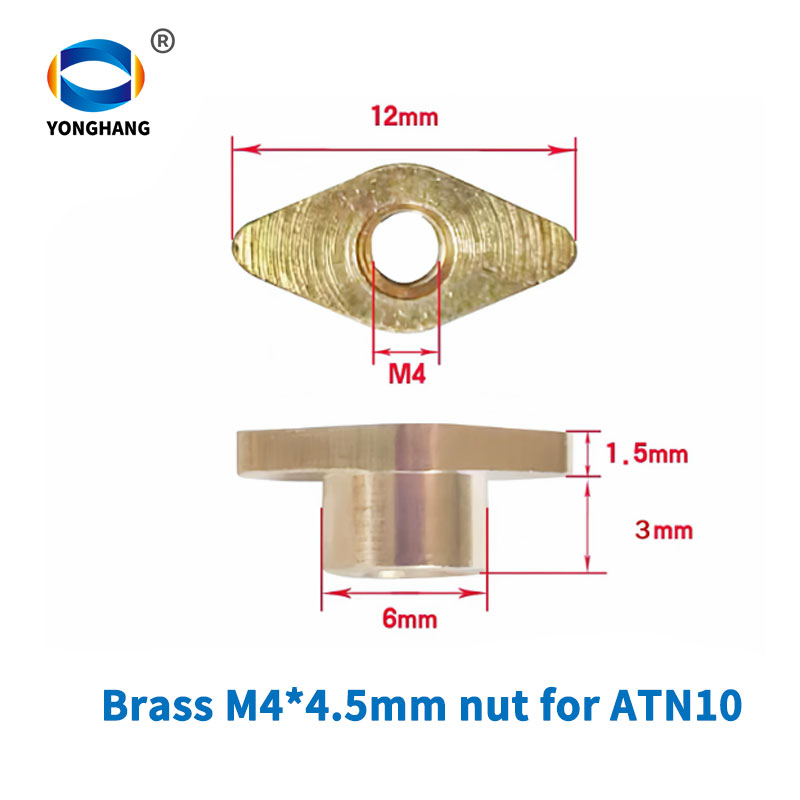
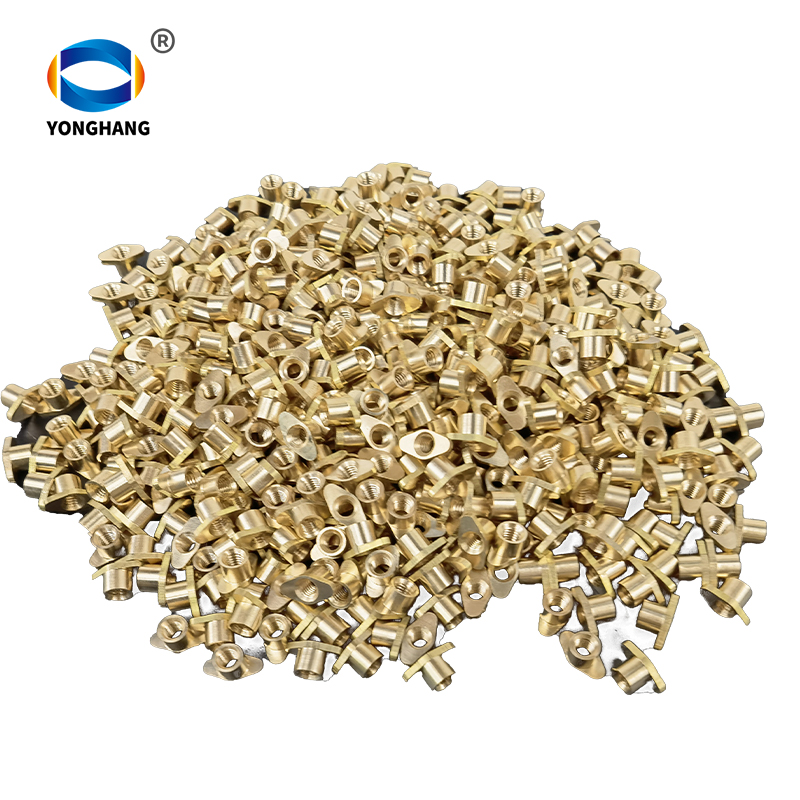
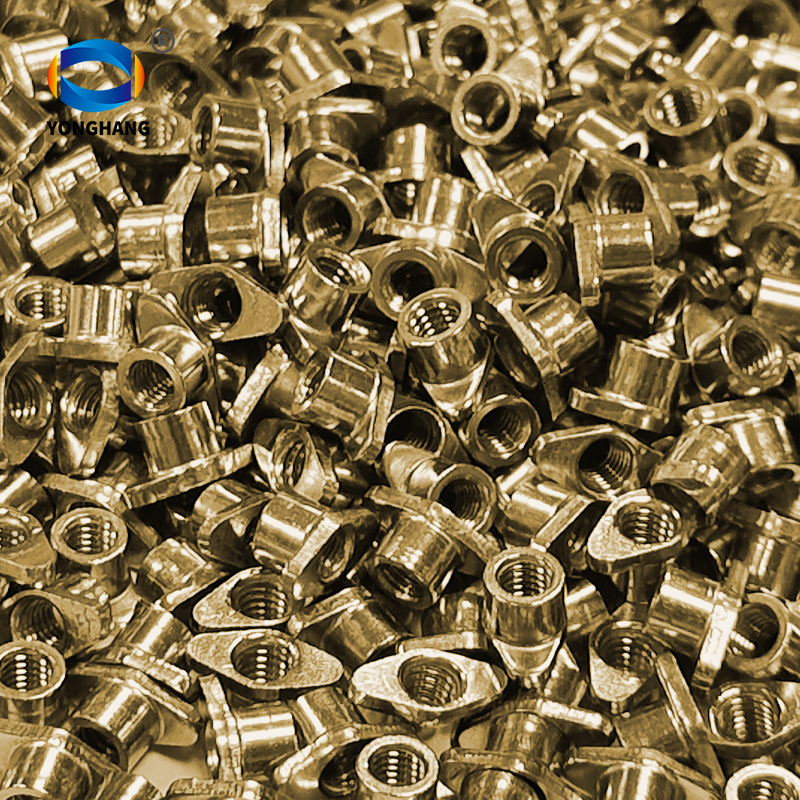
M4 brass nuts for timing belt,A much softer metal. While it provides a “smooth” thread feel, it has a lower torque limit.Easier and cheaper to machine, but more prone to physical deformation. If a jig is struck or experiences a sudden load spike, a brass nut is more likely to warp than a steel one….
M4 brass nuts for timing belt,A much softer metal. While it provides a “smooth” thread feel, it has a lower torque limit.Easier and cheaper to machine, but more prone to physical deformation. If a jig is struck or experiences a sudden load spike, a brass nut is more likely to warp than a steel one.
parameter
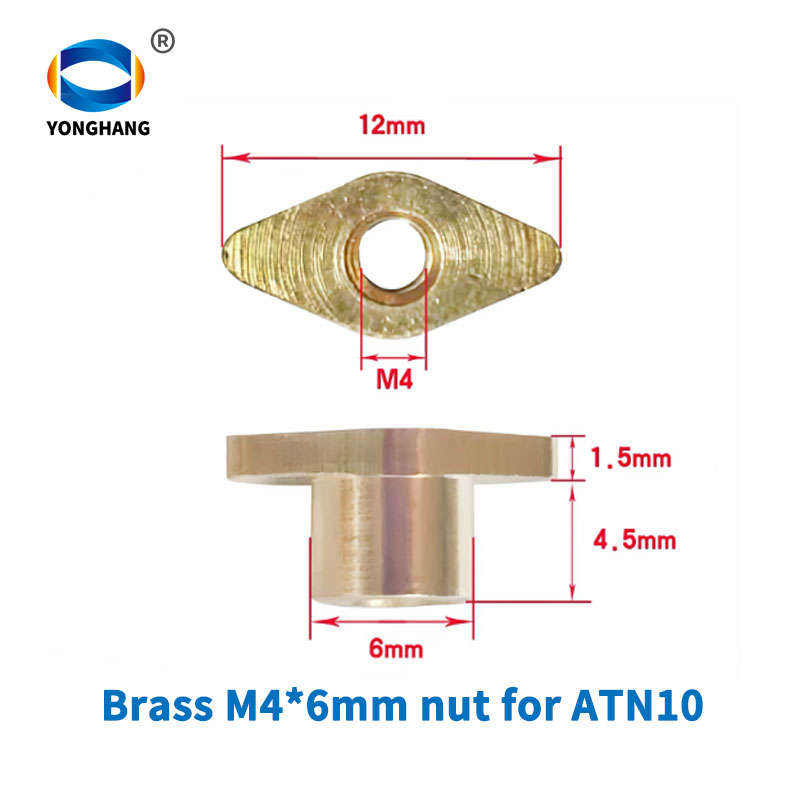
| Product name | M4 brass nuts |
| Brand | Yonghang |
| Screw thread | M4 |
| Material | brass |
| Craft | CNC machined |
| Applicable tooth profile | ATN10/AT10/ATN12.7 |
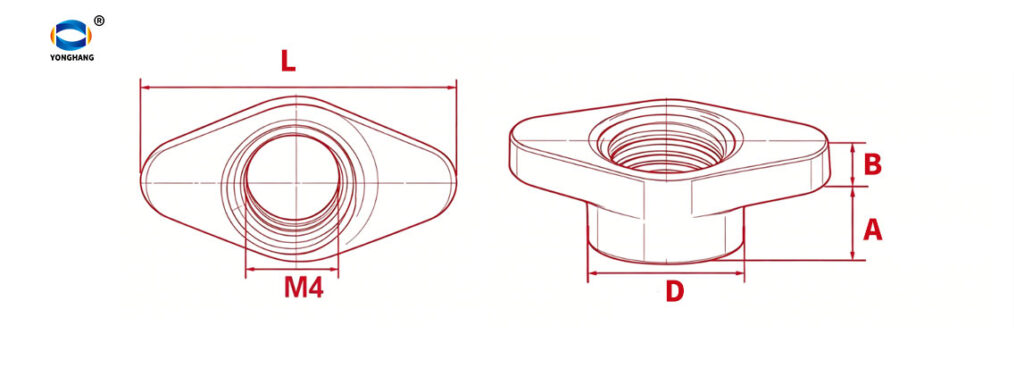
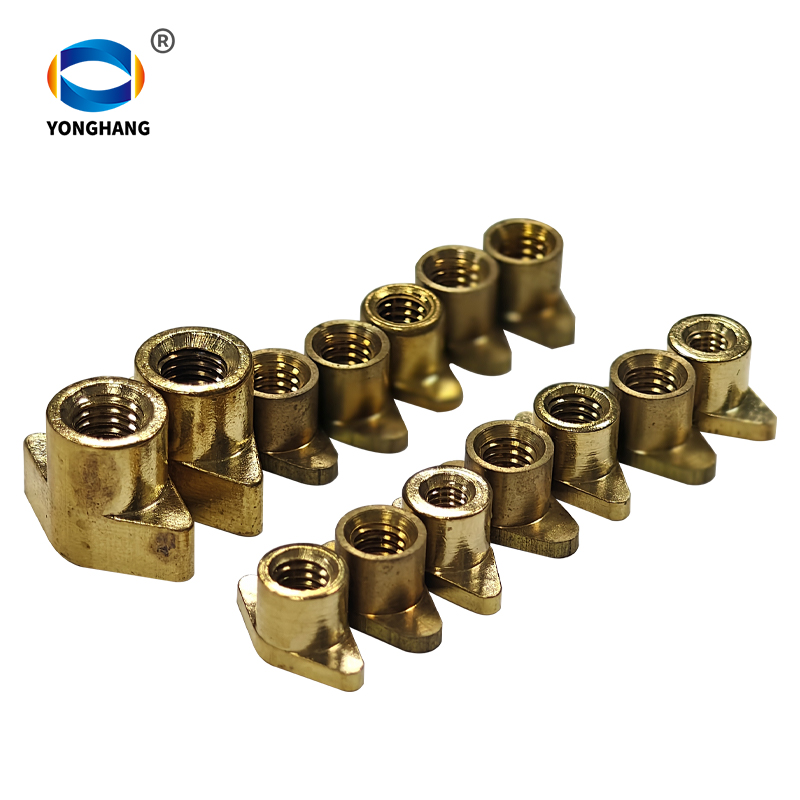
| Description type | L (mm) | A (mm) | B (mm) | Ø D (mm) |
| M4*4 | 12 | 2.5 | 1.5 | 6 |
| M4*4.5 | 12 | 3 | 1.5 | 6 |
| M4*6 | 12 | 4.5 | 1.5 | 6 |
Notice:In the drawing, A can be customized. It can be level with the timing belt or higher than the timing belt surface. If you have different dimensions, CNC processing can be carried out. Please feel free to inquire.
Advantages of Brass
- Corrosion Resistance without “Galling”: Unlike stainless steel, which can sometimes “seize” or gall (cold-weld) when a stainless bolt is tightened into a stainless nut, brass provides a naturally lubricated thread. This makes it easier to remove and adjust fixtures frequently.
- Electrical Conductivity: If your conveyor system handles sensitive electronics or needs to dissipate static electricity, brass nuts help maintain an electrical path from the fixture to the belt’s internal reinforcements (if grounded).
- Non-Sparking: In environments with volatile gases or dust, brass is a “safety metal” because it does not produce sparks when struck by tools.
3. Trade-offs to Consider
- Lower Torque Limit: Brass is a “soft” metal compared to stainless steel. If you over-tighten an M4 bolt, the threads inside a brass nut are more likely to strip. They are best suited for light-to-medium load jigs.
- Oxidation: While brass doesn’t rust, it will develop a dark patina over time. This is purely aesthetic and does not affect the structural integrity unless exposed to extreme chemicals (like ammonia).
Product video
FAQ
Q:What are the differences between M3, M4 and M5?
A:M3, M4 and M5 nuts for ATN timing belt,The main difference is in the dimensions,The smaller the tooth profile, the more suitable it is for M3/M4; the larger the tooth profile, the more suitable it is for M5.
M3/M4: Common for smaller pitch belts (like T5 or AT5/ATN10). Since the belt teeth are small, there is limited space to embed a metal insert, so a smaller screw is necessary.
M5: The standard for larger, high-torque belts like AT10, AT20, HTD14M or ATN20. These belts have enough polyurethane volume to house an M5 stainless steel nut, providing the “hard lock” needed for heavy jigs.
Q:What are the differences between Stainless steel and brass nuts used for timing belt
A:In these applications, stainless steel is the standard choice, as it offers significantly greater mechanical strength and resistance to shear and tensile forces than brass.
However, stainless steel is not as conductive as brass; it has a higher resistivity and poorer electrical conductivity, making it unsuitable for use as power transmission cables. It is only suitable for structural components, casings and earthing components.
Brass is a relatively soft metal with good electrical and thermal conductivity, making it suitable for terminal blocks, electrical connectors and conductive hardware. Only choose brass if your application specifically requires high electrical conductivity or non-sparking properties.