What is the difference between rubber timing belts and polyurethane timing belts?
Isn’t the hardness of a rubber timing belt a fixed value? Apart from hardness, what other differences are there between it and a PU timing belt?

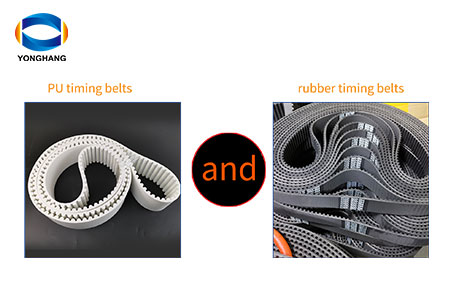
Isn’t the hardness of a rubber timing belt a fixed value? Apart from hardness, what other differences are there between it and a PU timing belt?
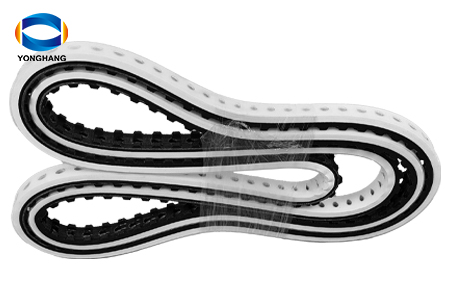
In high-end manufacturing sectors such as automated equipment, precision transmission, food packaging, and photovoltaic and lithium-ion battery production, silicone coated timing belts have become core components in transmission and conveying systems due to their excellent heat resistance, anti-adhesive properties, oil resistance, and high cleanliness. However, when selecting a belt, we often face the first critical decision: should we choose an open-ended (strip-shaped) belt or a closed-loop (seamless/joined) belt?
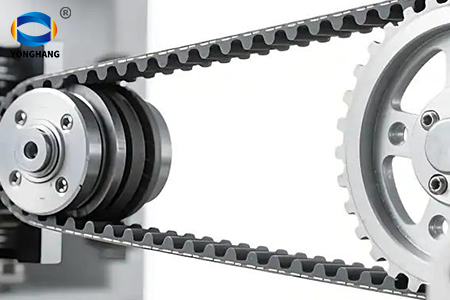
The evolution of timing belt tooth profiles is fundamentally a continuous optimization of their physical properties. Different tooth designs directly determine the belt’s performance in mechanical, acoustic, and tribological aspects. Understanding these physical property differences is essential for making scientifically sound selection decisions. I. Comparative Analysis of Core Physical Properties of Timing Belts 1. Stress…
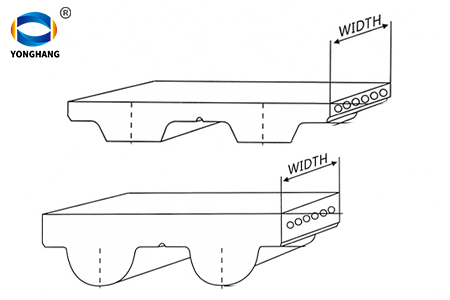
In the precision realm of industrial transmission, the seemingly simple timing belt—where even minute variations in tooth profile can dictate the performance limits of an entire mechanical system—tells a story. The evolution of its tooth shape, from classic trapezoidal to modern high-performance arcs, is not only a chronicle of breakthroughs in materials science and mechanical…
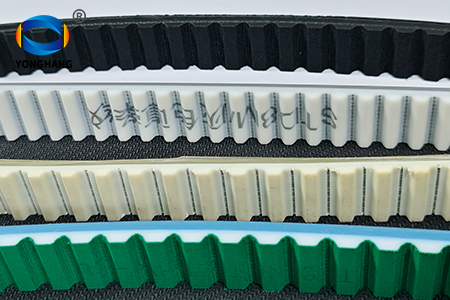
I. Basic Classification System for Timing Belt Tooth Profiles Before beginning identification, first understand the mainstream tooth profile systems: 1. Metric Trapezoidal Thread Series MXL: Finest pitch (2.032mm), micro transmission XL: Fine pitch (5.08mm), light load L: Medium pitch (9.525mm), general purpose H: Coarse pitch (12.7mm), heavy load XH/XXH: Extra coarse pitch (22.225/31.75mm), extra heavy…
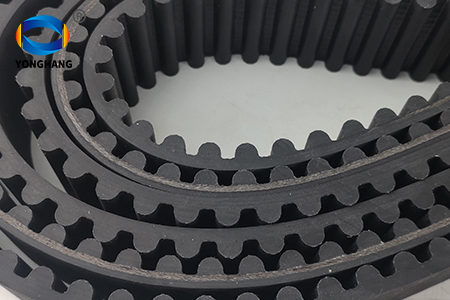
Within the multi-layer composite structure of timing belts, the core functions like the skeletal framework of the human body, undertaking the core tasks of transmitting power, maintaining pitch stability, and withstanding operational tension. Selecting appropriate core materials and structures directly determines the transmission accuracy, service life, and reliability of the timing belt. This paper systematically…

Leave Your Message