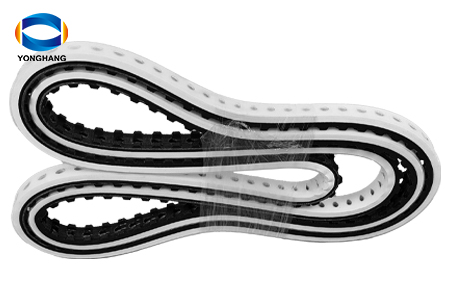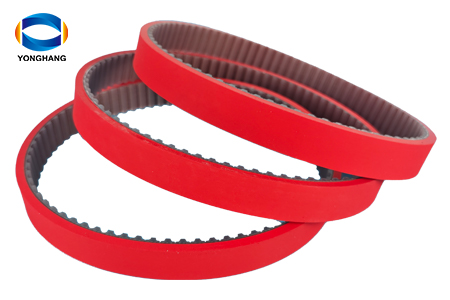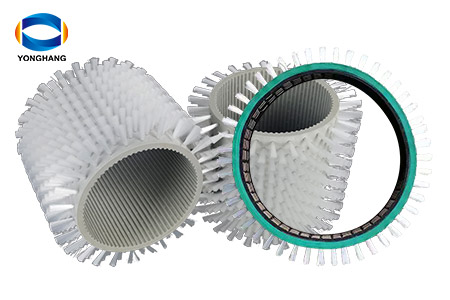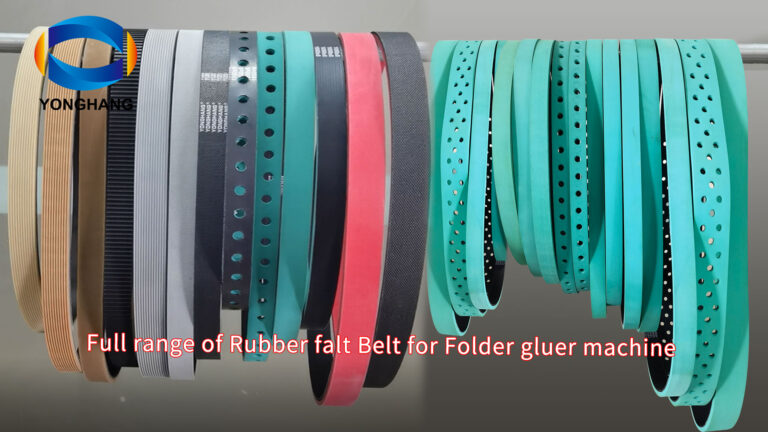
Against the backdrop of industrial automation and smart manufacturing, transmission components are undergoing unprecedented technological evolution. As a critical consumable in sectors such as food processing, packaging and logistics, and precision electronics, the development of silicone coated timing belts is no longer focused solely on “replacing imports” or “price competition,” but is instead evolving toward greater specialization, intelligence, and sustainability. Over the next three years, this seemingly traditional niche market will witness the following five key changes.
I. Material Composite Integration in Silicone Coated Timing Belts: From “Single-Layer Coating” to “Functional Integration”
Traditional silicone coated timing belts typically feature a two-layer structure consisting of a “silicone coating + reinforcement layer.” Over the next three years, material composite integration will become the main focus of technological upgrades.
On one hand, the introduction of functional fillers will endow timing belts with more “hidden capabilities.” For example, adding antimicrobial silver ion materials to meet the stricter hygiene standards of the food and medical industries; incorporating antistatic or electrostatic-dissipative components to adapt to production environments for new energy batteries and electronic components; and enhancing oil, acid, and alkali resistance through nanoscale modification to broaden their applicability under complex operating conditions.
On the other hand, multi-layer composite structures are gaining traction. The surface layer uses highly wear-resistant silicone, the middle layer incorporates a cushioning structure, and the base layer strengthens the bond with the tooth profile—this “division of labor among layers” design philosophy will significantly extend the service life of timing belts under high-speed, high-load, and high-frequency bending conditions.
It is foreseeable that over the next three years, “whether or not a coating is present” will no longer be the benchmark; rather, “what the coating can do” will be the key factor distinguishing product tiers.
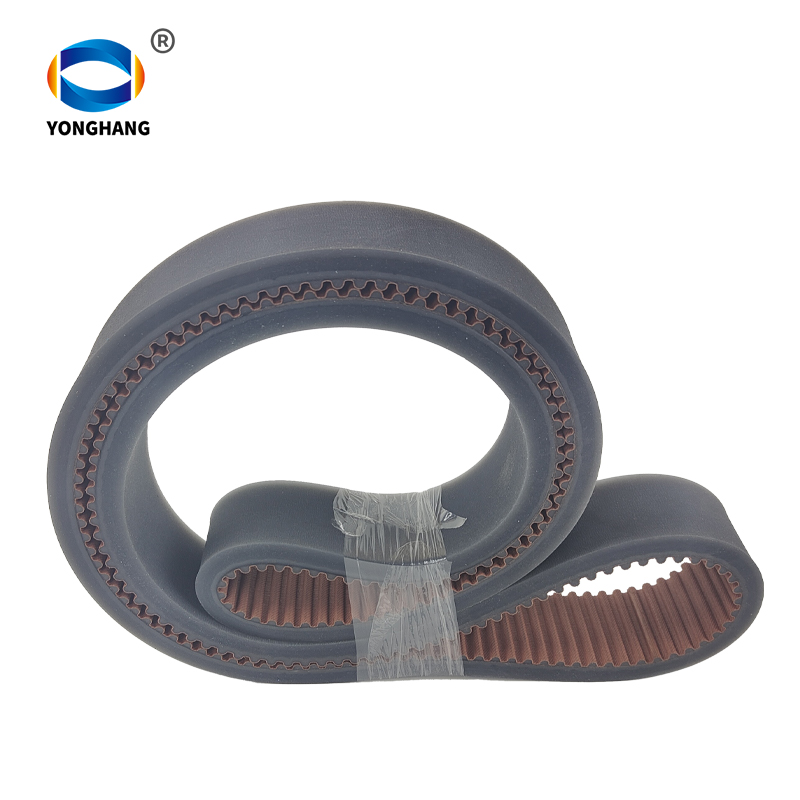
II. Structural Lightweighting: Meeting the Demands for High-Speed and Energy-Efficient Equipment
As industrial equipment evolves toward higher speeds, faster response times, and lower energy consumption, the weight of transmission components is becoming a factor that cannot be ignored.
Over the next three years, silicone coated timing belts will be optimized to become thinner, lighter, and more flexible while maintaining strength. Specific approaches include: using high-strength aramid fibers or ultra-fine steel wires as reinforcement materials to reduce thickness while maintaining tensile strength; optimizing tooth profile design to minimize material redundancy; and developing low-density silicone formulations to reduce weight per unit length.
The direct benefits of lightweighting are twofold: first, reducing the inertial load on the transmission system to improve the acceleration and deceleration response of equipment; second, reducing operational energy consumption, which can result in significant cumulative energy savings for equipment with long conveyor lines or multi-axis coordination.
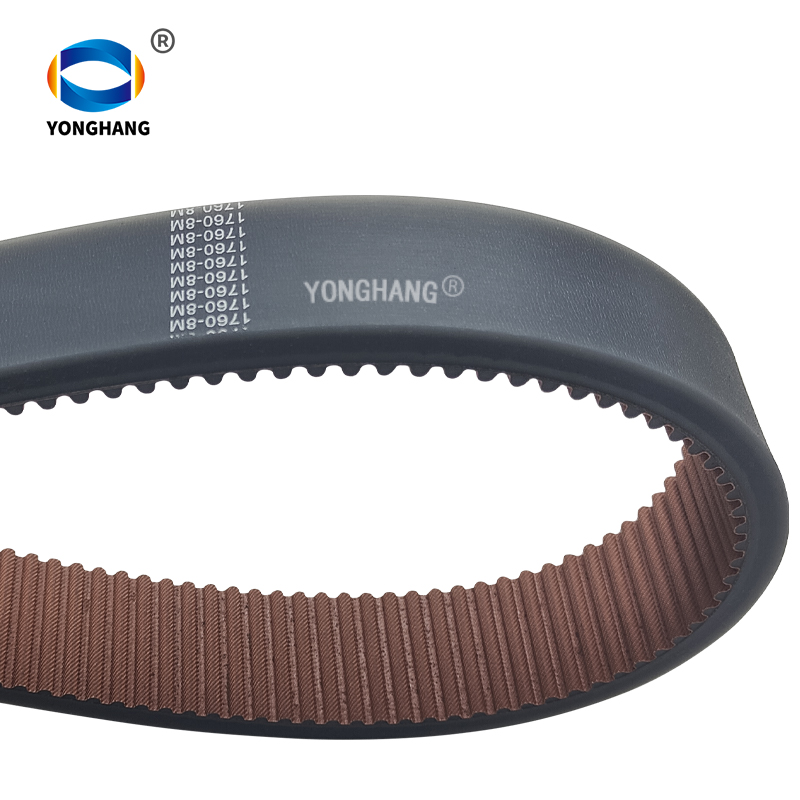
III. Smart Manufacturing: From “Empirical Formulations” to “Data-Driven”
In the past, the formulations and processes for silicone coated timing belts relied heavily on the experience of technical personnel, making it difficult to fully guarantee consistency across different batches. Over the next three years, smart manufacturing will become deeply integrated into this sector.
Online inspection and closed-loop control are becoming standard features in leading factories. By using sensors to monitor key parameters such as coating thickness, vulcanization temperature, and tension changes in real time, the system automatically adjusts the process to ensure that performance deviations in every meter of timing belt are kept within a minimal range.
At the same time, digital traceability systems will gradually become widespread. Users need only scan a product code to access information such as the raw material batch, production date, key process parameters, and factory inspection data for that specific timing belt. For industries requiring strict compliance, such as food and pharmaceuticals, this level of transparency is evolving from a “nice-to-have” to a “must-have.”
IV. Specialization of Application Scenarios: General-Purpose Products Give Way to “Dedicated Solutions”
In the past, many users were accustomed to purchasing general-purpose silicone coated timing belts, with a single model covering multiple types of equipment. Over the next three years, as process complexity increases across various industries, scenario-specific customization will become the dominant trend.
In lithium-ion battery manufacturing, processes such as electrode coating and calendering require timing belts that combine high temperature resistance, low outgassing, and anti-static properties. In the frozen food processing sector, maintaining flexibility and resistance to brittle fracture at temperatures as low as -30°C has become a core requirement. In the semiconductor packaging sector, standards for belt cleanliness, low volatility, and surface microstructural precision are approaching cleanroom-grade levels.
This implies that the suppliers set to succeed over the next three years will no longer be “one-size-fits-all” manufacturers with a broad product range, but rather specialized companies capable of deeply understanding the processes of specific industry segments and providing tailored solutions.
V. Green and Low-Carbon Transformation: Environmental Pressure Drives Upgrades Across the Entire Supply Chain
Under the “Dual Carbon” goals, the environmental attributes of industrial consumables are shifting from voluntary corporate initiatives to market access requirements. Over the next three years, silicone coated timing belts will undergo a wave of green upgrades.
First, at the material level. Regulations in the EU and China are becoming increasingly stringent regarding the restriction of harmful substances such as polycyclic aromatic hydrocarbons and nitrosamines in rubber products. Eco-friendly silicone, heavy-metal-free vulcanization systems, and recyclable core materials will become the mainstream choices.
Second, the production process. Traditional vulcanization processes are energy-intensive. Over the next three years, low-temperature rapid vulcanization technology and microwave vulcanization processes are expected to be gradually adopted, reducing carbon emissions at the source.Finally, waste management. As consumables, the disposal of large quantities of replaced timing belts is drawing increasing attention. Some leading companies have begun exploring recyclable timing belt designs or establishing recycling and remanufacturing mechanisms to help users reduce solid waste disposal costs and compliance risks.