Comparison of MXL and S2M timing belts (trapezoidal and arc-tooth)
Comparison of MXL and S2M timing belts (trapezoidal and arc-tooth) or RPP timing belts born

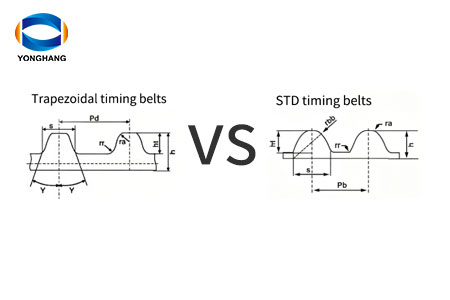
Comparison of MXL and S2M timing belts (trapezoidal and arc-tooth) or RPP timing belts born
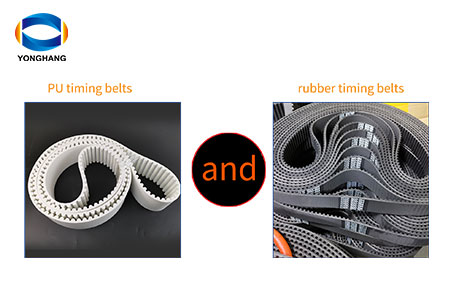
Isn’t the hardness of a rubber timing belt a fixed value? Apart from hardness, what other differences are there between it and a PU timing belt?

If you ask a Chinese person what the most important traditional festival in spring is, the answer is likely to be Qingming Festival. Every year around April 4 or 5, when the sun reaches 15 degrees of the ecliptic, China marks the beginning of the “Qingming” solar term. This is not only one of the…
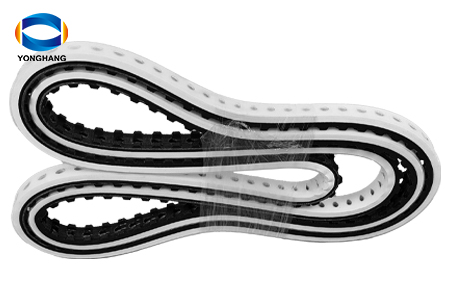
In automated production lines, silicone coated timing belts are often a prime example of “small parts, big impact.” While their unit price may seem low, over the course of a machine’s entire lifecycle, the combined costs of procurement, downtime losses, replacement frequency, and the defect rate caused by belt failures often add up to a staggering hidden expense.
In high-end manufacturing sectors such as automated equipment, precision transmission, food packaging, and photovoltaic and lithium-ion battery production, silicone coated timing belts have become core components in transmission and conveying systems due to their excellent heat resistance, anti-adhesive properties, oil resistance, and high cleanliness. However, when selecting a belt, we often face the first critical decision: should we choose an open-ended (strip-shaped) belt or a closed-loop (seamless/joined) belt?
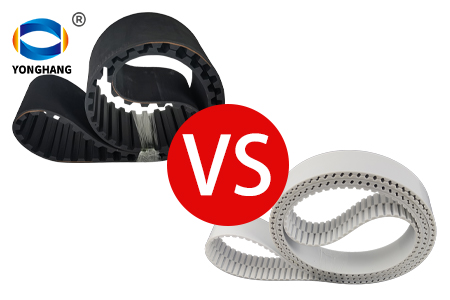
Material – The “genetic” determinism of timing belts In the performance equation of timing belts, material is not a supporting role but the core “gene” that determines transmission efficiency, service life and equipment stability. Rubber and polyurethane, the two dominant materials in the market, represent two different technical routes and application philosophies. A wrong choice…

Leave Your Message