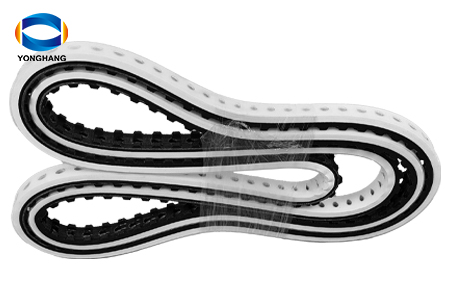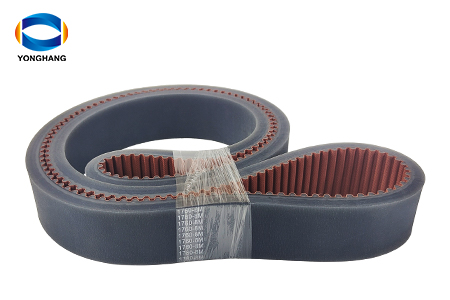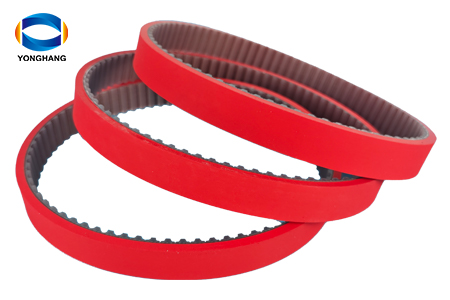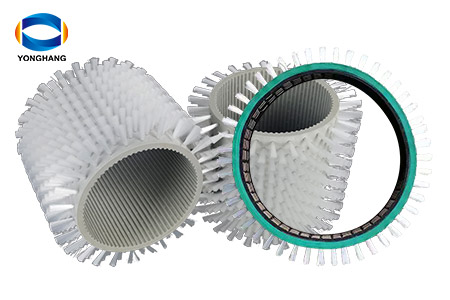
In automated equipment and packaging machinery, silicone coated timing belts are widely used in various conveying and power transmission applications due to their excellent anti-slip properties, wear resistance, and temperature resistance. However, frequent downtime for replacement not only affects production efficiency but also increases maintenance costs.
How can we extend the service life of these “rubber tracks”? Below, we share several practical, field-tested tips covering four key areas: selection, installation, maintenance, and environmental considerations.
I. Choosing the Right Silicone Coated Timing Belt
Many cases of premature failure stem from incorrect selection at the outset.
Verify Hardness and Thickness
The hardness and thickness of the silicone coating directly affect its wear resistance. If the conveyed objects are heavy or have sharp edges, selecting a coating with slightly higher hardness (e.g., 60–70 Shore A) or increased thickness (e.g., 2 mm or more) can significantly resist cutting wear. Do not choose an overly thin coating simply to save money.
Check the Base Belt’s Tensile Strength
Silicone is merely the “outer layer”; the internal neoprene or polyurethane (PU) synchronous belt serves as the “skeleton.” Ensure the base belt’s tensile strength and the diameter of the steel cord (or aramid fiber) are sufficient to withstand the load. If the skeleton has already failed, even the newest coating is useless.
Open-Ended or Endless Belt?
For long-distance conveying, avoid using spliced open-ended belts whenever possible. Although open-ended belts are cheaper, the splice is often the weakest link. Whenever possible, choose seamless endless belts to eliminate the risk of premature cracking at the splice.
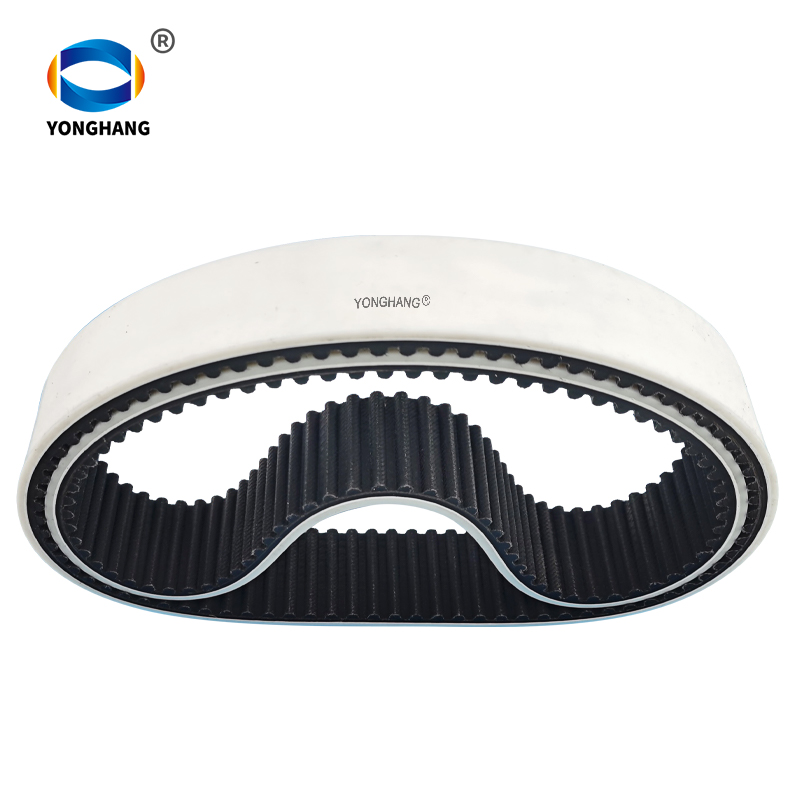
II. Proper Installation and Adjustment
Improper installation is the primary cause of reduced silicone coated timing belt lifespan.
Do Not Force the Belt into Place
During installation, be sure to loosen the center distance first. Place the silicone coated timing belt into the pulley groove before tensioning it. Never use hard objects such as screwdrivers to force the belt into the pulley, as this will sever the internal tension members and lead to belt failure later on.
Precise Tension Control
Too Loose: The belt skips teeth and slips. Although the silicone coating provides slip resistance, slipping generates significant frictional heat, accelerating silicone aging.
Too tight: Excessive load on the bearings; the belt body is overstretched, causing the internal cords to fatigue and break.
Tip: Use a tension gauge to measure, or apply pressure to the middle of the belt; the ideal deflection should be 1%–1.5% of the center distance.
Ensure Parallelism and Alignment
If the axes of the drive pulley and driven pulley are not parallel, the belt will run off-center during operation, causing the belt edges to rub violently against the side guards and resulting in “edge wear” damage. Use a laser alignment tool or a straightedge to calibrate the pulley set.
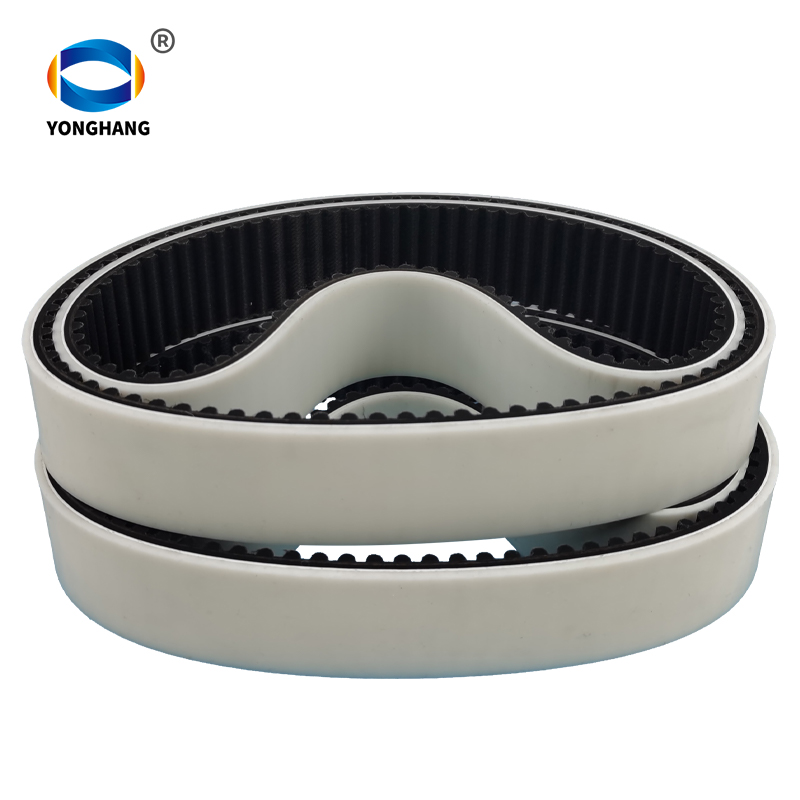
III. Routine Maintenance: Details Determine Lifespan
Regular Cleaning (Critical)
Although silicone-coated synchronous belts are resistant to oil and chemicals, they are vulnerable to sharp, hard objects.
Check for Residue: If metal fragments or glass shards are mixed in with the conveyed material, they can become embedded in the silicone surface and act like a “file,” continuously wearing down the pulleys and belts. Residue on the belt surface should be cleaned off before the end of each workday.
Clean the Pulley: Check the pulley grooves for any foreign objects that may be lodged there, and clean them thoroughly to prevent the belt from being damaged by the protrusions.
Prevent Oil Contamination
Although silicone has decent oil resistance, prolonged contact with lubricants or cutting fluids can cause it to swell and soften, reducing surface friction. If contact cannot be avoided, inspect the surface regularly and wipe away any oil residue.
Check Tension
After 24–48 hours of operation, a new belt will undergo initial stretching. At this point, it must be retensioned; otherwise, slippage may occur, leading to high-temperature burning of the coating.
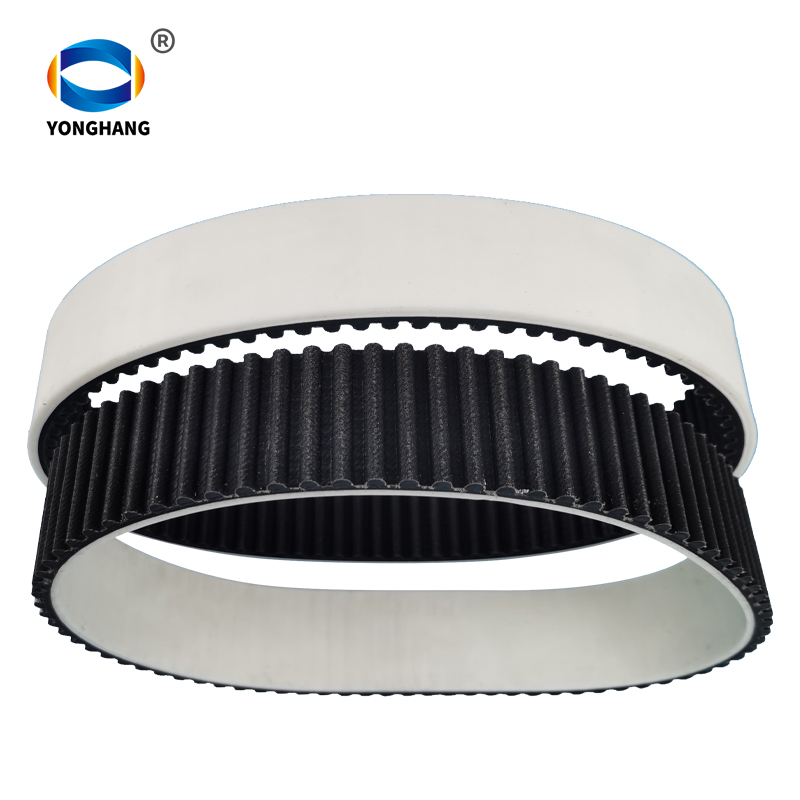
IV. Environmental Control: Creating a “Comfort Zone” for the Belt
Temperature Control
Standard silicone-coated synchronous belts typically have a temperature resistance range of -20°C to +100°C. If operated continuously at temperatures above 120°C, the silicone will harden and crack. If the operating conditions involve high temperatures, be sure to use a special high-temperature-resistant silicone.
Avoid Ozone and UV Light
Electrical sparks generated by motors produce ozone, and prolonged exposure to UV light from direct sunlight can accelerate silicone aging and cracking. When the equipment is not in use, it is recommended to cover it with a light-blocking cloth or install a protective cover.
V. Operating Guidelines: Use the “Soft Knife” Wisely
If the belt drives precision equipment, improper emergency stops can also damage the belt.
Avoid sudden starts and stops: If the motor’s starting torque is too high, the instantaneous impact force can tear the base of the belt’s teeth.
Ensure even loading: Try to ensure that materials are evenly distributed across the conveyor belt to avoid uneven wear caused by one-sided overloading.