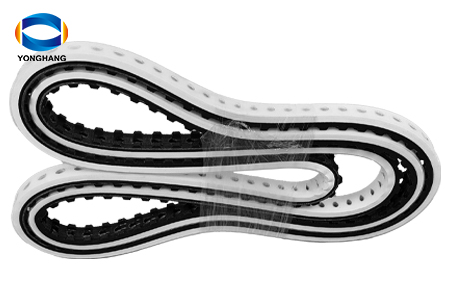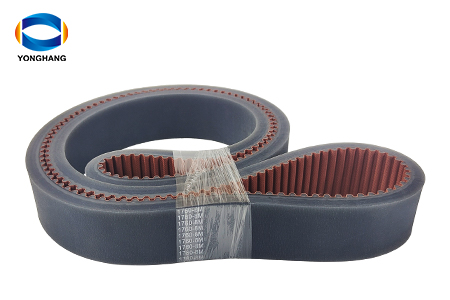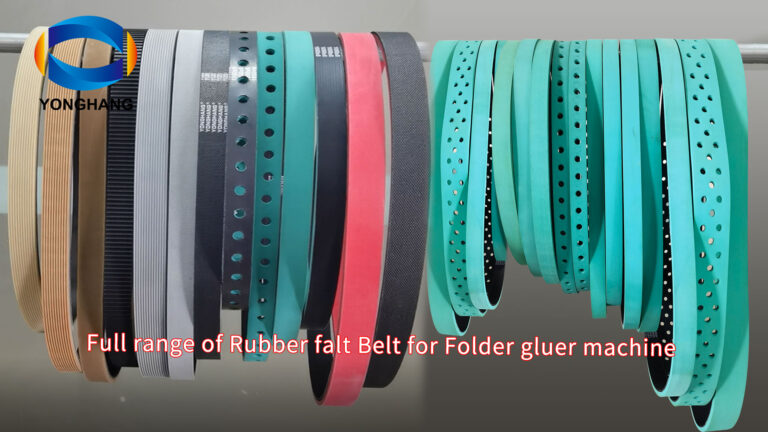
In the field of industrial power transmission, silicone coated timing belts are widely used in industries such as food processing, packaging machinery, and electronic equipment due to their high-temperature resistance, slip resistance, and ease of cleaning. However, there are many conflicting claims about these belts, and many users are often misled by so-called “word-of-mouth advice” when selecting and using them. Today, we’ll set the record straight by debunking the most common misconceptions to help you avoid unnecessary detours!
Misconception 1: The brighter the color of a silicone coated timing belt, the better its quality
Many people believe that the glossier the surface of a silicone coated timing belt, the purer the material and the more advanced the manufacturing process. This is not the case.
The Truth: The gloss of a silicone coated timing belt is primarily influenced by surface treatment processes and additives, and has no direct correlation with product quality. Some manufacturers, seeking to capitalize on the perception that “shiny surfaces look better,” apply gloss enhancers to the surface, which may actually mask the true quality of the base material. To determine the quality of a timing belt, one should focus on core metrics such as the bond strength between the coating and the base material, abrasion resistance, and resilience, rather than making judgments based solely on appearance.
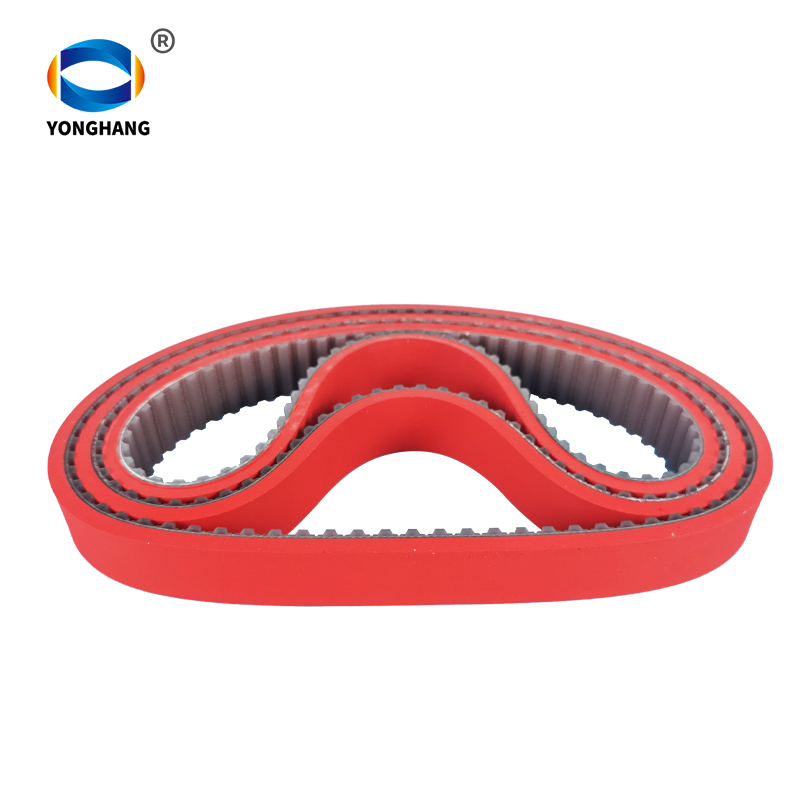
Misconception 2: High-temperature resistance means they can be used indiscriminately
Since silicone itself has excellent high-temperature resistance, many people believe that any silicone coated timing belt can be used “indiscriminately” in high-temperature environments, or even come into direct contact with the surfaces of hot objects.
The Truth: The temperature range for silicone coated timing belts is typically between -40°C and +200°C. However, “high-temperature resistance” does not mean “resistance to prolonged exposure to extreme heat,” nor does it imply “resistance to open flames” or “resistance to thermal radiation.” In practical use, if the temperature remains at the upper limit for extended periods or if the belt is frequently subjected to drastic temperature fluctuations, the coating will age prematurely, become brittle, and crack. Furthermore, silicone materials from different brands and with different formulations vary significantly in their temperature resistance. It is essential to select the appropriate type based on the actual operating conditions of the equipment.
Misconception 3: The Harder, the More Wear-Resistant
Some users press down on timing belts with their hands and assume that those that feel stiffer are “sturdier” and will inevitably have a longer service life.
The Truth: There is not a simple direct correlation between the hardness of silicone coated timing belts and their wear resistance. Excessive hardness increases surface compression resistance but reduces flexibility, leading to internal stress concentration when the belt wraps around pulleys and accelerating fatigue damage to the reinforcement layer. Conversely, insufficient hardness can cause deformation, misalignment, and inadequate load-bearing capacity. The appropriate hardness depends on the application scenario; for example, in situations requiring frequent bending, moderate hardness actually results in greater durability.
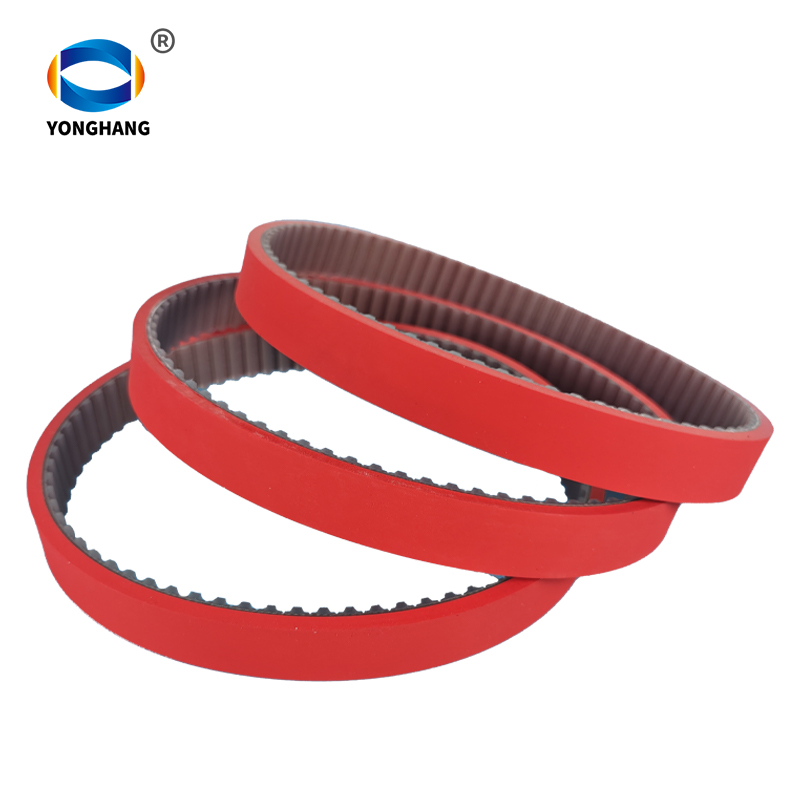
Misconception 4: All silicone coated timing belts are the same; you only need to check the specifications
This is the most common and dangerous misconception. Many people focus solely on “width + circumference + tooth profile” when purchasing, assuming that as long as the specifications match, all brands are the same.
The Truth: Silicone coated timing belts are a typical composite product involving “materials + structure + manufacturing process.” Differences among manufacturers in the following areas directly impact performance and service life:
Core Material: Glass fiber or steel wire? Tensile strength varies by several times
Base Compound: Is virgin rubber used? There is a world of difference in resilience and resistance to aging.
Coating Process: Is the coating uniform? Are there risks of bubbles or delamination?
Tooth Profile Precision: Precise meshing with the pulley directly affects transmission efficiency and noise levels.
Focusing only on specifications rather than quality is often the root cause of frequent equipment downtime and premature belt failure.
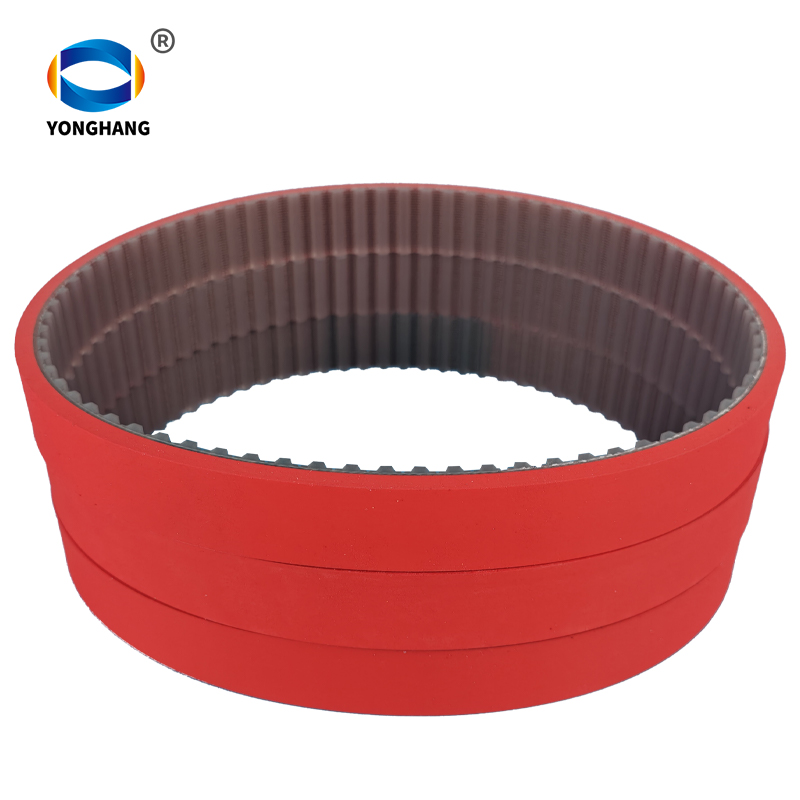
Misconception 5: Thinking a belt with scratches or minor damage can “hold out a little longer”
When production deadlines are tight, many people choose to “make do” with a timing belt that has fine scratches or minor localized damage on its surface, only replacing it once it has completely snapped.
The Truth: Damage to silicone coated timing belts rarely occurs suddenly. Minor surface scratches gradually expand, allowing moisture, oil, dust, and other contaminants to seep through the damaged areas and corrode the reinforcement layer, causing a sharp drop in tensile strength. Once visible damage appears, replacement should be arranged as soon as possible; otherwise, it may not only lead to equipment failure but also cause more severe secondary damage. Regular inspections and timely replacements are the true way to “save time and money.”
Misconception 6: The More Expensive, the Better
When making purchases, many people adopt the mindset that “expensive equals good” and automatically choose the most expensive product, believing it will solve their problems once and for all.The Truth: Price does not directly correlate with suitability. The key to selecting a silicone coated timing belt lies in “compatibility.” Expensive imported brands may perform exceptionally well under certain extreme operating conditions, but when used in ordinary transmission scenarios, their performance may be excessive, resulting in poor value for money. Conversely, some domestically produced brands with stable quality are fully capable of meeting requirements in low-to-medium speed and standard temperature environments, while offering shorter lead times and faster service response. The key is to make a comprehensive assessment based on actual load, speed, ambient temperature, and cleanliness requirements—the right choice isn’t necessarily the most expensive one.