I. Basic Classification System for Timing Belt Tooth Profiles
Before beginning identification, first understand the mainstream tooth profile systems:
1. Metric Trapezoidal Thread Series
MXL: Finest pitch (2.032mm), micro transmission
XL: Fine pitch (5.08mm), light load
L: Medium pitch (9.525mm), general purpose
H: Coarse pitch (12.7mm), heavy load
XH/XXH: Extra coarse pitch (22.225/31.75mm), extra heavy load
2. Metric Arc Tooth Series
3M/5M/8M/14M/20M: Pitch of 3/5/8/14/20mm
The number indicates pitch in millimeters, with “M” denoting metric
3. Imperial Arc Tooth Series
HTD® 3M/5M/8M/14M/20M: Similar to metric but with different standards
GT®: Improved arc tooth design for smoother transmission
4. Special Tooth Profile Series
AT/AT10: Reinforced trapezoidal teeth
RPP/HPPD: Ultra-high torque tooth profile
STS/STPD: Double-sided synchronous belt teeth
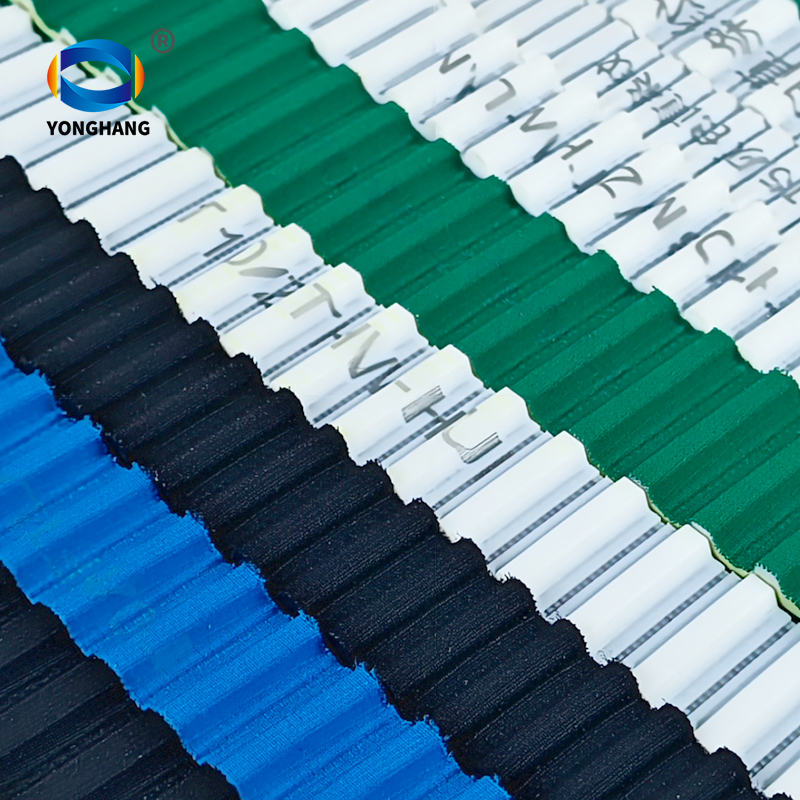
II. timing belt On-Site Rapid Identification Method (No Disassembly Required)
Method 1: Visual Inspection and Proportional Judgment
Observe tooth profile:
Distinct trapezoidal shape with straight sides: Trapezoidal tooth series
Smooth tooth tips with deep, rounded tooth valleys: Curved tooth series
Symmetrical and sharp tooth profile: May indicate fine-pitch series like MXL or XL
Estimate pitch ratio:
10 teeth span approx. 50mm → XL type (5.08 × 10 ≈ 50.8mm)
10 teeth span approx. 95mm → L type (9.525 × 10 ≈ 95.25mm)
10 teeth span approx. 127mm → H type (12.7 × 10 = 127mm)
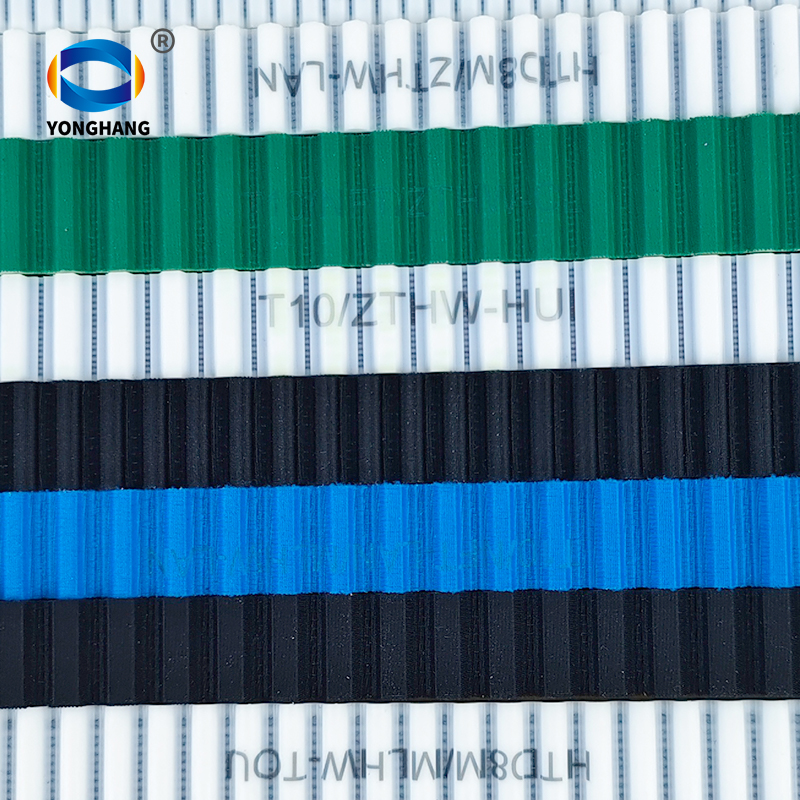
Method 2: Belt Marking Identification
Most industrial-grade timing belts feature complete markings printed on the back:
Locate the markings: Search the non-working area on the belt’s back
Interpreting the codes:
Example 1: “800 L 050” indicates: Length 800mm, L-type teeth, width 50mm
Example 2: “1200-8M-30” indicates: Length 1200mm, 8M arc teeth, width 30mm
Example 3: “GT2 2000-6” indicates: GT tooth profile, pitch 2mm, length 2000mm, width 6mm
Common prefix/suffix meanings:
“AT” prefix: Reinforced trapezoidal teeth
“T” suffix: Typically denotes trapezoidal teeth
“M” suffix: Metric arc teeth
“H” in middle: HTD arc teeth
III. timing belt Precision Measurement Identification Method
When no markings are present or precise verification is required, use the measurement method:
Step 1: Measure the Pitch
Clean the test area and select at least 10 consecutive teeth.
Measure the distance from the center of the 1st tooth to the center of the 11th tooth (ensuring 10 pitch measurements are taken).
Calculation: Pitch = Total Distance ÷ 10
Compare to standard values:
Approx. 5.08mm → XL type
Approx. 9.525mm → L type
Approx. 12.7mm → H type
8.00mm → 8M curved teeth
Step 2: Measure tooth profile angle
Rubbing impression: Trace the tooth profile onto white paper using a pencil
Measure flank angle with protractor:
40° angle: Standard trapezoidal teeth (MXL, XL, L, H)
14° or 20° angle: Certain double-sided teeth
No defined angle on arc teeth: Arc tooth series
Step 3: Measure tooth height
Typical trapezoidal tooth heights:
MXL: 0.51mm
XL: 1.27mm
L: 1.91mm
H: 2.29mm
Arc tooth height is proportional to pitch, e.g., 8M tooth height approx. 3.38mm
Step 4: Measure Band Width
Standard width series: 3mm, 6mm, 10mm, 15mm, 20mm, 25mm, 30mm, 50mm, etc.
Measure total band width (not tooth width)
IV. timing belt Handling Special Cases
Case 1: Severely Worn Old Belts
Prioritize measuring pulleys: Old belts are worn and deformed, leading to significant measurement errors.
Locate unworn areas: Such as the inner ring or ends of the belt.
Measure multiple positions and take the average value.
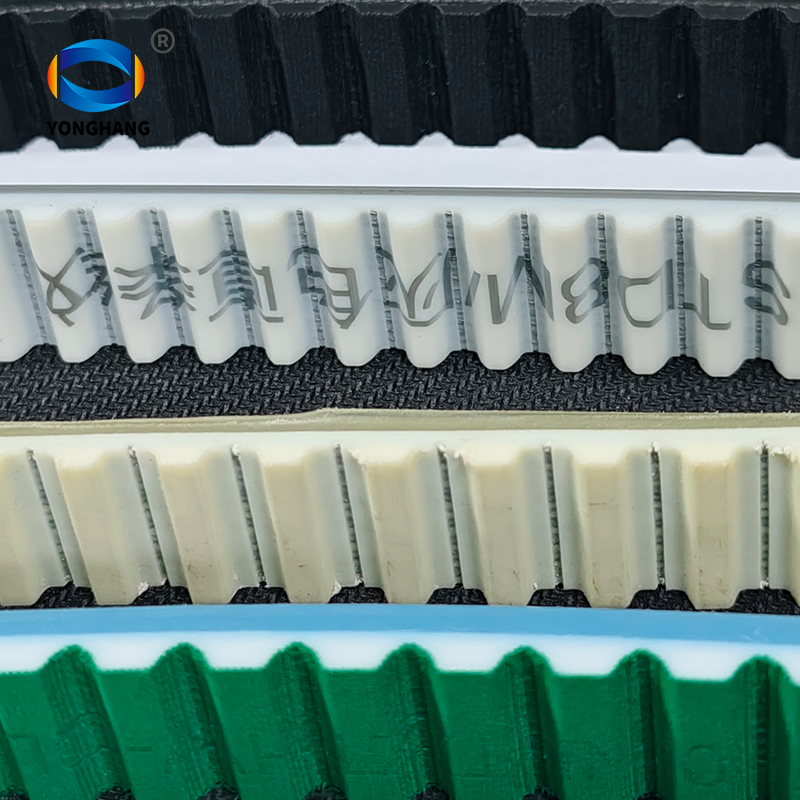
Scenario 2: Non-Standard Tooth Profiles
Photographic Comparison:
Capture clear images of the tooth profile
Compare against standard tooth profile reference charts
Consult Supplier:
Provide clear photographs and critical dimensions
Specialized suppliers maintain extensive tooth profile databases
Scenario 3: Double-Sided Tooth Synchronous Belts
Both sides may feature different profiles (e.g., one side AT5, other side AT10)
Measure pitch and tooth profile separately for each side
Note: Mark rotation direction
Guangzhou Yonghang Transmission Belt Company is a business with twelve years of product expertise. We can tailor recommendations based on customer needs to help clients select suitable products. If you require synchronous belts, transmission belts, traction belts, or other industrial belts, feel free to contact us anytime. We also supply diverse transmission belt accessories, including stainless steel and brass nuts, various tooth profiles, splice plates, and production equipment such as automatic, semi-automatic, and manual belt cutters, full-series splicing machines, and tooth-cutting tools. Contact us for more product details.