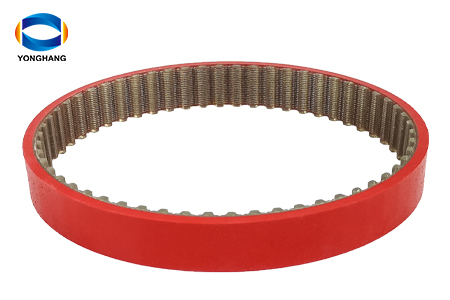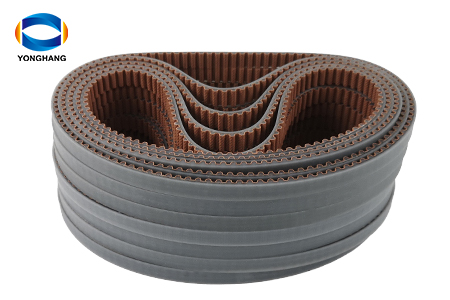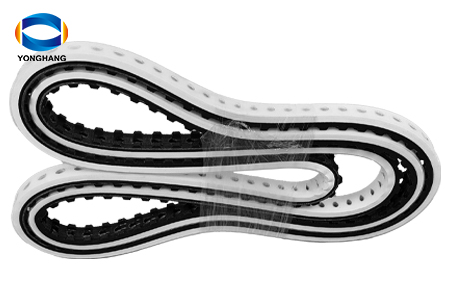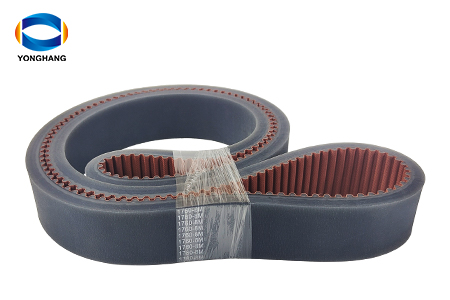
Within modern precision machinery lies an invisible lifeline—the PU timing belt. It delivers power with precision, ensures strict positional synchronization, and serves as the core enabling robots to dance with agility and machine tools to carve with accuracy. The key to this belt’s character and fate often lies hidden within its backbone: the core.
Today, we delve into the two core backbone materials of timing belts: traditional steel wire and advanced Kevlar fiber. Discover how they shape entirely distinct mechanical properties and application realms.
I. Steel Spine: Steel Wire Core, Engineered for Absolute Precision
Imagine embedding a row of fine, sturdy high-carbon steel wires at the core of a timing belt—like fitting a flexible belt with a rigid “metal ruler.”
Its core strengths lie in “rigidity” and “stability”:
Zero Creep, Absolute Synchronization: Steel wire is virtually non-stretchable. During transmission, it ensures absolute angular synchronization between the drive and driven pulleys, eliminating even the slightest positional slippage. This is the lifeline for guaranteeing machining precision in CNC machine tools, precision printing, and measuring instruments.
High rigidity, deformation resistance: Under heavy loads, the steel core significantly reduces belt bending deformation, ensuring direct and efficient power transmission.
Yet, even steel has its vulnerabilities:
Its rigidity becomes a weakness in dynamic scenarios. Repeated bending induces metal fatigue, much like how a wire snaps after constant bending. Consequently, steel-cored belts are more prone to premature failure from bending fatigue under demanding conditions: high speeds, small pulleys, frequent starts/stops, and reverse operation. Additionally, their weight, lack of corrosion resistance, and non-insulating properties limit their applicability in certain environments.
II. Flexible Spine: Kevlar Core, Built for Dynamic Endurance
Kevlar, this “miracle fiber” born from aerospace technology, boasts strength comparable to steel wire yet weighs significantly less. Using it as the core is like implanting a “flexible spine” into the pu timing belt.
Its revolutionary properties lie in “toughness” and “endurance”:
Near-Infinite Flexural Life: As an organic polymer fiber, Kevlar exhibits exceptional resistance to flexural fatigue. Under identical high-speed, small-pulley conditions, its service life often exceeds that of steel-cored belts by several times or even tenfold. This directly translates to longer equipment uptime and lower maintenance costs.
Lightweight yet robust with rapid dynamic response: Substantial weight reduction lowers system inertia, enabling more agile equipment starts/stops and acceleration/deceleration while conserving energy. This is critical for applications demanding extreme cycle times, such as high-speed parallel (Delta) robots, flying pick-and-place systems, and precision pick-and-place equipment.
Innately suited for harsh environments: Its corrosion and moisture resistance, combined with insulation and non-magnetic properties, effortlessly meet the special requirements of food, pharmaceutical, electronics, or humid environments.
Of course, it’s not perfect:
Kevlar cores slightly lag behind top-tier steel wires in long-term creep resistance (slow elongation) and require more careful tensioning during initial installation. Its raw material cost is also higher than steel wire.
Company name: Guangzhou Yonghang Transmission Belt Co., Ltd.
Address: 4th Floor, Building B8, Chuangbao Creative Park, Federal Industrial Zone, West Yushan Road, Panyu District, Guangzhou,China.511400
Contact person: Cindy
Tel: +86-020-84898802
Fax: +86-020-84898803
Hand phone: +86 19864737116
E-mail: sales@yonghang-belt.com