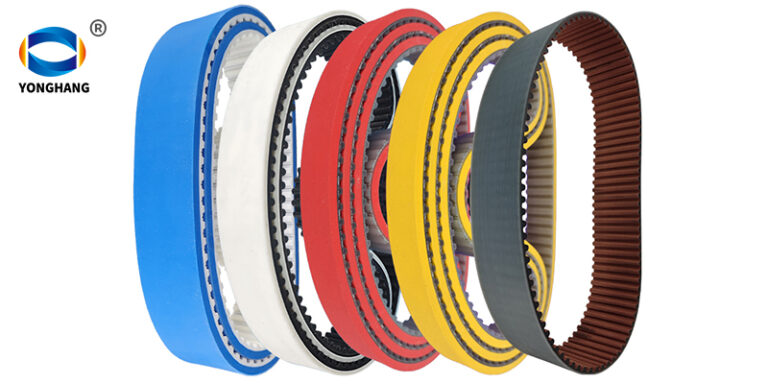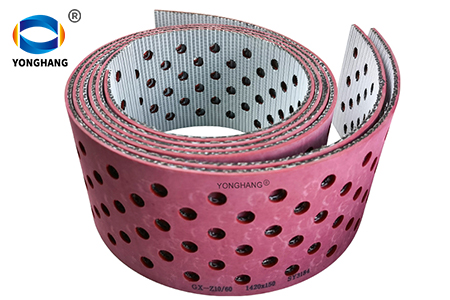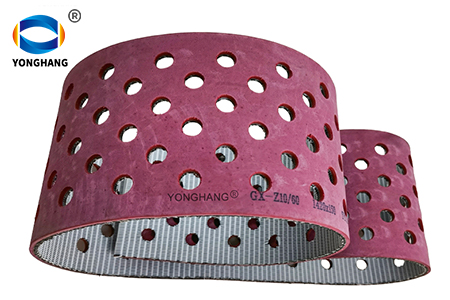
In industrial transmission and material handling, the choice of silicone coated timing belts directly impacts equipment efficiency, maintenance costs, and lifespan. Faced with the two mainstream options—silicone-coated timing belts and PU (polyurethane) timing belts—many equipment engineers often struggle to decide.Each has its strengths—there is no absolute “better,” only “more suitable.” Drawing on the latest 2026 material technologies and application cases, this article provides a comprehensive comparison across dimensions including temperature resistance, load capacity, wear resistance, hygiene standards, and cost-effectiveness to help you make an informed decision.
Each has its strengths—there is no absolute“better,”only“more suitable.”
Drawing on the latest 2026 material technologies and application cases, this article provides a comprehensive comparison across dimensions including temperature resistance, load capacity, wear resistance, hygiene standards, and cost-effectiveness to help you make an informed decision.
I. Core Performance Parameter Comparison
| Comparison Dimensions | Silicone-coated timing belt | PU timing belt |
| Operating Temperature Range | -60°C to +250°C | -30°C to +80°C |
| High Temperature Resistance Limit | 250°C (higher temperatures achievable with special formulations) | 80°C (may soften and deform beyond this range) |
| Low Temperature Resistance Limit | Maintains elasticity at -60°C | -30°C (may become brittle at low temperatures) |
| Mechanical Strength | Moderate (requires reinforcement layer support) | High (load-bearing capacity up to 2000 N/mm²) |
| Abrasion Resistance | Moderate (softer surface) | Excellent (abrasion resistance ≥90 mm²) |
| Tensile Strength | Low elongation (glass fiber/steel wire reinforced) | Elongation ≤1.7%, dimensionally stable |
| Chemical Resistance | Excellent (Resistant to acids, alkalis, ozone, UV) | Good (oil and solvent resistance) |
| Food-Grade Certification | FDA certified, meets food-grade standards | Meets food-grade standards (specific formulations) |
| Surface Friction Coefficient | High (Suitable for gripping, conveying) | Low (adjustable via coating) |
| Price Level | High (30%-50% higher than standard rubber) | Medium (basic to premium grades available) |
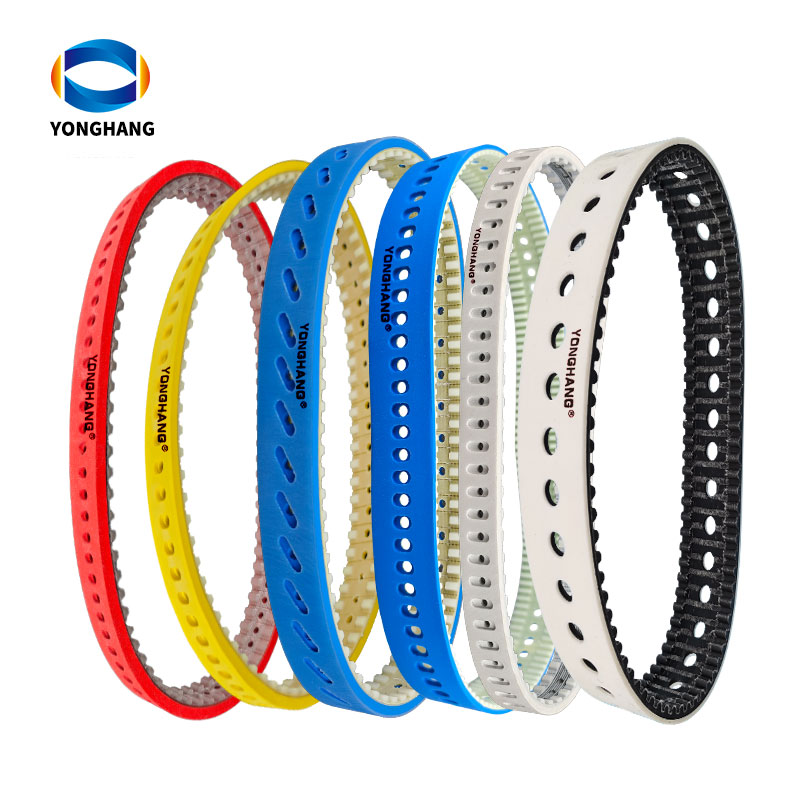
II. Selecting Based on Operating Conditions: Which One is Better Suited for Your Equipment?
1. Temperature and Humidity Environment
Select silicone coated timing belts if:
Equipment operating temperature exceeds 80°C, such as high-temperature drying equipment, food baking lines, heat treatment furnaces
Operation requires -60°C cryogenic environments, such as frozen food conveyance, low-temperature laboratory equipment
Frequent thermal cycling occurs, where silicone offers superior thermal stability
Select PU timing belts if:
Operating temperature falls within the standard range of -30°C to 80°C
Equipment operates at room temperature without special temperature resistance requirements
Consideration: Avoid PU for temperatures exceeding 80°C
2. Load Capacity and Transmission Precision
Select silicone coated timing belts if:
Light to medium load transmission, e.g., precision instruments, laboratory equipment
High friction coefficient required for material handling—silicone surface provides natural slip resistance
Noise-sensitive silent equipment—silicone offers excellent flexibility and vibration damping
Select PU Timing Belts if:
High-load, high-torque transmission (e.g., heavy machinery, industrial robots)
High-speed operation (maximum linear speed 80m/s), e.g., logistics sorting systems
High-precision positioning requirements (positioning accuracy ±0.05mm)Harsh environments (metal debris, dust), where PU + steel cord reinforcement is preferred
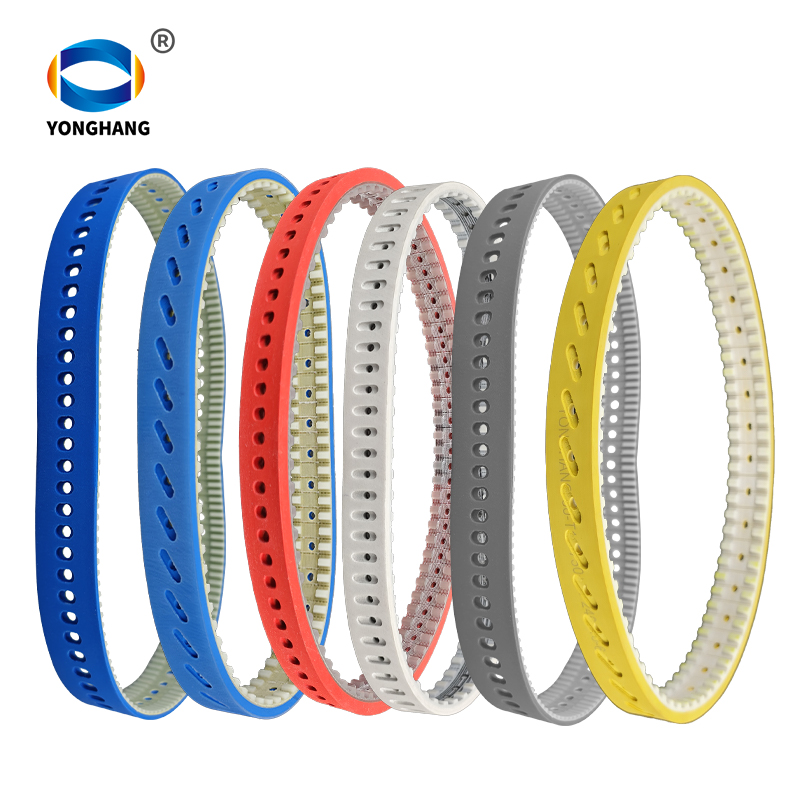
III. Special Applications: Can You Have Both?
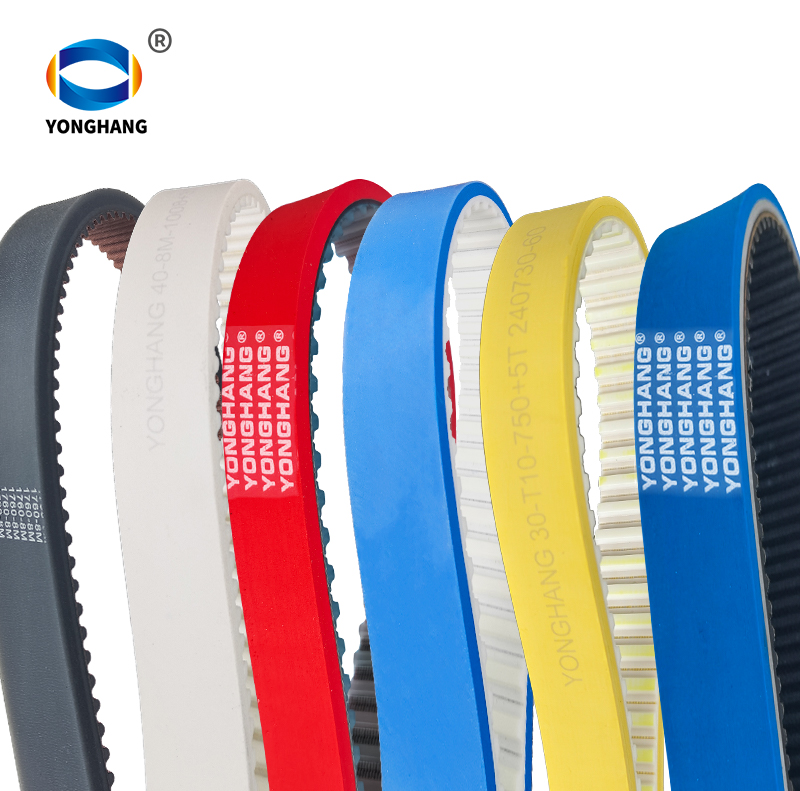
In practical applications, the combination of silicone coating + PU core is emerging as a hot trend for 2026.
Case Study: Filling Machine Conveyor Belt
Core: Black PU synchronous belt ensures transmission precision and structural strength
Surface: Vulcanized white silicone coating delivers food-grade hygiene and abrasion resistance
Achieves the perfect integration of “PU’s strength + silicone’s surface properties”
This composite structure is suitable for:
Food packaging machinery
Pharmaceutical conveyor lines
Electronic component assembly lines
Applications requiring both strength and hygiene
IV. Summary and Recommendations
Silicone coated synchronous belts excel in:
Extreme temperatures (-60°C to 250°C)
Highly corrosive chemical environments
Direct contact with food/medical applications
Gripping and conveying requiring high friction coefficients
Polyurethane timing belts dominate in:
High-load, high-torque transmission
High-speed precision positioning
Harsh conditions with oil contamination and dust
Applications demanding long-life wear resistance