Material – The “genetic” determinism of timing belts
In the performance equation of timing belts, material is not a supporting role but the core “gene” that determines transmission efficiency, service life and equipment stability. Rubber and polyurethane, the two dominant materials in the market, represent two different technical routes and application philosophies. A wrong choice may cause the equipment to age prematurely or even shut down unexpectedly. If the right choice is made, the transmission system can remain in its “peak condition” throughout its service life. This article will delve deeply into the essential differences between these two materials and reveal how they affect your devices from the micro to the macro level.
Part One: Core Showdown – From Molecular Structure to Macroscopic Properties
Essential Origin Tracing: Two Different material philosophies
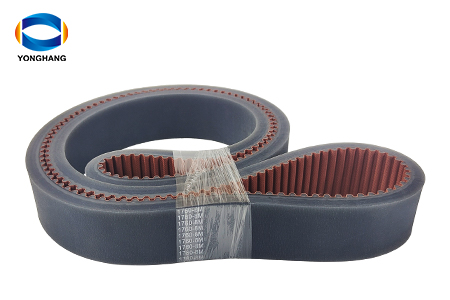
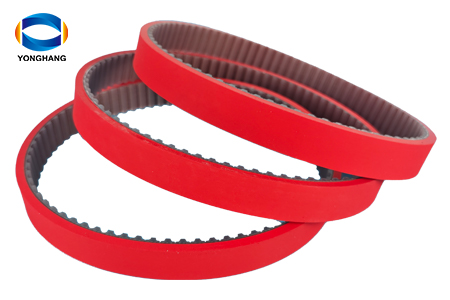
Rubber timing belt (mainly chloroprene rubber) : An elastomer system
Basic: Synthetic rubber (usually chloroprene CR) + reinforcing fibers (polyester/glass fiber/aramid) + nylon fabric tooth surface
Philosophy: Softness Overcomes hardness – Absorbing shock and vibration through elastic deformation, pursuing dynamic balance of the system.
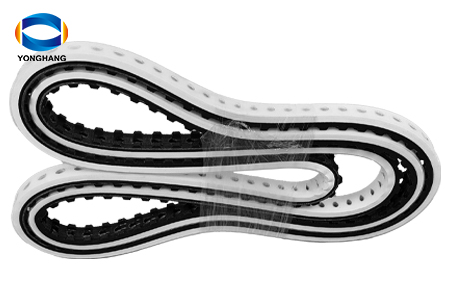
Polyurethane timing belt (mainly thermoplastic polyurethane TPU) : A plastic body system
Basic: Thermoplastic polyurethane + high-strength steel wire rope (or polyester rope) core wire
Philosophy: Combining rigidity and flexibility – maintaining shape accuracy with high rigidity while possessing a certain degree of toughness.
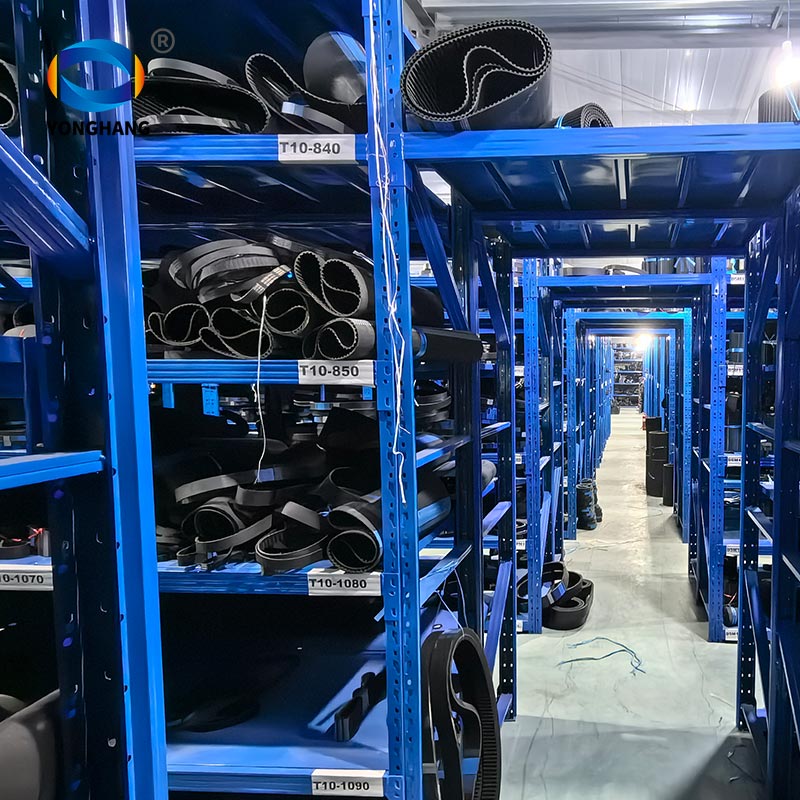
How to choose the “best timing belt” for your equipment?
Food, pharmaceutical and packaging industry
Polyurethane (white food grade) is the absolute mainstream. Easy to clean, non-toxic, resistant to cleaning agents, and in compliance with FDA/USDA standards.
Machine tools, Semiconductors and Precision Automation
Polyurethane tape (steel wire core) takes the lead. High rigidity meets positioning accuracy and is resistant to slight oil stains.
Woodworking, textile, mining and heavy conveying:
Rubber belts are a more reliable choice. Cope with dust, humidity, impact loads and a wider range of temperature variations.
Automobile assembly and testing equipment
Mixed scenarios: Polyurethane for precision workstations; Rubber for workstations such as welding and painting that involve heat and ozone.
How does material directly affect the lifespan and total cost of ownership of equipment
Lifespan killer: Typical Consequences of material mismatch
Case A (Polyurethane Used in High-temperature Environments) : Polyurethane belts were used on the conveyor line near the heat treatment furnace. One month later, the belt body softened and stretched, and the transmission failed. The lifespan is shortened by 90%.
Case B (Rubber Used in oil-immersed Environment) : The engine test bench uses ordinary rubber timing belts. The rubber expands, its strength decreases, and it breaks frequently. Maintenance costs have increased by 300%.
Hidden costs: Unplanned downtime caused by mismatch, increased defect rate, and higher energy consumption.
Differences in Maintenance Strategies
Rubber belt: The key points of monitoring are tension (due to certain extension) and wear on the tooth surface/side. At the end of its service life, it is often manifested as blunt tooth profile.
Polyurethane belt: The key points of monitoring are whether there are cracks, missing teeth (especially brittle fracture) and whether the steel wire rope is corroded. It may suddenly fail without obvious signs of wear.
Future trends and advanced choices
Mixed materials and special treatments
The evolution of rubber: The addition of hydrogenated nitrile butadiene rubber (HNBR) enhances heat and oil resistance. The tooth surface is attached with a polyurethane layer, which takes into account both the performance of the rubber body and the meshing characteristics of polyurethane.Strengthening of polyurethane: Developing high-temperature resistant (HTD PU) and UV-resistant types to expand its application boundaries.
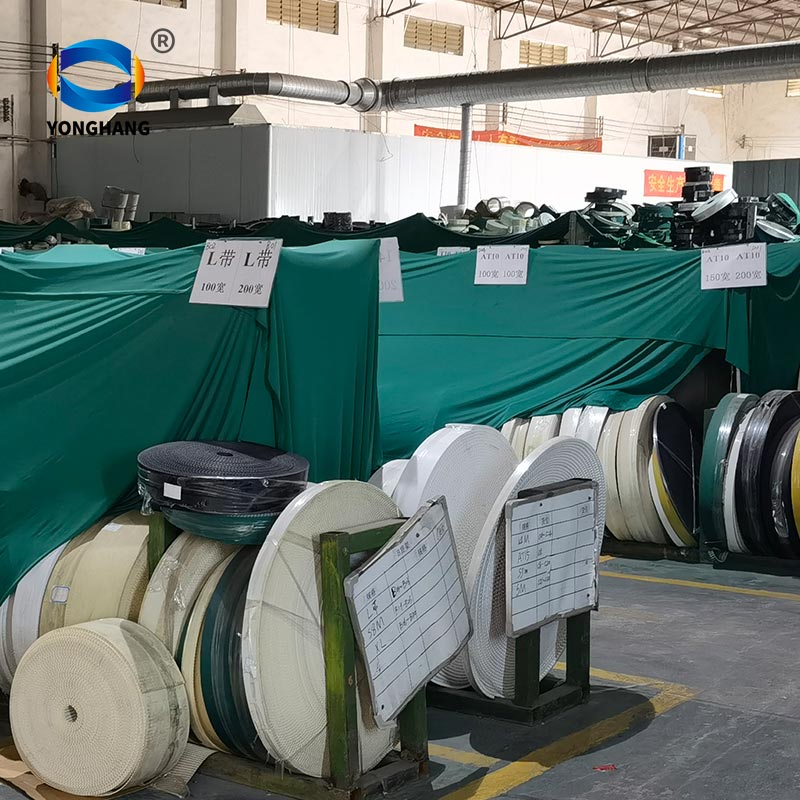
The third path beyond choice: Systematic thinking
Material selection is not the end but the starting point of system optimization
Pairing optimization: Polyurethane belts are best paired with hard anodized aluminum wheels. The rubber belt fits well with cast iron or steel wheels.
Tension design: Rubber belts need to pay more attention to the tension force maintenance mechanism. Polyurethane tapes have higher requirements for the initial installation accuracy.
Protective measures: Regardless of the material, adding a protective cover (dust-proof, dust-proof, splash-proof) can greatly extend the service life