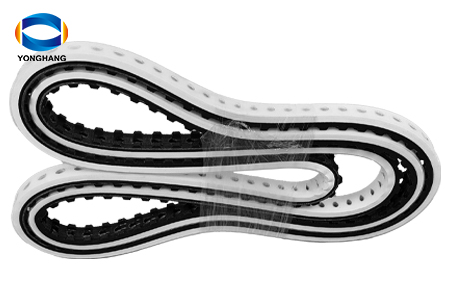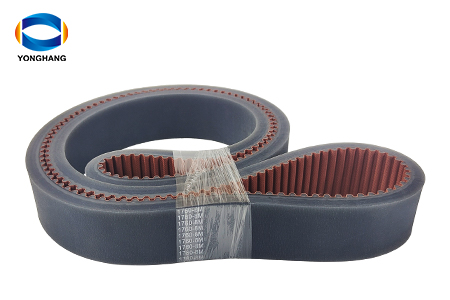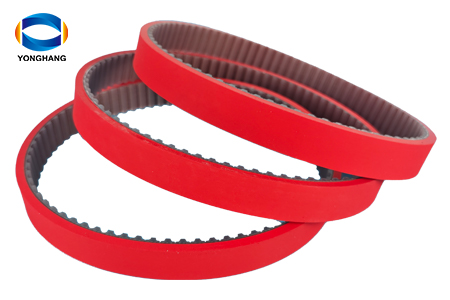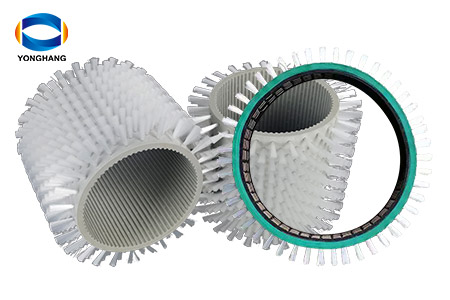
In the realm of modern industrial transmission, timing belts serve as highly efficient and precise transmission components, widely applied in precision transmission systems such as automotive engines, machine tools, and textile machinery. Among the diverse family of timing belts, the “rubber-coated synchronous belt” stands out as a vital member. With its unique structural design and exceptional performance, it plays an irreplaceable role across numerous industrial applications. This article will delve into the multi-layer structure of rubber-coated synchronous belts, revealing the engineering ingenuity behind their precision transmission capabilities.
I. Reinforcement Layer: The High-Strength Core Bearing Tension
The structure of a rubber-coated timing belt begins with its reinforcement layer, which typically serves as the “backbone” of the belt body. This layer is predominantly constructed from high-strength glass fiber cords or aramid fibers, either spirally wound or arranged in parallel along the belt’s length. These fiber materials possess exceptionally high tensile strength and extremely low elongation, ensuring the timing belt can withstand immense working tension during transmission without significant deformation. The precise arrangement and pre-tensioning of the fiber strands maintain stable pitch during high-speed operation, forming the physical foundation for synchronous transmission.
II. Tooth Profile Structure: The Geometric Secrets of Precise Meshing
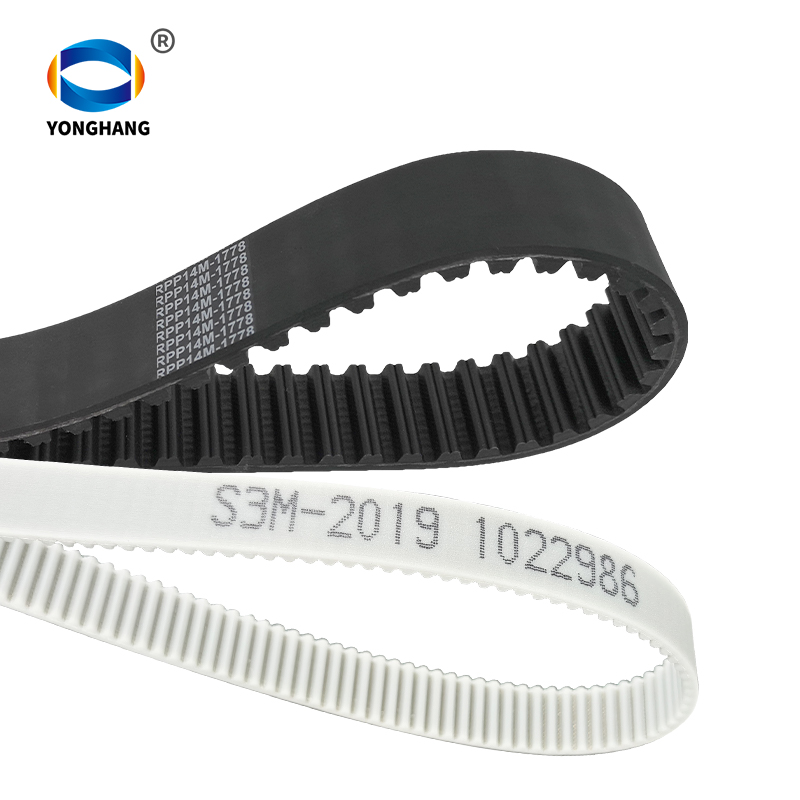
The “synchronous” function of rubber-coated timing belts hinges on their precisely engineered tooth profiles. Common profiles include trapezoidal teeth (e.g., T-type, AT-type) and curved teeth (e.g., HTD-type, RPP-type). Each profile represents the culmination of extensive mechanical calculations and experimental validation:
Trapezoidal teeth feature a simple structure, ease of manufacturing, and suitability for medium-to-low speed transmission.
Curved teeth (such as arc teeth) provide superior stress distribution, reduce root stress concentration, and are ideal for high-speed, heavy-load applications.
The geometric parameters of the tooth profile—pitch, tooth height, and tooth angle—are meticulously engineered to ensure perfect meshing with the pulley groove, eliminate slippage, and achieve precise speed ratio transmission.
III. Rubber Body: The Elastic Medium of Flexible Transmission
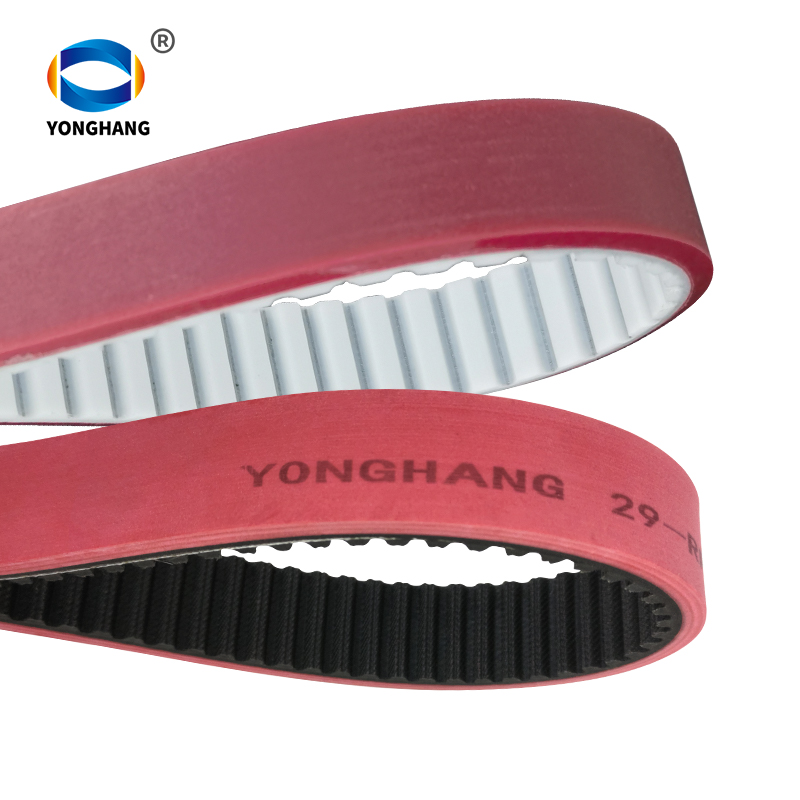
The core of the “rubber-coated” process lies in the rubber component of the belt body, typically made from high-performance elastic materials such as chloroprene rubber (CR) or polyurethane (PU). The rubber layer not only encases the skeleton cord but also forms the main body comprising the teeth and the back:
The rubber in the teeth section must possess sufficient hardness to maintain tooth profile while offering adequate elasticity to absorb meshing impacts.
The rubber in the back section provides the flexibility enabling the timing belt to bend and wrap around pulleys.The rubber compound typically incorporates additives like anti-aging agents, wear-resistant agents, and oil-resistant agents to adapt to diverse operating environments.
IV. Nylon Fabric Covering Layer: A Wear-Resistant Protective Jacket
Most rubberized timing belts feature a thin yet resilient nylon fabric covering the tooth surfaces and belt back. This protective layer serves multiple functions:
– Reduces tooth surface wear, extending service life
– Enhances oil resistance and contamination protection
– Increases friction coefficient to prevent slippage with pulleys (in certain designs)
– Shields the inner rubber layer from environmental factors like UV radiation and ozone
V. Structural Integration: Synergistic Effects of Multi-Layer Composite
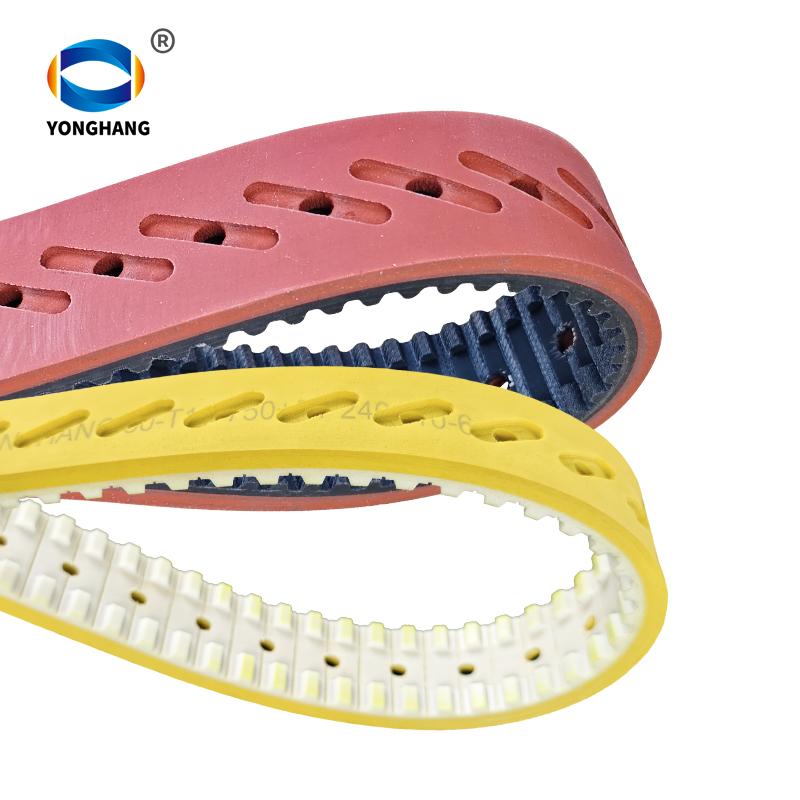
The exceptional performance of bonded timing belts stems not from any single material, but from the precise coordination of each structural layer. During manufacturing, the skeleton layer, rubber body, and cover layer are integrated into a structurally uniform whole through precision molding and high-temperature vulcanization. This integrated design ensures:
– Efficient power transmission from the pulley through the rubber teeth to the fiber skeleton
– Coordinated deformation of all material layers under dynamic loads
– Dimensional stability and durability of the overall structure
If you require timing belts, please contact Guangzhou Yonghang Transmission Belt Company. We will provide you with professional service and high-quality products.