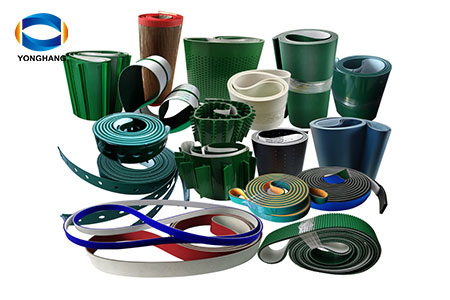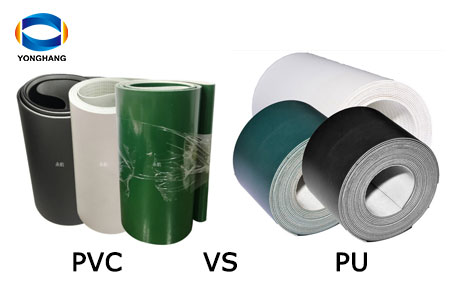
Behind the high-speed operation of automated equipment lies a seemingly unassuming yet critical component—the silicone coated timing belt. It must ensure precise power transmission while withstanding multiple challenges including high temperatures, friction, and media corrosion. The right choice delivers efficient, quiet operation and long-lasting durability; the wrong one leads to frequent downtime and soaring maintenance costs.Based on the latest 2026 market trends and technical standards, we’ve compiled 10 core factors you must consider during selection. This guide helps you avoid pitfalls and get it right the first time.
1. Silicone Coated Timing Belts: Defining Operating Limits—Temperature, Media, and Load
This forms the foundation of all selections. You must first answer three questions:
Temperature Range: What is the equipment’s operating temperature? Standard silicone typically withstands temperatures from -60°C to 200°C. However, if the belt will be continuously exposed to temperatures above 150°C or undergo frequent thermal cycling, verify that the material is optimized for these conditions.
Contact Media: Will the belt encounter oil, chemicals, or ozone? Silicone generally has moderate oil resistance; specialized formulations are required for demanding environments.
Load Type: Is it constant light load or heavy load with impact? This directly determines the required reinforcement material (e.g., fiberglass, steel cord).
2. Identifying Coated Silicone: Material Purity and Process
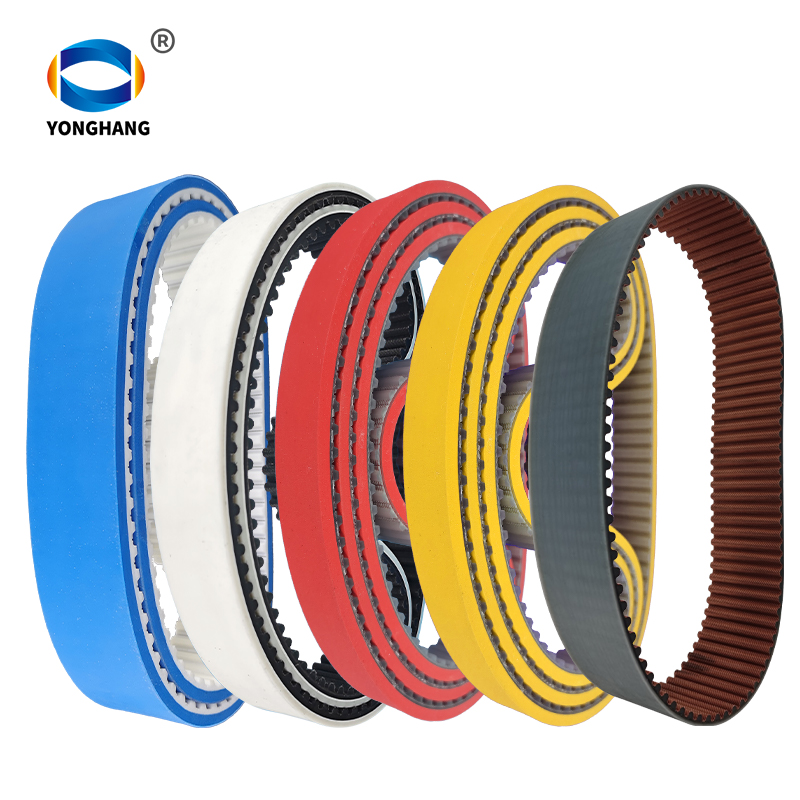
The silicone coating is the belt’s “face” and its core functional layer.
Purity: High-quality silicone coatings should have a smooth surface, no odor, and uniform color. Inferior silicone may contain excessive fillers, leading to easy wear and powder shedding—critical issues in cleanrooms or food industries.
Processing: The bond strength between the coating and the backing layer (typically rubber or PU) is critical. Poor adhesion can cause coating peeling or bubbling during operation.
3. Matching Tooth Profile Structure: Transmission Precision and Noise
The tooth profile determines the transmission efficiency and operational performance of Silicone Coated Timing Belts:
Arc teeth (e.g., HTD, STD): Handle heavier loads with precise transmission, making them ideal for servo motors and automation equipment.
Trapezoidal teeth (e.g., MXL, XL): Suitable for light-load transmission but produce relatively higher noise and vibration.
Herringbone teeth (2026 Hot Trend): Compared to traditional straight teeth, herringbone teeth significantly reduce operational noise, enhance shear resistance by 50%, and improve transmission efficiency by over 15%.
4. Confirm Reinforcement Material: The “Backbone” Determining Tensile Strength
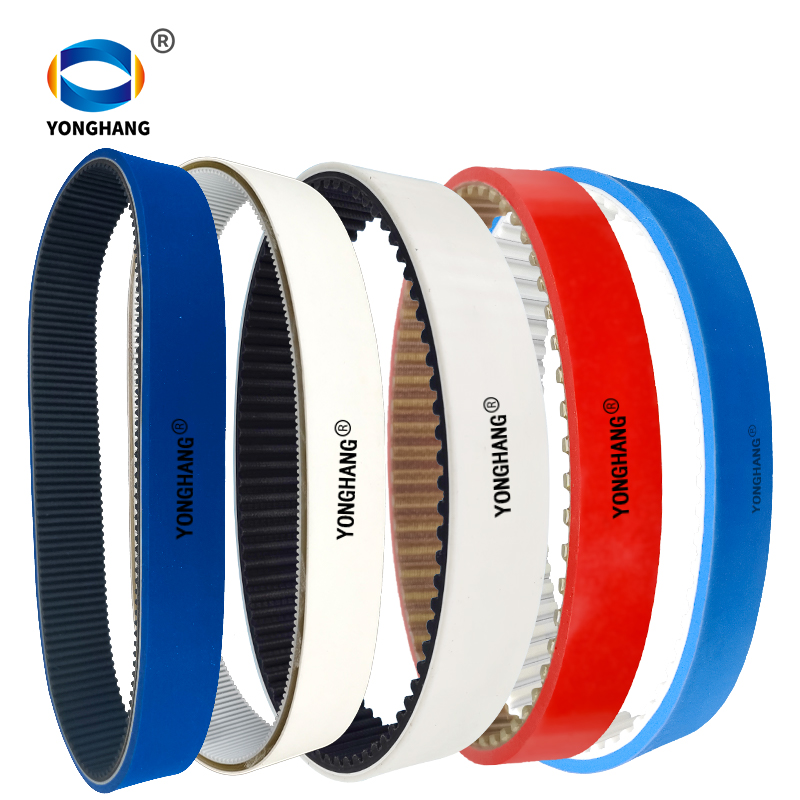
The tensile layer within Silicone Coated Timing Belts forms its core reinforcement. Common options include:
Glass fiber cord: A versatile choice with low elongation and high cost-effectiveness.
Steel Cord: Suitable for high-load, high-torque applications with near-zero elongation, but requires rust prevention.
Aramid Fiber/Carbon Fiber (Premium Configuration): Used in scenarios demanding extreme lightweight and high strength, such as high-speed precision equipment, offering excellent dimensional stability.
5. High-Temperature Resistance and Wear Resistance of Silicone Coated Timing Belts: The Litmus Test for Special Conditions
If your equipment operates in unique environments, prioritize these two aspects:
High-Temperature Resistance: Standard silicone withstands approx. 200°C, but specially formulated high-temperature silicone timing belts handle more extreme heat sources.Abrasion Resistance & Anti-Static: In electronics and textiles, belts require anti-static properties to prevent dust attraction or spark generation. The silicone coating’s inherent abrasion resistance must also be enhanced through formulation to withstand prolonged friction.
6. Evaluate the Manufacturer’s Custom R&D Capabilities
Virtually no complex equipment can rely solely on “standard products.” The 2026 procurement trend is shifting from “buying products” to “buying solutions.” Therefore, it is crucial whether the manufacturer possesses the following capabilities:
Can they design non-standard perimeters or widths based on spatial constraints?
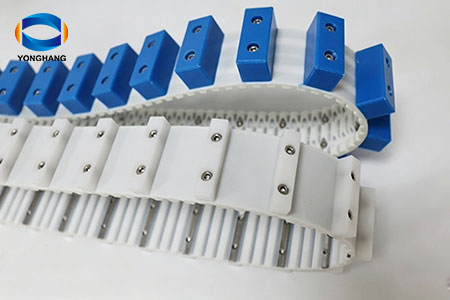
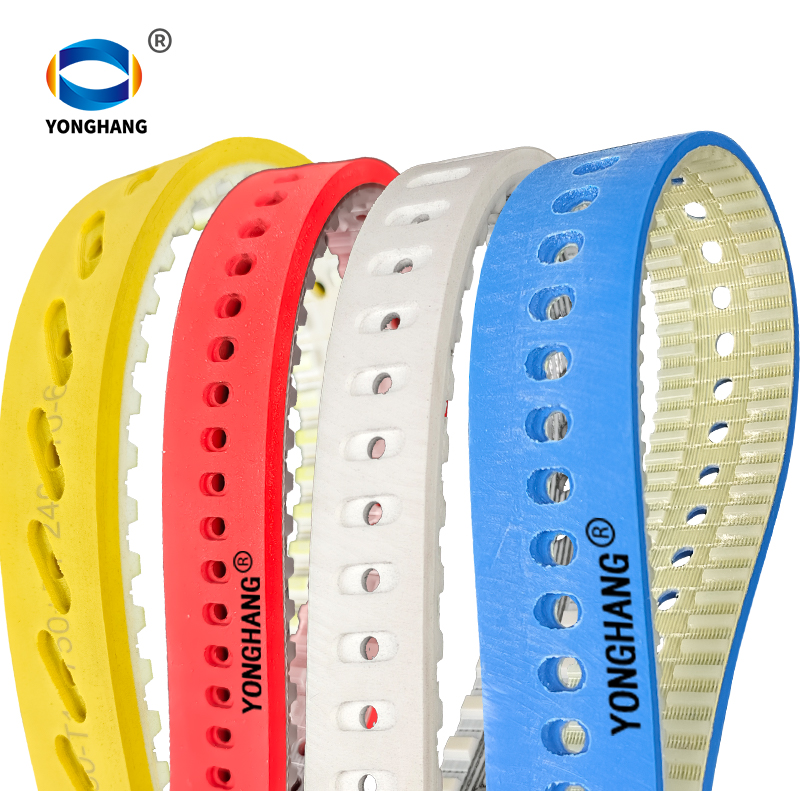
Can they perform specialized processing on belts (e.g., adding adhesive backing, guide strips, or perforations)?
Can the R&D team respond rapidly (e.g., 24-hour evaluation, 72-hour solution proposal)?
7. Verify Quality Certifications and Test Reports
Don’t rely solely on verbal assurances—demand tangible evidence:
– System Certification: ISO 9001 is fundamental; for automotive applications, prioritize IATF 16949 certification.
Product Testing: Require third-party testing reports from authoritative institutions, focusing on critical data like tensile strength, abrasion resistance, and aging tests.
8. Assess Supply Capacity and Delivery Lead Times
Equipment downtime can’t wait, and project schedules can’t be delayed:
Stock Availability: For common specifications, does the manufacturer maintain a warehouse with tens of thousands of square meters of inventory? Can they achieve “same-day order, same-day shipment”?
Production Capacity Assurance: How many automated production lines does the manufacturer operate? What is their daily output capacity? This directly reflects their capability to handle large orders and urgent requests.
9. Evaluate Brand Reputation and Industry Case Studies
“Hearing about” is no substitute for “seeing for yourself.” Review the manufacturer’s client portfolio:
Leading Industry Clients: If the manufacturer supplies well-known enterprises, it typically indicates they have passed rigorous supplier audits, and their quality control system is trustworthy.
Industry-Specific Experience: Do they have successful case studies in your sector? (e.g., ceramics, photovoltaics, logistics sorting)
10. Calculate Total Cost of Ownership: Beyond Purchase Price
Value ≠ Low Price. Consider three key factors:
Service Life: A belt with double the lifespan reduces total costs even if 30% more expensive. Ask the manufacturer for expected service life under similar operating conditions.
Maintenance costs: High-quality belts reduce replacement frequency, lowering labor maintenance expenses and equipment downtime losses.Technical support: Verify if the manufacturer offers lifetime technical support and regular follow-up services.
2026 Ultimate Purchasing Checklist
To help you make quick decisions, bring this checklist when communicating with suppliers:
What is the maximum operating temperature? Are there oil or chemical contaminants?
What tooth profile is required? (Round/Herringbone/Trapezoidal)
What material is required for the internal cord? (Fiberglass/Steel wire/Carbon fiber)
Are special features needed, such as anti-static or food-grade properties?
Can the manufacturer provide successful case studies within the past 3 months under similar operating conditions?
Do they hold ISO 9001 certification and third-party test reports for the product?
How long does it take to produce a custom sample? What is the lead time for bulk orders?
Beyond the belt itself, can they provide pulley selection guidance and technical support?