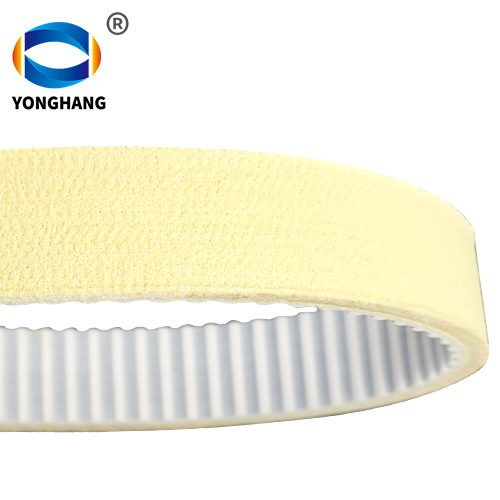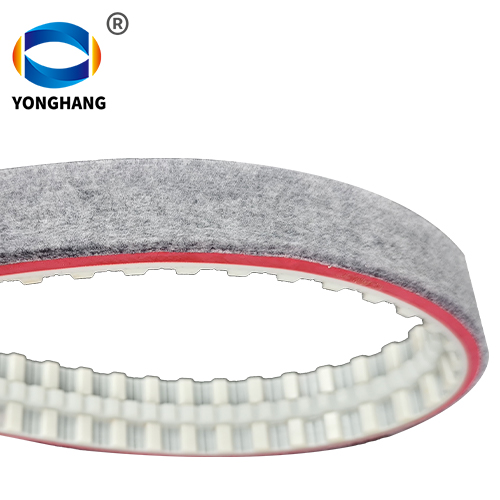
Double Sided Felt Conveyor Belt
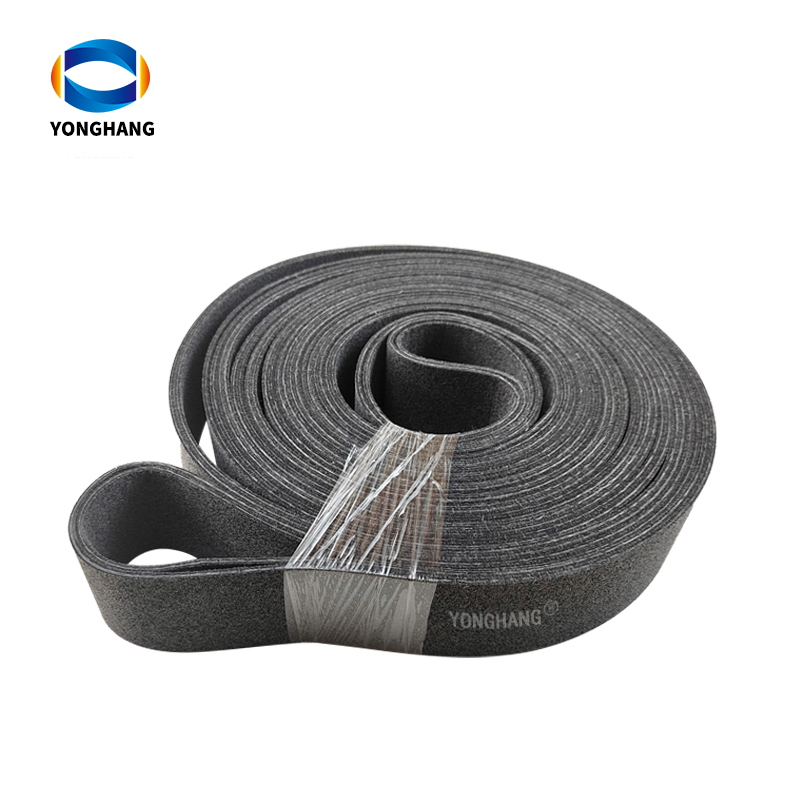
The double sided felt conveyor belt is also known as “Anti-cut belt”. They do not cut easily unlike a PVC or PU belt would. double sided felt conveyor belt is made of non-woven (needled) polyester and impregnated with a special rubber Latex. This permits excellent resistance to abrasion and cutting, low noise and minimal stretch…
The double sided felt conveyor belt is also known as “Anti-cut belt”. They do not cut easily unlike a PVC or PU belt would. double sided felt conveyor belt is made of non-woven (needled) polyester and impregnated with a special rubber Latex. This permits excellent resistance to abrasion and cutting, low noise and minimal stretch when sized and tensioned properly.
| Key words | Novo felt conveyor belt |
| Place of origin | Guangzhou, China |
| Material | Novo felt |
| colour | Black and dull grey |
| Size | customization |
| Thickness | 2.5mm/3mm/4mm/5.5mm |
| Tensile strength | 3mm tensile strength ≥140 N/mm; 4mm tensile strength ≥170 N/mm; Force required for 1% elongation ≥15 N. |
| Joint | Welded |
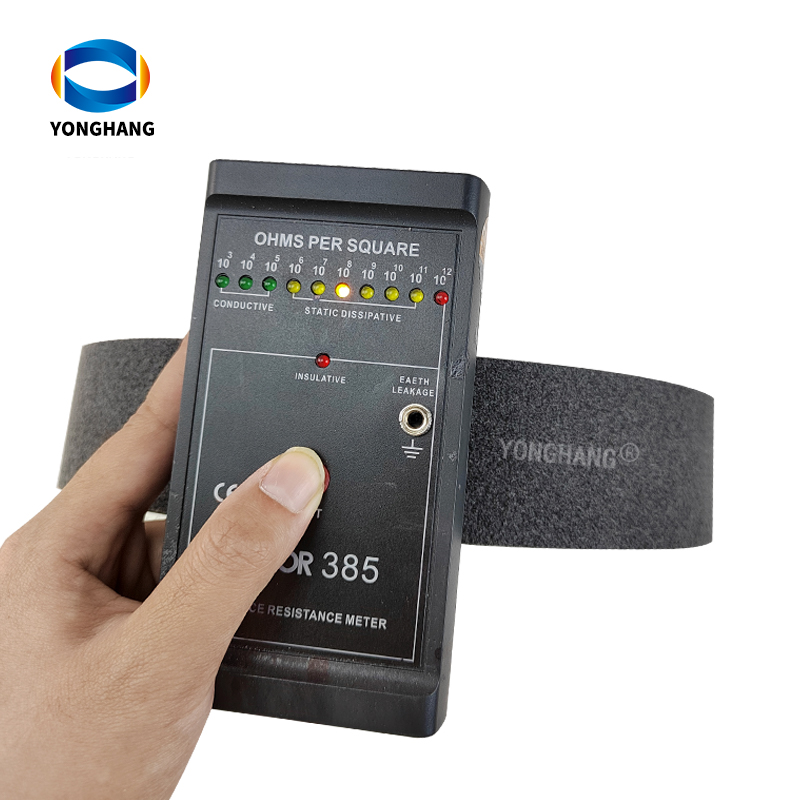
| Antistatic | 10 to the power of 9 |
| Temperature range | -10℃to+150℃ |
| Max width | 3400mm |
| Application | Cutting table, paper industry & tyre industry |
processing
The processing of felts includes the steps of adding guides and punching holes.
The purpose of adding guides is to enhance the durability and stability of the felt and to ensure that it will not be deformed or deflected in the course of use.
The holes are punched for precise positioning, air absorption and ventilation.
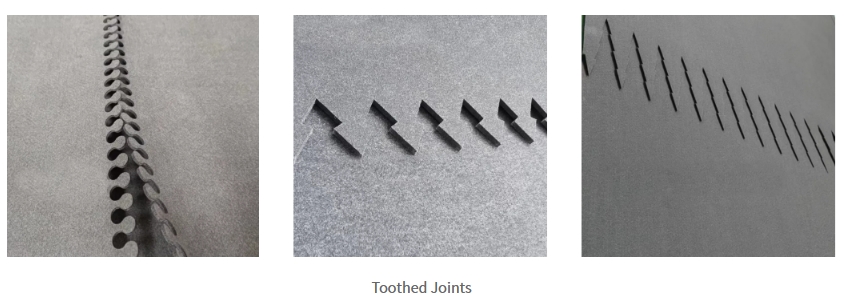
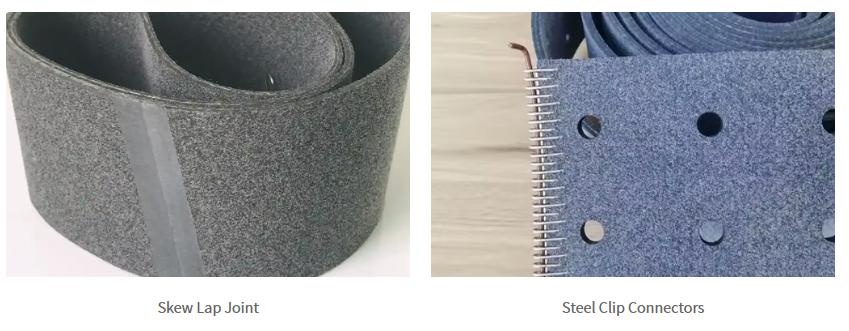
Common Felt Belt Joints
Toothed Joints
Skew Lap Joint
Steel Clip Connectors
Double Sided Felt Conveyor Belt Application
Felt conveyor belts are primarily used in automotive, precision ceramics, electronics, and circuit board industries where scratch-free, high-temperature resistance is required. Aluminum profiles withstand high temperatures without damaging their surfaces, making felt belts widely adopted in aluminum profile processing.
Light industry: such as clothing, footwear and other production lines, for conveying fragile or need to protect the goods.
Electronic industry: excellent anti-static performance, suitable for conveying electronic components or sensitive materials.
Packaging industry: for the transportation of finished packaging products to avoid abrasion or scratching of packaging materials.
Logistics and warehousing: in sorting systems for the transportation of lighter and irregular items, which effectively protects the surface of the material.