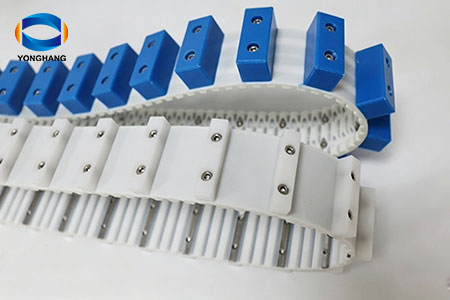
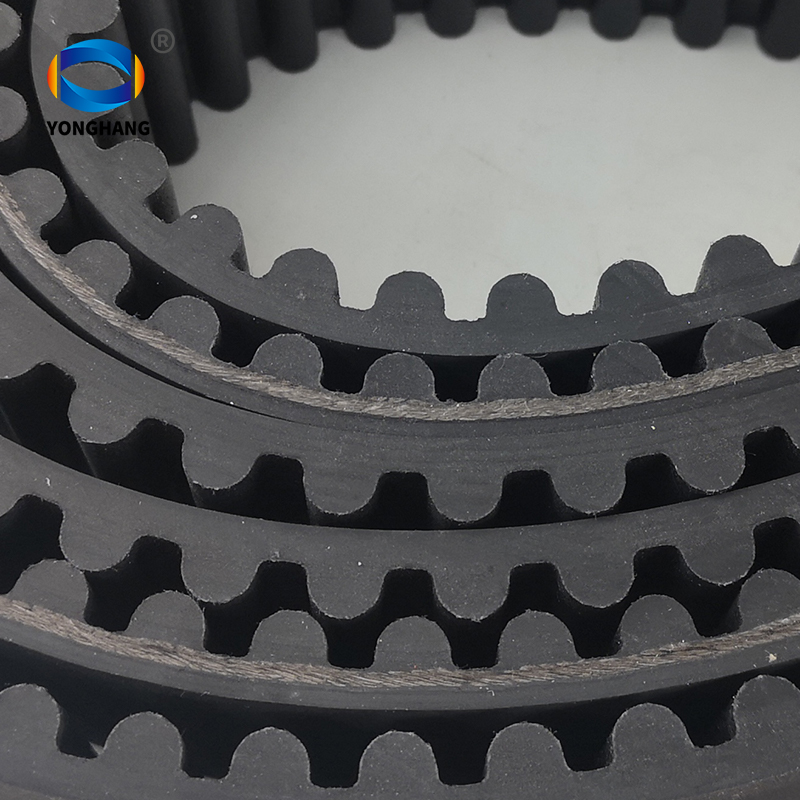
Within the multi-layer composite structure of timing belts, the core functions like the skeletal framework of the human body, undertaking the core tasks of transmitting power, maintaining pitch stability, and withstanding operational tension. Selecting appropriate core materials and structures directly determines the transmission accuracy, service life, and reliability of the timing belt. This paper systematically explores the selection principles, material properties, and application matching of timing belt cores, providing engineering technicians with a comprehensive selection framework.
I. Core Functions and Performance Requirements of the Core
Before making an in-depth selection, it is essential to clarify the core role of the core within the timing belt:
Tension Load-bearing: Bearing the primary tensile load during transmission
Pitch Stability: Maintaining constant tooth pitch to ensure precise synchronous transmission
Fatigue Resistance: Withstanding cyclic stresses from repeated bending and stretching
Dimensional Stability: Maintaining length stability under various operating conditions
II. Comparison of Mainstream Core Material Properties
1. Glass Fiber Core
Material Properties: E-glass or S-glass fibers impregnated with resin and twisted into strands
Mechanical Properties: High tensile strength (E-glass: approx. 3.4 GPa)
Moderate elastic modulus (approx. 72 GPa)
Low elongation (<3%)
Thermal Properties: Excellent temperature resistance (-60°C to +350°C)
Chemical Stability: Corrosion-resistant, but not resistant to strong alkalis
Typical Applications: General industrial transmission, medium-to-high speed applications
2. Aramid Fiber Core
Material Characteristics: Poly(p-phenylene terephthalamide) fiber (e.g., Kevlar®)
Mechanical Properties: Ultra-high tensile strength (approx. 3.6 GPa)
High modulus (approx. 130 GPa)
Excellent impact resistance
Thermal Properties: High-temperature resistance (decomposition temperature approx. 500°C)
Chemical Stability: Resistant to most chemicals, but sensitive to UV light
Typical Applications: High-speed heavy-load, impact-loaded applications
3. Carbon Fiber Core
Material Properties: Polyacrylonitrile-based carbon fiber
Mechanical Properties: Extremely high modulus (230-600 GPa)
High strength (3.5-7 GPa)
Zero elongation (actual <1%)
Thermal Properties: Extremely low thermal expansion coefficient
Chemical Stability: Excellent, but expensive
Typical Applications: Ultra-high precision transmission, special environments
4. Stainless Steel Wire Core
Material Properties: 304 or 316 stainless steel filament
Mechanical Properties: Moderate strength (0.5–1 GPa)
Excellent ductility
Thermal Properties: High-temperature resistance
Chemical Stability: Corrosion resistance, especially against chloride ions
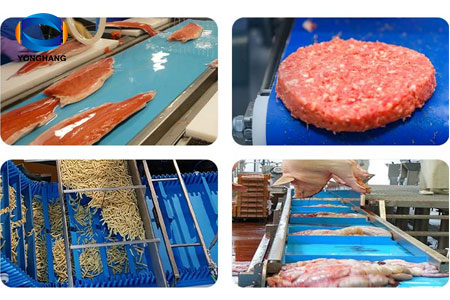
Typical Applications: Food processing machinery, corrosive environments
III. Industry Application Case Studies
Case 1: Automotive Timing Belts
Operating Conditions: High speed (6000-8000 rpm), high temperature (>120°C), continuous operation
Core Material Selection: High-strength aramid fiber
Reasoning: High-temperature resistance, fatigue resistance, high precision retention
Case 2: Textile Machinery Timing Belts
Operating Conditions: Medium speed, constant tension, fiber dust environment
Core Material: Glass fiber + anti-static treatment
Reasoning: Moderate cost, dimensional stability, anti-static properties
Case 3: Food Packaging Machinery
Operating Conditions: Frequent start/stop cycles, cleanliness requirements, corrosion resistance
Core Material: Stainless steel wire or food-grade aramid
Reasoning: Corrosion resistance, compliance with food hygiene standards
Case 4: 3D Printer Timing Belts
Operating Conditions: Low speed, high precision, light load
Core Material: Fine glass fiber or carbon fiberReasons: Zero backlash, high rigidity, low elongation
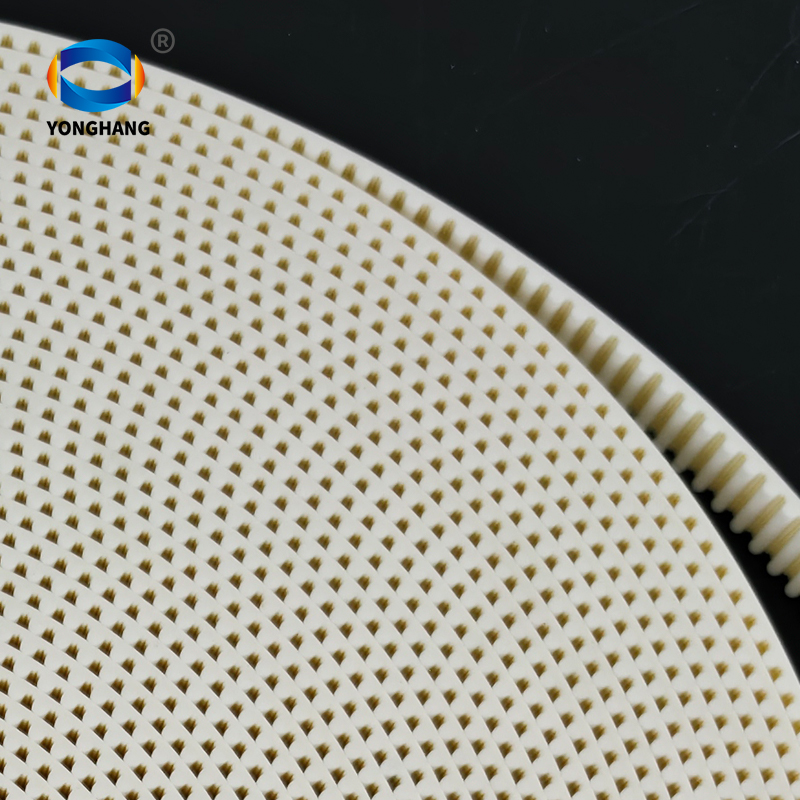
IV. Impact of Core Structure Design
1. Twisting Method
Single-twist structure: Excellent flexibility, suitable for small pulleys
Multi-twist structure: High stability, suitable for high-precision transmission
Parallel arrangement: Extremely high rigidity, virtually no elongation
2. Impregnation Treatment
Resin Impregnation: Enhances inter-fiber bonding, reduces internal friction
RFL Impregnation (Resorcinol-Formaldehyde-Latex): Improves adhesion with rubber
Pre-Stretching Treatment: Eliminates initial elongation, improves dimensional stability
3. Wire Diameter and Strand Count
Fine-diameter multi-strand: Excellent flexibility, extended bending life
Coarse-diameter few-strand: High strength, but poor bendability
Mixed-diameter: Balances strength and flexibility
Guangzhou Yonghang Transmission Belt Company is a business with twelve years of product expertise. We can tailor recommendations based on customer needs to help clients select suitable products. If you require synchronous belts, transmission belts, traction belts, or other industrial belts, feel free to contact us anytime. We also supply diverse transmission belt accessories, including stainless steel and brass nuts, various tooth profiles, splice plates, and production equipment such as automatic, semi-automatic, and manual belt cutters, full-series splicing machines, and tooth-cutting tools. Contact us for more product details.