Introduction: Why is Timing Belt Selection Critical?
As a precision mechanical transmission component, incorrect selection of timing belts can reduce transmission system efficiency by over 30% and even cause equipment failure. Proper selection not only ensures transmission accuracy but also extends equipment lifespan and reduces maintenance costs. This article simplifies the process, guiding you through three key steps to systematically master the core principles of timing belt selection
Step 1: Define Requirements – Determine the Base Model Based on Five Core Parameters
1. Transmission Power and Torque Calculation
Formula reference: P = (T × n) / 9550 (Power P in kW, Torque T in N·m, Speed n in r/min)
Safety factor selection: Choose a safety factor between 1.2 and 2.0 based on load characteristics (steady/impact)
Practical tip: Record peak operating conditions rather than average conditions
2. Gear Ratio and Space Constraints
Speed ratio calculation: i = n1 / n2 = z2 / z1
Center distance range: Determine minimum installation space and maximum tensioning strokeCommon pitfall: Neglecting tension adjustment space, leading to unmaintainable conditions later
3.Precision and Synchronization Requirements
Comparison Table of Different Tooth Profile Accuracies:
| Tooth Profile Type | Transmission Accuracy | Applicable Scenarios |
| Trapezoidal teeth (e.g., MXL, XL) | Standard precision | Light-duty conveying, office equipment |
| Hypocycloidal gears (e.g., HTD, GT) | High precision | Industrial robots, CNC machine tools |
| Semi-circular arc teeth (e.g., RPP, AT) | Ultra-high precision | Precision measurement, medical equipment |
4. Environmental Conditions Assessment Form
| Environmental Factors | Recommended Materials | Special Treatment |
| High Temperature (>80°C) | Fluorocarbon Rubber/Silicone Rubber | Heat-Resistant Coating |
| Oil-contaminated environment | Polyurethane + steel wire rope | Oil-resistant treatment |
| Moisture/Corrosion | Neoprene | Mold-resistant treatment |
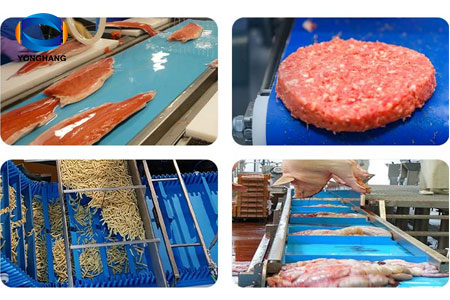
| Food Contact | Polyurethane (FDA Certified) | White or Uncoated |
5. Service Life Expectancy and Maintenance Cycle
Select core wire materials and tooth surface treatment processes at different levels based on the expected service life.
Step 2: Product Selection—Three-Dimensional Specification of Timing Belts
Dimension One: Detailed Guide to Tooth Profile Selection
T-Tooth Series (Most Economical)
Common Models: MXL (Thinnest), XL, L, H, XH, XXH
Advantages: Low cost, comprehensive model range
Limitations: Lower torque transmission capacity, relatively higher noise levels
Golden Rule: Preferred for small equipment and light loads
Arc Tooth Series (Most Versatile)
HTD Profile: 3M, 5M, 8M, 14M, etc.
GT Profile: 2GT, 3GT, 5GT, etc. (Upgraded version of HTD)
Advantages: High torque capacity, smooth transmission, low noise
Industry Consensus: Optimal choice for 80% of industrial applications
Special Profiles (High Performance)
AT Profile: Higher torque, higher precision
RPP Profile: Smoothest transmission, near-zero backlash
Applications: High-end CNC equipment, precision instruments
Dimension Two: Material Structure Analysis
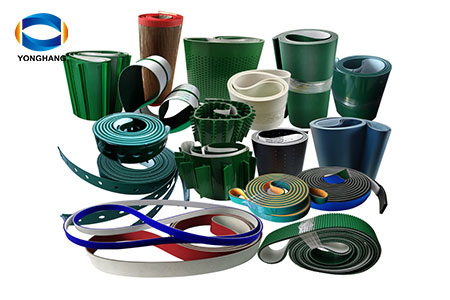
Rubber + Fiber Cord: General-purpose, well-balanced
Polyurethane + Steel Cord: High rigidity, low elongation
Special Composite Materials: Resistant to extreme environments
Dimension Three: Bandwidth and Belt Length Calculation
Bandwidth Formula:
Bandwidth = (Design Power × Service Factor) / (Base Rated Power × Bandwidth Coefficient)
Belt Length Calculation Steps:
Preliminary Calculation of Center Distance
Calculate Initial Belt Length
Locate Closest Standard Belt LengthVerify Actual Center Distance Adjustability
Step 3: Brand and Purchasing Decisions
Supplier Evaluation Checklist
Do you offer complimentary technical support for product selection?
Do you maintain local inventory and ensure rapid delivery capabilities?
Can you provide samples for testing purposes?
What is the coverage of your after-sales service network?
Are there successful case studies available for reference?
Cost Optimization Strategies
Volume Purchasing: Ordering standard models in bulk can reduce costs by 15%-30%
Alternative Solutions: Consider substitutes that maintain equivalent performance
Life Cycle Cost: Evaluate total cost of ownership rather than focusing solely on purchase price
Selection Self-Check List
Before final confirmation, please verify the following items:
– Transmission power calculation includes safety factor
– Tooth profile matches precision requirements
– Material suits operating environment
– Belt width and length calculations are accurate
– Sufficient tension adjustment space is available
– Brand budget aligns with performance needs- Supplier technical support and delivery schedule are confirmed